How do Smart Access control systems enhance security?

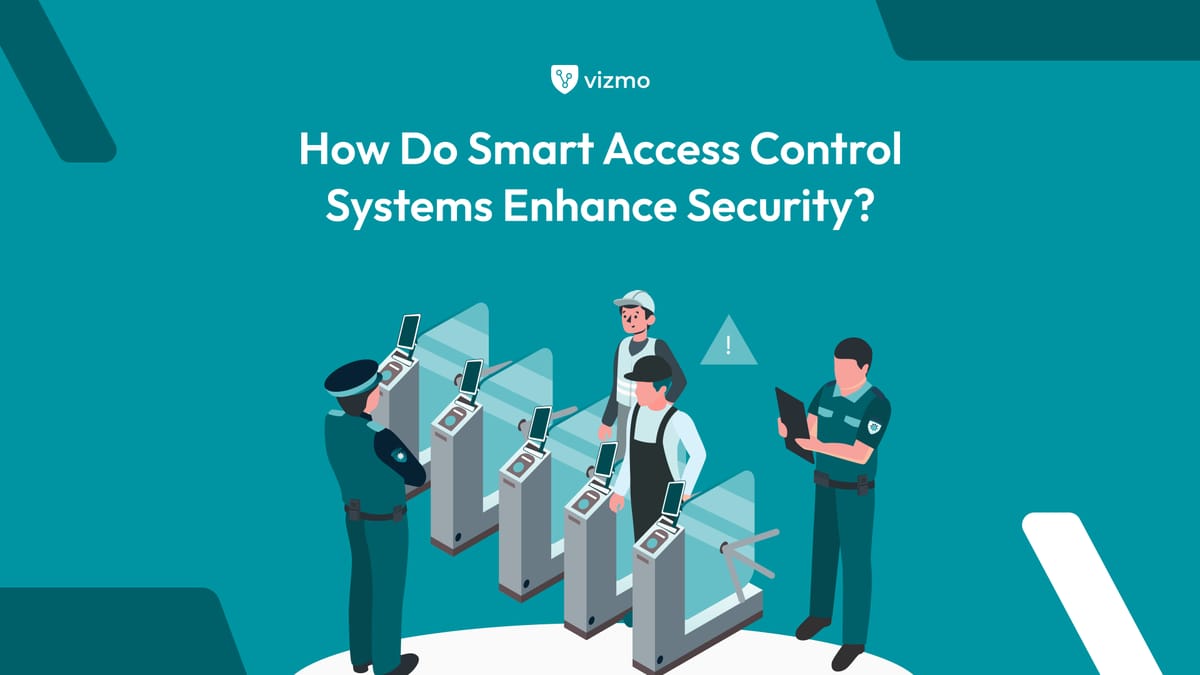
Introduction
Walk into any modern factory today, and you’ll notice how much has changed. Production lines are faster, operations are more data-driven, and safety standards are tighter than ever. But while manufacturing has evolved rapidly, security in many facilities is still catching up.
Managing who enters a factory, where they go, and what they can access is no longer a simple task. With multiple shifts, contract workers, vendors, and high-value equipment all operating simultaneously, even a small lapse in access control can lead to serious consequences.
This is where smart access control makes a difference.
Unlike traditional systems that rely heavily on manual processes or basic credentials, modern access control systems bring intelligence into security. They don’t just restrict entry—they actively monitor, analyze, and adapt to how people move within a facility. For factories, this shift is not just about security; it’s about operational efficiency, compliance, and safety.
What Is Smart Access Control in Factories?
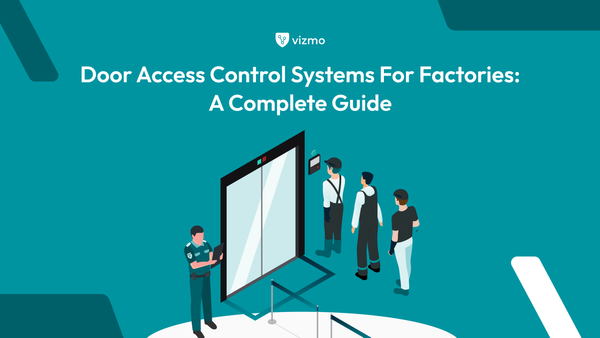
To put it simply, what is a smart access control system for factories? It’s a system designed to digitally manage and monitor access across a facility using advanced technologies.
Instead of depending on physical keys or manual registers, smart access control solutions use credentials such as biometric data, RFID cards, mobile devices, or facial recognition to authenticate individuals. These systems are often connected to cloud platforms, making them highly scalable and easier to manage across multiple locations.
What truly sets them apart is their ability to provide real-time visibility. At any given moment, you can know who is inside the facility, which areas they have accessed, and whether their access aligns with their role or shift. This is particularly important in access control systems for manufacturing plants, where different zones carry different levels of risk and sensitivity.
Why Traditional Access Control Falls Short
Despite the availability of modern solutions, many factories still rely on outdated or semi-digital commercial access control systems. These setups often lack flexibility and visibility, which creates operational blind spots.
Manual logs can be inaccurate or incomplete. Access cards can be shared or misused. Security personnel may not always have real-time information, especially in large facilities. Over time, these gaps add up, making it difficult to enforce restricted area access in factories or respond quickly during incidents.
These are some of the most common challenges in factory access control and how to solve them becomes a pressing question for facility managers. Without the right system in place, ensuring both security and compliance becomes increasingly complex.
How Smart Access Control Systems Enhance Factory Security
The real value of smart access control lies in how it transforms security from a reactive function into a proactive one.
One of the biggest advantages is real-time visibility. With real-time worker tracking, facility managers can instantly see who is present on-site and where they are located. This becomes critical during emergencies, helping teams respond faster and ensure worker safety.
Another major improvement is how access is controlled within the facility. Instead of granting blanket access, smart systems enable precise permissions based on roles, departments, or clearance levels. This ensures that only authorized personnel can enter sensitive zones, significantly reducing risks associated with unauthorized access.
The adoption of biometric access control for factories and face recognition based access control further strengthens security. Since these methods are tied to an individual’s identity, they eliminate the possibility of credential sharing. Additionally, touchless access control for factories improves hygiene and speeds up entry during peak hours, which is especially important in high-traffic environments.
Smart systems also bring structure to workforce management through shift-based access control. Access can be automatically aligned with employee schedules, ensuring that individuals can only enter the facility or specific zones during their assigned shifts. This reduces manual intervention and improves overall discipline.
From a compliance standpoint, the ability to generate detailed audit logs for factory security is invaluable. Every entry, exit, and movement is recorded, making it easier to meet industrial safety compliance requirements and conduct thorough investigations when needed.
Finally, with cloud-based access control for manufacturing, organizations can manage multiple facilities from a single interface. Permissions can be updated instantly, and activity can be monitored remotely, making it easier to maintain consistency across locations.

Key Benefits of Smart Access Control Systems in Manufacturing Plants
- Enhanced security through real-time monitoring and controlled access
- Improved worker safety with accurate visibility of on-site personnel
- Reduced unauthorized access to sensitive and high-risk areas
- Faster and more efficient entry processes, minimizing bottlenecks
- Better compliance with safety and regulatory requirements
- Centralized management for multi-location operations
- Scalable systems that grow with expanding manufacturing units
- Increased accountability with detailed audit trails
Types of Smart Access Control Systems Used in Factories
- RFID access control systems for factories – Cost-effective and suitable for large workforces using cards or tags
- Biometric access control system for factories – Uses fingerprints or iris scans for high-security authentication
- Face recognition based access control – Touchless, fast, and ideal for high-traffic entry points
- Mobile-based access control – Uses smartphones as credentials for convenience and flexibility
- Hybrid systems – Combine multiple technologies for enhanced security and adaptability

What to Look for in a Factory Access Control System
Choosing the right system starts with understanding your operational needs. A good access control system for factories should go beyond basic entry management and offer features that support both security and efficiency.
Look for systems that provide real-time monitoring, customizable access permissions, and seamless integration with other security tools like surveillance systems. The ability to generate detailed reports and maintain centralized control is equally important, especially for growing organizations.
Scalability is another critical factor. As your operations expand, your system should be able to handle additional users, locations, and access points without requiring a complete overhaul. Ease of use also plays a key role—both for administrators managing the system and employees using it daily.
How to Choose the Right Access Control System for Your Manufacturing Plant
- Evaluate the size, layout, and complexity of your facility
- Consider workforce size, shift patterns, and contractor involvement
- Identify the level of security required for different zones
- Ensure the system supports compliance and audit requirements
- Check for integration capabilities with existing infrastructure
- Assess scalability for future growth
- Choose a solution that is user-friendly and easy to manage
- Partner with a reliable vendor offering strong support

Why Indian Factories Are Adopting Smart Access Control Systems
The rise of smart access control systems for Indian manufacturing plants is not just a trend—it’s a response to evolving operational demands.
As factories scale up and become more interconnected, the need for better visibility and control becomes unavoidable. Safety regulations are becoming stricter, and organizations are under increasing pressure to ensure compliance at all levels. At the same time, workforce dynamics are changing, with more contract workers and flexible shift structures entering the picture.
These factors are driving the adoption of smarter systems. Businesses are realizing that traditional methods cannot keep up with modern challenges. This shift explains why Indian factories are adopting smart access control systems at a growing pace—not just to enhance security, but to streamline operations and future-proof their facilities.
Real-World Scenario: How a Large Electronics Manufacturer Closed Its Access Control Blind Spots
Industry: Electronics Manufacturing Employees: ~3,800 | Shifts: 3 rotating shifts, 24/7 operations Location: Sri City, Andhra Pradesh
A large-scale electronics manufacturer operating across a sprawling multi-building campus had invested heavily in production infrastructure — but their access control hadn't received the same attention. Entry to the main facility was managed through RFID cards, but internal zone access was still largely dependent on security guards and manual verification.
On the surface, it seemed adequate. In reality, it was creating compounding problems.
The facility had over 40 internal zones — cleanrooms, component storage, server rooms, assembly lines, and loading docks — each carrying a different level of sensitivity. But access permissions hadn't been updated to reflect role changes, departmental shifts, or contractor expirations in over a year. Workers who had moved departments still had access to their previous zones. A vendor whose contract had ended three months prior had an active RFID card that hadn't been deactivated.
The issue came to light when a routine internal audit flagged 23 active access credentials belonging to individuals no longer associated with the facility. No incident had occurred — but the exposure was significant. Any one of those credentials could have been used to access restricted zones without triggering an alert.
There was a second, operational problem too. The facility ran a large contract workforce — nearly 900 workers on any given day. Managing their access manually created daily bottlenecks at entry points, with peak-hour queues stretching to 25–30 minutes. Productivity was being lost before shifts even began.
What changed after implementing a smart access control system:
The facility deployed a hybrid system combining face recognition at high-traffic entry points and RFID for internal zone access — all managed through a centralized cloud dashboard. Role-based permissions were configured from scratch, aligned with current designations, shift schedules, and contractor timelines. Access credentials were set to auto-expire based on contract end dates, eliminating the risk of dormant active IDs.
Within the first two weeks, peak-hour entry time dropped from 25 minutes to under six. The security team could see real-time zone occupancy across all 40 areas from a single screen. When a contractor attempted to access a restricted assembly zone outside their permitted hours, the system flagged it instantly — something the previous setup would have missed entirely.
At their next compliance audit, the team submitted zone-wise access logs, credential histories, and entry timestamps covering the full audit period — all exported in minutes.
The most significant change wasn't a single dramatic improvement. It was the shift from a system that recorded access to one that actively managed it.

Solving Common Factory Security Challenges
Factory environments come with unique challenges—high footfall, multiple entry points, and diverse roles all operating simultaneously. Without a structured system, managing access becomes chaotic.
Smart access control solutions for factories address these challenges by introducing automation and clarity. Unauthorized access is minimized through role-based permissions. Manual errors are eliminated with automated tracking. Real-time dashboards provide instant visibility, and temporary access controls simplify contractor management.
By directly addressing these gaps, businesses can overcome the most common challenges in factory access control and how to solve them without adding complexity to their operations.
The Future of Access Control in Manufacturing
The evolution of access control systems is moving toward greater intelligence and integration. Emerging technologies are enabling systems to do more than just grant or deny access—they are beginning to predict risks and optimize operations.
Artificial intelligence is being used to analyze behavior patterns, while IoT integrations are connecting access control with broader facility management systems. This creates a more holistic approach to security, where data from multiple sources works together to enhance decision-making.
As factories continue to modernize, the role of access control will expand beyond security into areas like workforce optimization and operational analytics. Businesses that adopt these innovations early will be better positioned to stay competitive in an increasingly complex landscape.
Conclusion
Factory security today requires more than just physical barriers—it demands intelligence, adaptability, and real-time control. That’s exactly what smart access control delivers.
By combining technologies like biometrics, RFID, and cloud-based management, modern access control solutions provide a comprehensive approach to managing access across manufacturing environments. They not only enhance security but also improve efficiency, compliance, and overall operational visibility.
For organizations looking at how to improve factory security with smart access control, the path forward is clear. Moving to a smarter system is no longer optional—it’s essential for building safer, more efficient, and future-ready factories.

Frequently Asked Questions (FAQs)
Q1. What is a smart access control system and how is it different from traditional systems?
A smart access control system uses advanced technologies — biometrics, face recognition, RFID, or mobile credentials — combined with real-time monitoring and cloud-based management to regulate facility access. Unlike traditional systems that rely on manual checks or basic card swipes, smart systems actively monitor movement, enforce role-based permissions, and generate detailed audit logs automatically.
Q2. How does face recognition based access control improve security in factories? Face recognition ties access directly to an individual's identity, making credential sharing or misuse impossible. It also enables touchless, high-speed entry — critical at busy shift change points — while maintaining a reliable, timestamped record of every person who entered a specific zone. This makes it one of the most secure and efficient options for high-traffic manufacturing environments.
Q3. What is shift-based access control and why does it matter in manufacturing? Shift-based access control automatically aligns entry permissions with an employee's assigned working hours. A worker on the morning shift cannot enter the facility during night hours without explicit authorization. This reduces unauthorized after-hours access, improves operational discipline, and removes the need for manual monitoring at entry points during shift transitions.
Q4. How do smart access control systems help with industrial safety compliance? Every entry, exit, and zone movement is automatically logged with timestamps and identity details. These audit logs can be retrieved instantly during inspections, making it significantly easier to meet regulatory and safety compliance requirements. For facilities in regulated industries, this level of documentation is not optional — it's essential.
Q5. Can smart access control systems manage contract workers and vendors effectively?
Yes. Modern systems allow organizations to configure temporary access credentials with defined expiry dates aligned to contract timelines. Once a contract ends, access is automatically revoked — eliminating the risk of dormant active credentials. Movement can also be restricted to specific zones relevant to the contractor's work, ensuring they never access areas beyond their scope.
Q6. Why are Indian manufacturing facilities increasingly adopting smart access control systems?
Scaling operations, stricter safety regulations, growing contract workforces, and increasing compliance pressure are all driving adoption. Traditional methods cannot provide the visibility or control that modern factories require. Smart access control systems offer a practical way to manage complex, multi-shift environments while staying audit-ready — making them a strategic investment rather than just a security upgrade.