How Visitor Management System Boosts Your Company's Professionalism

INTRODUCTION
A vendor walks into your office. There's no one at the front desk. They wait five minutes, fill out a paper register with a borrowed pen, and wander toward the elevator unsure which floor to go to. Meanwhile, your receptionist is on a call and three other visitors are piling up at the entrance.
That moment — before a single meeting starts — already tells your visitor something about how you run your business.
A visitor management system changes that first impression entirely. It makes entry structured, fast, and professional — and gives your team full visibility over who is in the building at any given time.
The Problem with How Most Indian Offices Handle Visitors Today

Most corporate offices in India still rely on a front desk register, a security guard with a logbook, or at best, a basic spreadsheet. These aren't just outdated — they create friction at every step.
- No pre-registration process - Visitors arrive unannounced, the host isn't notified in time, and the visitor waits. That waiting is entirely preventable.
- No audit trail - If an HR or compliance review asks who visited on a specific date, the answer depends on whether the handwriting in the logbook is legible.
- No consistent experience - Different guards, different registers, different processes — the visitor experience changes every time, and never by design.
- No host notification - Receptionists manually call upstairs to inform hosts, who are often mid-meeting or unavailable. The visitor stands at the lobby with no update.
For a company that positions itself as professional, modern, or enterprise-grade, this gap between the product and the front door is a credibility problem.
How a Visitor Management System Fixes These Problems — Specifically
Vizmo's digital visitor management system addresses each of these gaps before the visitor even arrives.
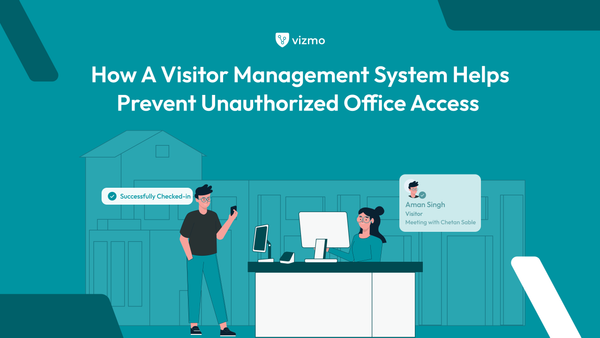
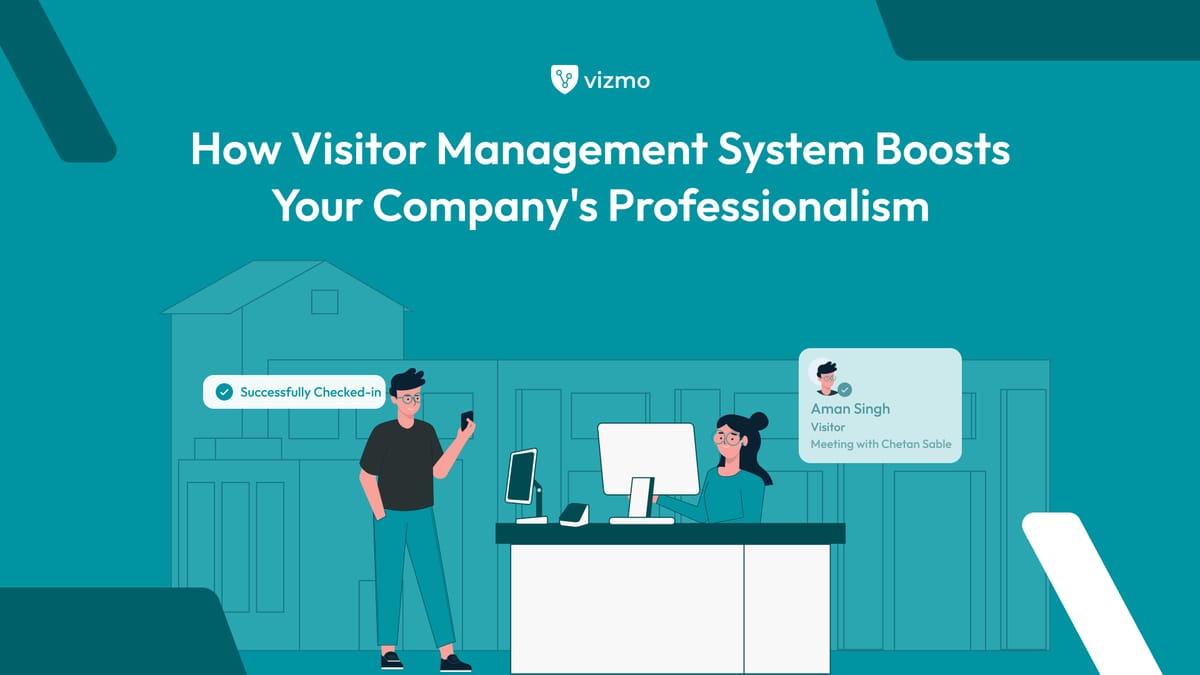
Hosts pre-register visitors from their laptop or phone. The visitor receives a QR code by email or WhatsApp before the visit. On arrival, they scan the code at the kiosk — no form-filling, no waiting, no front desk intervention needed.
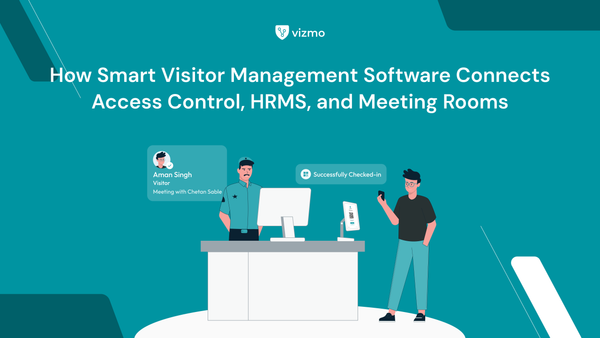
The host receives an instant notification the moment their visitor checks in. No more calling reception. No more visitors standing at the lobby wondering if anyone knows they're there.
For security and compliance teams, every entry and exit is automatically logged — with timestamp, host name, visitor photo, and purpose of visit. The audit log is always current, always exportable, and never depends on a staff member remembering to update it.

Where Professionalism Gets Built or Broken
The visitor experience has five moments that shape perception — and most offices get at least three of them wrong.
- Pre-arrival - When a visitor receives nothing before they come in, they arrive uncertain. A well-configured visitor management system sends the QR code, host name, floor details, and parking instructions automatically after the host registers the visit. The visitor arrives informed, not anxious.
- Check-in speed - A visitor who waits four minutes at a front desk while a receptionist fumbles through a call is already forming an opinion. Touchless visitor check-in through a QR scan takes under 30 seconds and requires no staff involvement. That speed communicates operational maturity without saying a word.
- The badge - A printed visitor badge with the visitor's name, photo, host name, and time of arrival is a small detail that signals a serious operation. It also ensures that anyone in the building can immediately identify whether a person belongs there — which matters for security as much as professionalism.
- Host notification - In offices without a system, the receptionist calls the host, the host doesn't pick up, and the visitor waits again. With real-time visitor monitoring, the host gets a push notification the second the visitor checks in — and can be at the lobby in two minutes.
- Exit and record - Most manual systems have no exit log at all. A visitor management system auto-logs departure time and closes the record. Security knows who is still inside. Compliance has a complete entry-to-exit record without anyone having to maintain it.
Real Example: A 400-Person IT Services Firm in Hyderabad
A mid-sized IT services company in Hyderabad was regularly hosting enterprise clients — including procurement teams from multinationals evaluating them as a vendor.
Their front desk process was entirely manual. Visitors filled a register, waited for the receptionist to call upstairs, and left with no badge. Two enterprise clients flagged the entry process during vendor evaluations as a concern. One cited it specifically in written feedback.
After deploying Vizmo's contactless visitor management system with pre-registration, QR-based check-in, and visitor badge printing, average check-in time dropped from over four minutes to under 40 seconds. The entry experience now matched the quality of the product they were selling. The next three client visits completed without a single front desk delay or complaint.
What a Professional Visitor Experience Actually Delivers

The benefits of a visitor management system go beyond first impressions. Here is what changes at the operational level once a system like Vizmo is in place.
- Front desk workload drops significantly - Receptionists stop managing check-ins manually and can focus on higher-value tasks. In offices with high visitor volume, this alone justifies the investment.
- Security improves without adding headcount - Every visitor is logged, badged, and matched to a host. Restricted areas can be configured to flag unregistered visitors automatically. The security team gets visibility without having to stand at every door.
- Compliance becomes effortless - Visitor data compliance and security requirements — whether for ISO audits, client due diligence, or internal policy reviews — are met automatically. The system generates complete visitor logs on demand, with no manual compilation needed.
- The brand perception shifts - When a client, investor, or partner walks into an office and is greeted by a structured, digital check-in process, it signals that the company sweats the details. That perception carries into the meeting before anyone has said a word.
What to Look for in a Visitor Management System

Not every visitor management solution is built for Indian corporate environments. When evaluating options, these are the criteria that matter most.
- QR code and touchless check-in - The system should support contactless entry as a default — not as an add-on. Post-pandemic expectations around touchless visitor check-in for corporations are now standard, not optional.
- Pre-registration with automated visitor communication - Hosts should be able to register a visitor in under two minutes and the system should handle the rest — sending the QR code, directions, and host details to the visitor automatically.
- Real-time host notifications - The notification should reach the host the moment the visitor checks in, not after a manual trigger. Push notifications via app or SMS both work — the key is that no human has to initiate the alert.
- Visitor badge printing - Printed badges should include at minimum the visitor's name, photo, host name, and entry time. This supports both professionalism and restricted zone access in offices.
- Audit logs that are always exportable - The system should generate complete visitor records — entry time, exit time, host, purpose — that can be exported without IT involvement. This is non-negotiable for companies subject to regular compliance reviews.
- Integration with access control - The most capable visitor management systems connect directly with building access control, so a registered visitor's QR code also grants them access to the right floor or zone — without a separate approval step.
In Short
- A visitor management system replaces manual registers and front desk bottlenecks with a structured, digital check-in process that takes under 30 seconds.
- The five moments that shape visitor perception — pre-arrival, check-in, badging, host notification, and exit — are all handled automatically once a system like Vizmo is in place.
- Indian companies adopting digital visitor management systems report measurable gains: faster entry, reduced front desk workload, and audit-ready compliance records without manual tracking.
- Professionalism is not just about the product or the pitch — it starts at the front door, and a visitor management system is what makes that experience consistent every single time.
- When evaluating a visitor management solution, prioritise QR-based check-in, automated pre-registration, real-time notifications, badge printing, and access control integration.

FAQs
- How does a visitor management system improve company professionalism?
It replaces a manual, inconsistent front desk process with a structured digital experience — pre-arrival communication, touchless check-in, printed badges, and instant host notifications. Visitors form their impression of your company before the meeting begins, and a smooth entry process signals that your organisation is well-run.
- What should I look for in a visitor management system for a corporate office?
Look for QR-based touchless check-in, automated visitor pre-registration, real-time host notifications, visitor badge printing, and exportable audit logs. For Indian enterprise environments, access control integration is also important — it ensures registered visitors can access the right floors without a separate approval process.
- Why are Indian companies adopting digital visitor management systems?
Indian enterprises are dealing with higher visitor volumes, stricter compliance requirements, and growing pressure to match the operational standards of multinational clients. A digital visitor management system addresses all three — without adding headcount to the front desk.
- How does a visitor management system help with compliance and data security?
Every visit is automatically logged with timestamp, visitor identity, host name, and purpose. These records are stored digitally, always current, and exportable on demand — making compliance audits, internal reviews, and security investigations significantly faster and more reliable than any paper-based system.
- Can a visitor management system integrate with existing access control?
Yes. Platforms like Vizmo connect directly with building access control systems, so a visitor's pre-registered QR code grants them entry to the correct floor or zone automatically. This removes the need for a separate approval step and ensures that visitor access is always tied to a verified, logged record.