Importance of Compliance in the Workplace


Workplace compliance is the comprehensive system of rules, regulations, and standards that organizations must follow to operate legally and ethically. It's not just a bureaucratic checklist - it's the invisible shield protecting businesses from potentially catastrophic risks. According to IBM's "Cost of a Data Breach Report," compliance failures have significantly increased over the past three years, with the average financial impact of a single incident now reaching approximately $4.5 million.
The landscape of workplace compliance has become increasingly complex. With global regulations expanding and becoming more intricate, organizations must now navigate a maze of legal requirements spanning multiple domains - from data privacy and workplace safety to environmental standards and labor laws. The regulatory environment has become so sophisticated that recent data reveals that mid-sized companies allocate about 5.5% of their annual revenue to compliance-related activities.
According to Accenture’s 2022 Compliance Risk Study, 95% of businesses have either established or are actively working to build a culture of compliance. The complexity of modern workplace compliance demands a proactive, comprehensive approach. It requires understanding intricate regulations, implementing sophisticated monitoring systems, and creating a culture where compliance is viewed as a strategic advantage rather than a mandatory burden. In this comprehensive blog, let's explore the importance of compliance in the workplace, understand what it entails, and outline the key steps to implement it effectively.

What is Workplace Compliance?
Workplace compliance is a comprehensive framework that ensures organizations operate within legal, ethical, and regulatory boundaries. It represents the systematic approach of adhering to laws, regulations, and internal policies that govern business operations and protect the interests of employees, stakeholders, and the organization itself. According to North Row, companies spend an average of 25% of their revenue on compliance costs, with 18% of organizations estimating that over 50% of their income goes toward compliance.
Non-compliance isn't just about avoiding penalties - it's about protecting the fundamental integrity of an organization. The consequences extend far beyond monetary fines. Companies facing significant compliance violations can experience the following:
- Immediate financial losses
- Long-term reputational damage
- Potential legal actions
- Loss of business licenses
- Decreased investor and customer trust
At its essence, compliance encompasses multiple critical domains. Legal compliance requires organizations to follow federal, state, and local regulations covering areas like labor standards, workplace safety, anti-discrimination practices, and fair employment guidelines. These regulations create a structured environment that protects both employers and employees from potential misconduct and ensures fair treatment. Ethical dimensions of compliance extend beyond mere legal requirements. Organizations must cultivate a culture of integrity that prioritizes transparency, fairness, and respect. This approach transforms compliance from a defensive strategy to a proactive method of building organizational excellence and trust.
Critical compliance areas include labor laws that protect employee rights, safety regulations ensuring workplace health and security, and data protection protocols safeguarding sensitive information. Financial compliance demands accurate reporting and prevention of fraudulent practices, while environmental regulations require businesses to minimize their ecological impact. Data protection has become increasingly significant in the digital age. Regulations like GDPR and CCPA mandate comprehensive protocols for collecting, storing, and managing sensitive information. GDPR fines in 2022 were 50% higher than those issued in 2021. Organizations must implement robust systems that protect individual privacy and prevent unauthorized data usage.
Workplace safety compliance represents another crucial area, involving creating and maintaining safe working conditions, implementing emergency response protocols, and conducting regular hazard assessments. Compliance is not merely a legal obligation but a moral responsibility. It reflects an organization's commitment to creating a fair, safe, and transparent work environment. The Ten Thousand Commandments 2018 report by CEI reveals that organizations globally spend an average of $5.47 million on compliance. By prioritizing compliance, companies demonstrate their dedication to ethical practices, employee well-being, and broader societal values.
The most successful organizations view compliance in the workplace as a strategic opportunity for growth. They understand that true compliance transcends rule-following, creating a culture of integrity, continuous improvement, and mutual respect.
Types of Compliance in the Workplace
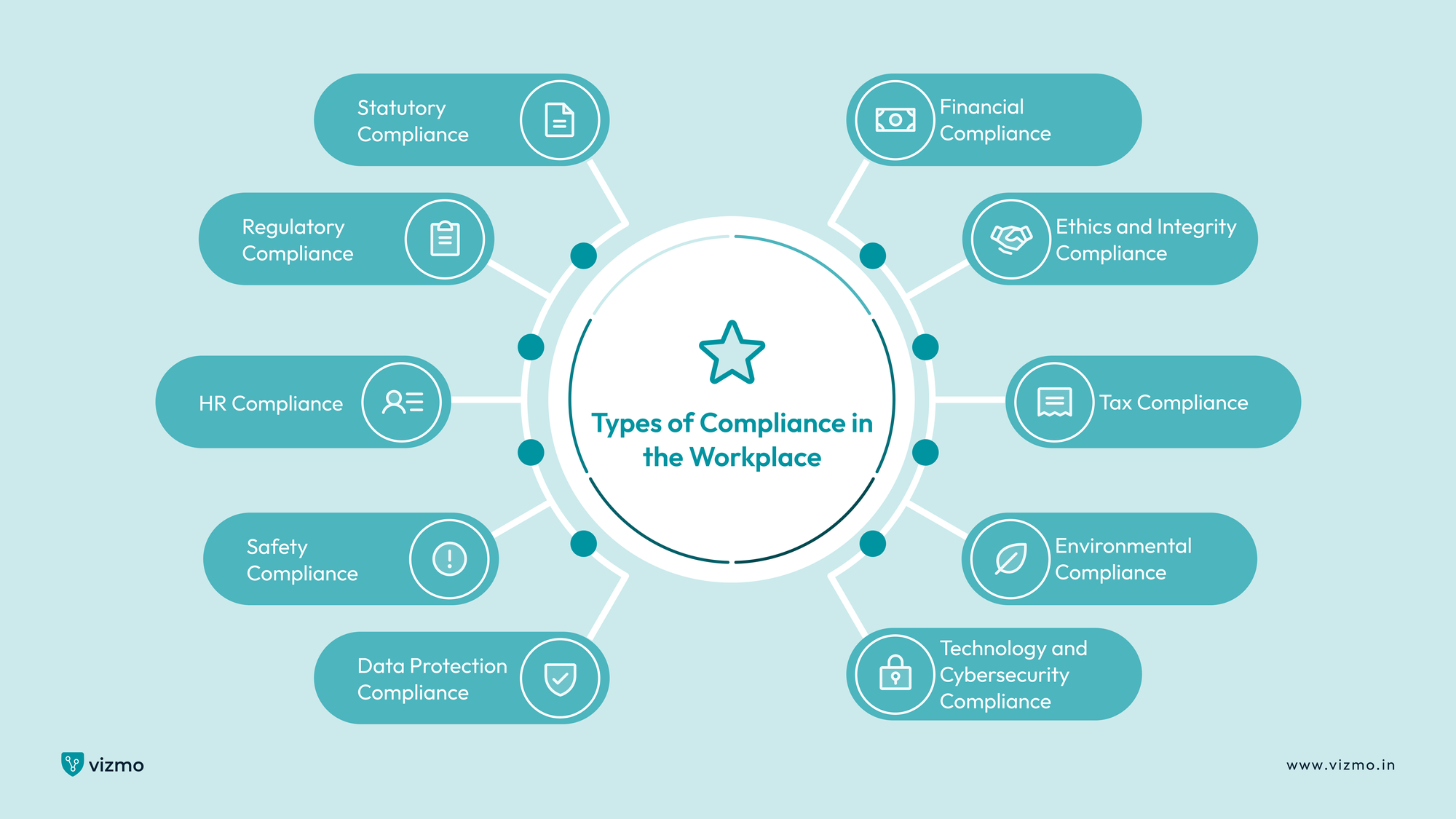
Workplace compliance encompasses multiple critical domains, each addressing different aspects of organizational responsibility and legal requirements. Understanding these diverse compliance types is essential for creating a comprehensive and robust governance framework.
1. Statutory Compliance
Statutory compliance refers to the obligation of organizations to adhere to laws and regulations set by government bodies at the federal, state, and local levels. These laws cover various critical areas, such as minimum wage requirements, working hours, employee benefits, health and safety standards, and anti-discrimination policies. Compliance in these areas ensures that organizations operate within the boundaries of the law and maintain a fair and safe working environment for their employees.
To meet statutory compliance requirements, organizations must stay up-to-date with changing regulations, maintain accurate records, and implement policies that align with legal mandates. For instance, they must ensure that employees are paid at least the minimum wage, that working hours comply with labor laws, and that workplace safety standards are followed to prevent accidents and health risks.
Failure to comply with statutory requirements can lead to legal consequences, including fines, penalties, or lawsuits, and can damage an organization's reputation.
2. Regulatory Compliance
Regulatory compliance refers to the adherence of organizations to specific rules and guidelines set by government agencies and regulatory bodies. These rules vary depending on the industry, ensuring that companies operate within a legal framework that protects both the organization and its stakeholders.
For instance, financial institutions must comply with regulations from bodies like the Securities and Exchange Commission (SEC) to ensure transparency, protect investors, and maintain financial stability. Healthcare organizations must follow HIPAA (Health Insurance Portability and Accountability Act) standards, which safeguard patient privacy and ensure secure handling of medical records. Technology companies are often required to comply with various data protection regulations, such as the General Data Protection Regulation (GDPR), to ensure personal data is managed and protected appropriately.
Regulatory compliance helps maintain industry standards, reduce the risk of legal issues, and build trust with customers, investors, and the public.
3. HR Compliance
HR compliance focuses on ensuring that organizations adhere to laws and regulations that protect employee rights and promote fair and equitable workplace practices. This includes complying with anti-discrimination laws, such as Title VII of the Civil Rights Act, which prohibits employment discrimination based on race, color, religion, sex, or national origin. HR compliance also involves providing equal employment opportunities (EEO), ensuring that all individuals are given fair access to employment and career advancement, regardless of their background.
In addition to these foundational requirements, HR compliance requires organizations to implement proper hiring practices, such as non-discriminatory job postings, objective recruitment processes, and transparent selection criteria. It also emphasizes the importance of workplace diversity and inclusion, fostering a culture where employees from all walks of life feel valued, respected, and have equal opportunities to thrive.
4. Safety Compliance
Safety compliance is essential in ensuring that organizations maintain a safe working environment for their employees, regardless of the industry. This compliance involves adhering to Occupational Safety and Health Administration (OSHA) regulations, which set the standard for workplace safety practices. Companies must take proactive steps to prevent accidents, injuries, and illnesses by conducting regular safety training, where employees are educated on hazard identification, safe work practices, and emergency procedures.
Regular workplace inspections are another key aspect of safety compliance, as they help identify potential risks and ensure that all safety equipment, machinery, and tools are functioning properly. In addition, organizations must establish and enforce comprehensive safety protocols, including emergency response plans, injury reporting procedures, and guidelines for maintaining a safe physical environment.
5. Data Protection Compliance
As digital interactions and data sharing continue to increase, data protection compliance has become more critical than ever. Regulations such as GDPR (General Data Protection Regulation) and HIPAA (Health Insurance Portability and Accountability Act) require organizations to follow strict protocols when it comes to collecting, storing, and managing sensitive personal and organizational data.
Organizations must implement strong cybersecurity measures to protect against data breaches, hacking, or unauthorized access to information. This includes encrypting sensitive data, using secure storage solutions, and maintaining secure access controls. Data privacy is also a top priority, requiring companies to inform individuals about how their data is collected, used, and stored, and giving them control over their information.
Moreover, transparency in data handling practices is essential. Companies must develop clear data protection policies, regularly train employees on privacy protocols, and be prepared to respond quickly and efficiently in the event of a data breach or security incident.
6. Financial Compliance
Financial compliance ensures that organizations adhere to established accounting standards, financial reporting requirements, and internal control mechanisms to maintain accuracy and transparency in their financial practices. This includes following regulations such as the Sarbanes-Oxley Act, which sets comprehensive guidelines for financial transparency and corporate governance. The act requires companies to maintain precise financial records and implement strong internal audit processes to detect and prevent inaccuracies, fraud, or misstatements in financial reporting. Regular financial audits, the establishment of clear financial reporting systems, and strong internal controls help mitigate the risk of financial mismanagement or legal issues.
By maintaining financial compliance, organizations can ensure they meet regulatory requirements, avoid penalties, and build trust with investors, stakeholders, and the public.
7. Ethics and Integrity Compliance
Ethics and integrity compliance extends beyond simply meeting legal requirements—it focuses on fostering a culture of ethical behavior and accountability throughout the organization. This involves developing clear and comprehensive codes of conduct that outline expected behaviors and ethical standards for employees at all levels.
Key aspects include implementing robust whistleblower protection mechanisms, which encourage employees to report unethical behavior or violations without fear of retaliation. Establishing strong anti-corruption policies is equally vital, as these help organizations prevent fraud, bribery, and other corrupt practices.
Transparency plays a central role in ethics compliance, with organizations promoting openness in decision-making processes to build trust among employees, stakeholders, and customers. Regular ethics training programs and leadership buy-in are also critical to embedding these values into the organization's culture.
8. Tax Compliance
Tax compliance involves ensuring that all financial and tax-related activities within an organization adhere to local, national, and international regulations. This includes accurate management of employee tax withholdings, timely payment of corporate taxes, and conducting regular financial audits to verify compliance.
Organizations must stay updated on ever-changing tax laws and regulations to avoid penalties or legal issues. This requires maintaining detailed financial records, filing tax returns on time, and addressing any discrepancies promptly. Additionally, businesses often implement robust financial reporting systems to ensure transparency and accountability in their tax-related processes.
9. Environmental Compliance
NavexGlobal’s Top Risk & Compliance Trends for 2021 highlight that businesses are expected to adopt environmental, social, and corporate governance (ESG) practices in response to climate-related disasters, impacting supply chains, decision-making, and investments. Environmental regulations require organizations to minimize their ecological footprint, reduce emissions, manage waste responsibly, and implement sustainable practices. This compliance type has become increasingly important as businesses face growing pressure to demonstrate environmental responsibility.
10. Technology and Cybersecurity Compliance
As digital technologies evolve, compliance in technology and cybersecurity has become critical.
According to Thomson Reuters' 2021 Cost of Compliance Report, 62% of businesses anticipate greater compliance involvement in cybersecurity in the coming years. Organizations must protect digital assets, prevent data breaches, ensure secure communication channels, and comply with emerging technology regulations.
Each compliance type represents a crucial component of organizational governance. Successfully navigating these complex requirements demands a proactive, comprehensive approach that integrates legal, ethical, and operational considerations.

Impact of Compliance on Employees and Workplaces
Compliance is more than a legal requirement - it's a fundamental mechanism for creating a positive, supportive workplace environment. When organizations prioritize comprehensive compliance strategies, they create ecosystems that protect, empower, and validate their employees.
1. Employee Safety and Well-being
Robust compliance protocols directly translate to enhanced workplace safety. By implementing rigorous safety standards, organizations reduce workplace accidents, minimize health risks, and create environments where employees feel physically and psychologically protected. This highlights the importance of security in the workplace, ensuring that safety measures are not only in place but are continuously monitored and updated. A well-structured safety compliance program fosters trust and confidence among employees, knowing that their well-being is a top priority.
2. Trust and Organizational Culture
Compliance builds a critical foundation of trust between employees and management. When organizations consistently demonstrate commitment to fair practices, transparent policies, and ethical decision-making, employees develop a sense of psychological safety. This trust encourages open communication, promotes innovation, and reduces workplace conflicts.
3. Retention and Employee Satisfaction
Compliance plays a pivotal role in employee retention. When employees feel protected, respected, and valued through fair employment practices, they are more likely to remain committed to their organization.
4. Legal and Ethical Protection
Comprehensive compliance protects employees from potential discrimination, harassment, and unfair treatment. By establishing clear guidelines and reporting mechanisms, organizations create supportive environments that respect individual rights and promote diversity and inclusion.
5. Performance and Productivity
A strong compliance culture correlates directly with improved workplace performance. Employees working in environments with clear expectations and fair practices demonstrate higher engagement levels, increased productivity, and greater job satisfaction.
6. Risk Mitigation
Effective compliance strategies help organizations proactively identify and mitigate potential risks. This approach not only protects the organization but also creates a sense of security for employees who understand that their workplace is committed to maintaining high standards of operational integrity.
7. Professional Development
Compliance training and ongoing education provide employees with opportunities for professional growth. By investing in comprehensive compliance programs, organizations demonstrate their commitment to employee development and continuous learning.
The most successful organizations understand that compliance is not a burden but an opportunity to create workplaces that are safe, fair, and conducive to individual and collective growth. By prioritizing compliance, companies invest in their most valuable asset - their people.
Why Is Compliance Important in the Workplace?
Compliance serves as a critical shield protecting organizations from multifaceted risks while creating a foundation for sustainable business success.
1. Risk Mitigation
Comprehensive compliance strategies act as proactive defense mechanisms against legal challenges. By establishing clear guidelines and implementing stringent protocols, organizations can prevent potential lawsuits, regulatory penalties, and unexpected financial liabilities. Research indicates that businesses with strong compliance frameworks experience 50% fewer legal confrontations compared to those with minimal compliance measures.
2. Reputation and Trust Building
Compliance directly influences organizational reputation and customer perception. Companies demonstrating consistent ethical practices and regulatory adherence gain significant market credibility. A Deloitte survey revealed that 87% of consumers are more likely to trust and engage with organizations known for maintaining high compliance standards.
3. Operational Efficiency
Standardized compliance processes streamline organizational operations, reducing errors and improving overall productivity. By creating clear, consistent guidelines, companies can minimize operational disruptions and create more predictable business environments. Organizations with robust compliance programs report 40% faster problem resolution and 35% reduced operational inefficiencies.
4. Competitive Advantage
In today's complex regulatory landscape, compliance becomes a strategic differentiator. Organizations that prioritize comprehensive compliance demonstrate their commitment to ethical practices, attracting top talent, investors, and socially conscious customers. Companies recognized for strong compliance cultures often experience 25% higher investor confidence and improved market positioning.
5. Financial Protection
Compliance helps organizations avoid substantial financial risks. Businesses can save an average of $2.86 million by conducting regular compliance audits. By investing in proactive compliance strategies, businesses can prevent these potentially devastating financial consequences.
6. Competitive Marketplace Positioning
A strong compliance culture signals organizational maturity and responsible management. This approach not only protects against risks but also creates opportunities for growth, partnership, and expanded market reach. Companies with comprehensive compliance programs are 60% more likely to secure complex business contracts and international collaborations.
The most successful organizations view compliance not as a mandatory requirement but as a strategic opportunity for creating sustainable, responsible, and efficient business practices.
Steps to Implement Compliance in the Workplace

Creating an effective compliance program requires a strategic approach that blends legal requirements, organizational culture, and operational practices. A crucial part of this is a workplace security checklist, ensuring that security measures like access control and safety protocols are effectively implemented and maintained for ongoing compliance. Let’s go through each of the steps:
1. Conduct a Comprehensive Risk Assessment
Begin by thoroughly evaluating your organization's specific compliance risks. This involves analyzing industry regulations, identifying potential legal vulnerabilities, and understanding unique operational challenges. A detailed risk assessment provides the foundation for developing targeted compliance strategies. As part of this evaluation, consider incorporating workplace security tips to strengthen the overall safety framework. Identifying potential security risks, such as inadequate access control or surveillance, can help in crafting a more comprehensive compliance plan that ensures both regulatory adherence and a secure working environment.
Develop Clear Compliance Policies Create comprehensive, easily understandable compliance policies that:
- Clearly outline organizational expectations
- Provide specific guidelines for different operational areas
- Address potential legal and ethical challenges
- Align with industry-specific regulatory requirements
2. Implement Training and Education Programs
According to Netwrix 2020 IT Trends Report, 67% of companies with 5,001–10,000 employees plan to invest in security awareness programs, up from 33% in 2019.
Develop ongoing compliance training initiatives that:
- Educate employees about regulatory requirements
- Provide practical guidance for maintaining compliance
- Ensure understanding of organizational policies
- Create a culture of continuous learning and awareness
3. Establish Reporting and Monitoring Mechanisms
Design robust systems for:
- Tracking compliance performance
- Identifying potential violations
- Facilitating confidential reporting
- Conducting regular internal audits
4. Create Accountability Structures
Develop clear accountability frameworks that:
- Define compliance responsibilities at all organizational levels
- Implement consistent consequences for policy violations
- Recognize and reward compliance excellence
5. Leverage Technology Solutions
Advanced compliance management technologies are transforming the way organizations maintain workplace security and adhere to regulations. These tools simplify complex processes and help businesses stay ahead of compliance requirements with ease.
Utilize advanced compliance management technologies that:
- Automate compliance tracking
- Provide real-time monitoring capabilities
- Generate comprehensive reporting
- Integrate seamlessly with existing organizational systems
Incorporating workplace analytics further enhances decision-making, making compliance management more efficient and improving overall workplace security. Accenture’s compliance risk study reveals that 93% of respondents believe AI and cloud compliance tools reduce human error, automate manual tasks, and enhance efficiency and effectiveness. Modern solutions like Visitor Management Systems and Video Surveillance Systems play a critical role in this transformation. Implementing an access control system alongside these technologies further strengthens organizational security, controlling who enters the premises and ensuring compliance with safety regulations.

According to data, businesses save an average of $2.03 million by integrating data security with their privacy and security functions. Visitor management systems automate credential verification, access tracking, and background checks while generating detailed reports for streamlined compliance. Similarly, AI-powered video surveillance ensures real-time monitoring, threat detection, and incident tracking, enhancing security and adapting to evolving risks.
The key benefits of leveraging these technologies include:
- Automating compliance tracking to reduce manual work
- Providing real-time monitoring capabilities to ensure quick responses to potential issues
- Generating comprehensive reporting for transparent and efficient record-keeping
- Seamlessly integrating with existing organizational systems for smooth implementation
6. Continuous Improvement
Regularly review and update compliance programs to:
- Adapt to changing regulatory landscapes
- Address emerging organizational risks
- Incorporate feedback and lessons learned
The most effective compliance programs are dynamic, integrated approaches that view compliance as a strategic opportunity for organizational growth and risk management.

Final Thoughts
Compliance plays a critical role in creating a safe, ethical, and productive workplace. It establishes a foundation of trust between employees, management, and external stakeholders while ensuring that organizational practices align with legal and ethical standards. By creating accountability and reducing risks, compliance safeguards the organization’s reputation and operational integrity.
Proactive compliance management is essential for long-term success. Rather than waiting for issues to arise, organizations that actively prioritize compliance can identify and address potential challenges early, improving efficiency and resilience. This proactive approach ensures that businesses remain adaptable in a constantly evolving regulatory landscape.
Start building a culture of compliance today. Take the first step toward a safer and more ethical workplace by conducting a compliance audit, refining your policies, and empowering your teams with the training they need to succeed. Book a Free Demo with us to create a better and more efficient workplace.