Optimizing Front-Desk Operations: How Digital Check-ins Improve Workplace Flow


Front desks have always been the heartbeat of any workplace. They manage the inflow of people, safeguard the premises, and create the first impression for every visitor, vendor, interview candidate, or employee walking in. Traditionally, the front desk was a manual operation: receptionists juggling phone calls, handwritten logs, printed visitor badges, and directing foot traffic. While functional, these methods are increasingly inadequate for today’s fast-paced, hybrid, and high-security corporate environments.
Modern organizations are now shifting toward digitally automated front desks powered by touchless check-ins, pre-registrations, smart notifications, and real-time visibility. This evolution is more than a technological upgrade; it directly affects operational efficiency, security, regulatory compliance, and overall visitor satisfaction. In today’s hybrid workplaces, where footfall varies daily, guest expectations are high, and employee experience is a competitive differentiator, a front desk must do more than “manage visitors”—it must optimize the flow of people, information, and resources in real time.
In this blog, we explore how digital check-in systems are transforming front-desk operations, why the transition is critical, and how smart check-in technology improves workplace flow end to end. From reducing bottlenecks to enhancing security, automating approvals, and providing actionable analytics, digital check-ins are a cornerstone of modern, intelligent workplaces.
1. The Rise of Digital Check-ins: Why Traditional Front Desks Can’t Keep Up

For decades, workplaces relied on manual processes: writing names in registers, calling hosts, stamping time entries, and issuing handwritten badges. While effective for low-traffic offices, these systems cannot keep pace with today’s high-footfall environments where multiple visitors, employees, and contractors move through reception simultaneously.
Challenges with traditional front desks include:
- Long queues during peak hours: Visitors often wait unnecessarily, creating frustration and lowering satisfaction. Even a short wait becomes magnified when dozens of guests arrive at once, leaving a negative impression of the organization’s efficiency.
- Slow host notifications: Manually calling hosts delays meetings, wastes time, and can make employees appear unprepared or inattentive to guests. These delays disrupt schedules and affect overall productivity.
- Untracked or unauthorized entries: Lack of oversight increases security risks, making it difficult to know who is on the premises, which areas they accessed, or whether proper authorization was obtained.
- High dependency on reception staff: Receptionists are overburdened with repetitive tasks, limiting their ability to provide personalized guest interactions or attend to exceptions and urgent needs.
- Human errors in data collection: Manual logs are prone to mistakes, omissions, and duplicate entries, compromising the accuracy of visitor records and making reporting unreliable.
- Difficulty retrieving past visit data: Locating historical visitor data in paper registers slows audits, compliance checks, and incident investigations, wasting valuable time.
- Compliance concerns: Paper-based systems make audits and regulatory adherence time-consuming and error-prone, especially in industries with strict data-tracking requirements.
- Poor visitor experience: Slow, inconsistent processes leave a negative impression on clients, partners, or potential hires, affecting relationships and organizational reputation.
Digital check-ins automate these interactions, enabling fast authentication, instant notifications, and real-time visibility. By removing repetitive tasks and bottlenecks, organizations not only streamline operations but also demonstrate professionalism, modernity, and technological readiness to everyone entering the premises.
2. First Impressions Matter: Visitor Experience Begins at Check-in
The front desk is the first point of physical interaction visitors have with your organization. Studies consistently show that first impressions influence perceptions of efficiency, professionalism, and trustworthiness. A slow or confusing check-in can make visitors feel unwelcome, even before the meeting begins.
Digital check-ins elevate the visitor experience by combining convenience, security, and branding:
- Touchless Kiosk Check-ins: Visitors can complete the check-in process independently using QR codes or facial recognition, reducing both wait times and physical contact. This improves safety, especially in post-pandemic workplaces, while giving visitors a sense of control.
- Pre-registration for Faster Entry: Guests complete required formalities online before arrival, allowing them to bypass queues and proceed directly to their designated meeting spaces. This proactive step reduces congestion and provides a frictionless experience.
- Branded Digital Interfaces: Customizable screens reinforce corporate identity and professionalism, providing a polished, consistent first impression. Personalized welcome messages and company branding enhance the visitor’s perception of the organization.
- Instant Badge Printing: Badges printed immediately include visitor information and access permissions, ensuring security and recognition. Visitors feel acknowledged and informed, while staff can quickly verify credentials.
Collectively, these enhancements streamline the visitor journey, build credibility, and show that the organization values time, safety, and efficiency.
3. Reducing Wait Times and Eliminating Bottlenecks
Front-desk congestion is a visible sign of operational inefficiency. High visitor traffic during peak hours—whether employees returning from breaks, multiple vendors arriving simultaneously, or clients attending back-to-back meetings—can overwhelm traditional reception setups.
Digital check-ins address this by:
- Assisted Queue Handling: The system supports a managed check-in flow that helps maintain orderly visitor queues and reduces confusion during peak entry times.
- Parallel Self-Service Stations: Multiple kiosks enable several visitors to check in simultaneously, reducing dependency on a single receptionist and preventing bottlenecks.
- Instant Verification: QR codes, pre-registered passes, and digital credentials drastically reduce processing time, enabling guests to move efficiently through the entry process.
- Faster Workflow Routing: Notifications, badges, and access permissions are automatically issued to hosts and security teams, eliminating delays caused by manual coordination.
The outcome: Smooth, uninterrupted visitor flow during peak periods, enhanced satisfaction, and front-desk staff freed to focus on high-value interactions.
4. Empowering Front-Desk Teams Through Automation

Reception teams often juggle responsibilities ranging from greeting visitors to verifying identities, notifying hosts, and maintaining records. Much of this workload is repetitive and administrative, consuming hours of productive time.
Automation allows front-desk staff to:
- Focus on high-value hospitality tasks: Staff can provide personalized assistance, answer questions, and offer a welcoming presence rather than performing repetitive administrative tasks.
- Handle escalations instead of routine requests: By automating standard procedures, receptionists can concentrate on exceptions, such as VIP visits, last-minute scheduling changes, or troubleshooting access issues.
- Maintain cleaner, more accurate data: Automated logging prevents errors, duplicates, and missing entries, ensuring a reliable database for audits, reporting, and security verification.
- Provide a premium guest experience: Staff can dedicate time to ensuring guests feel welcomed, guided, and supported, creating a positive, professional impression of the organization.
Overall, automation enhances operational efficiency while boosting employee satisfaction and engagement.
5. Strengthening Workplace Security Through Controlled Check-ins
Security is a critical front-desk responsibility. Traditional systems struggle to validate entries and enforce access policies effectively. Digital check-ins enhance security through:
- Access Control Integration: Entry permissions are automatically applied based on visitor type, ensuring that guests cannot access unauthorized areas.
- Visitor Screening: All check-ins are screened against an approved restriction list, helping ensure that blacklisted individuals are identified and denied entry.
- Time-Based Access: Visitors are allowed entry only during scheduled windows, preventing overstays and unauthorized movement.
- Centralized Visitor Logs: Secure digital records provide quick reference for incident response and auditing purposes, allowing security teams to operate proactively rather than reactively.
These measures create a controlled and compliant environment while minimizing administrative overhead and strengthening workplace security.
6. The Power of Pre-registration: Smoother Flow Before Visitors Even Arrive
Pre-registration allows organizations to manage visitor flow proactively, reducing congestion and improving the overall experience:
- Sending invitations with meeting details: Hosts can pre-send meeting agendas and relevant information, so visitors arrive prepared and oriented.
- Sharing QR codes or access passes: Digital passes streamline entry, allowing guests to bypass manual verification and avoid long lines.
- Collecting documents ahead of time: NDAs, ID verification, or safety forms can be completed in advance, preventing delays at the front desk.
- Triggering pre-approvals if needed: Visits requiring additional security clearance can be approved automatically, so no last-minute bottlenecks occur.
- Reducing front-desk traffic: Predictable visitor inflow reduces congestion and ensures smoother lobby operations for both staff and guests.
7. Compliance, Data Accuracy & Audit Trails Made Easy
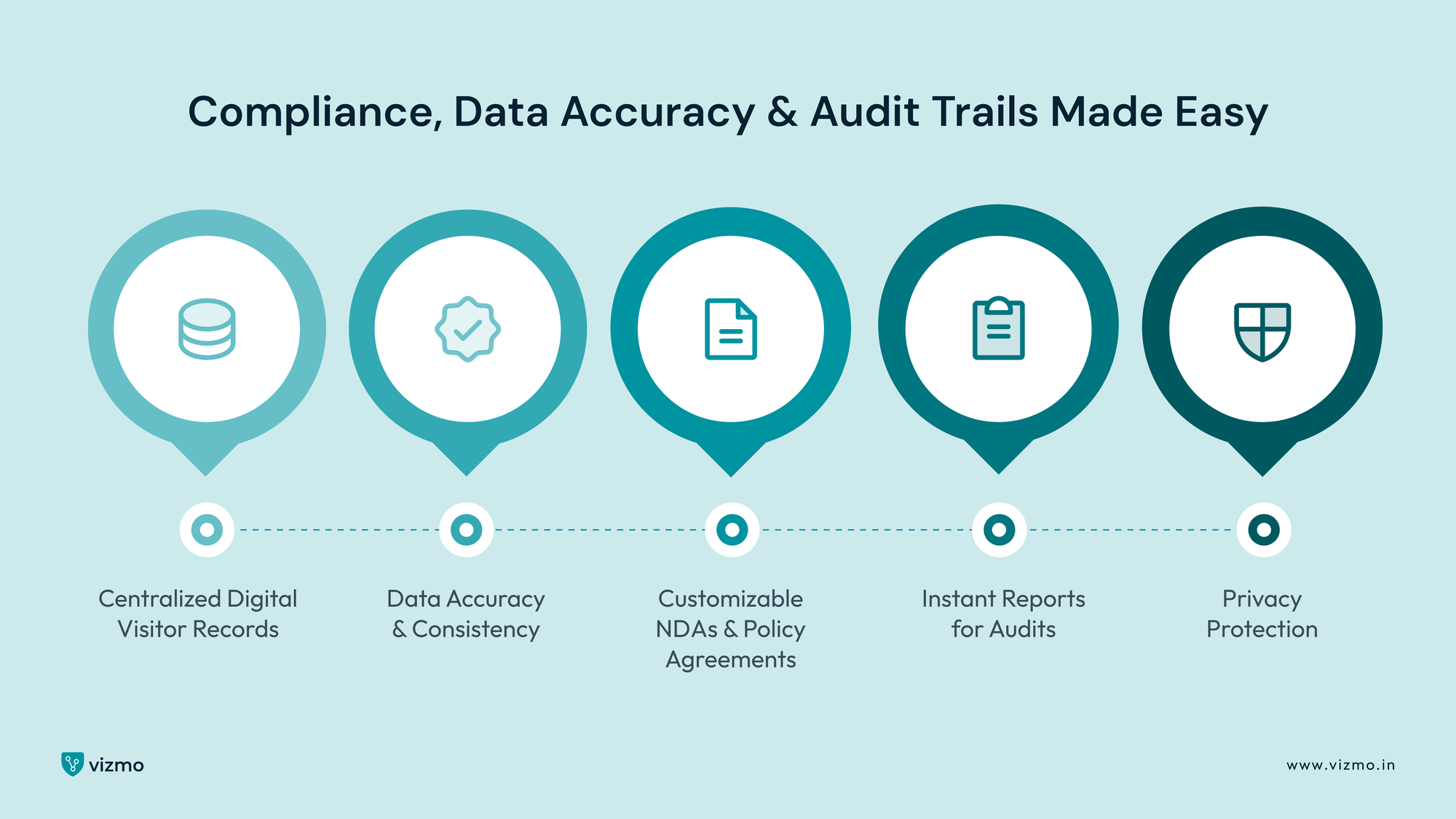
Many industries, such as BFSI, IT/ITES, manufacturing, and healthcare, operate under strict compliance regulations requiring accurate visitor tracking and record-keeping. Paper-based systems are labor-intensive, prone to errors, and slow to audit. Digital check-ins simplify compliance while increasing accuracy and reducing manual effort:
- Centralized Digital Visitor Records: All visitor entries are stored securely in a centralized database, allowing staff to quickly retrieve historical data, support audits, and streamline reporting processes without digging through paper logs.
- Data Accuracy & Consistency: Automated entry eliminates duplicate records and human errors, ensuring that visitor information is always reliable and up-to-date for operational or regulatory purposes.
- Customizable NDAs & Policy Agreements: Visitors can complete necessary agreements digitally during check-in, reducing paperwork and ensuring that legal or safety policies are consistently enforced.
- Instant Reports for Audits: Managers and compliance teams can generate comprehensive reports instantly, saving hours of manual work while maintaining regulatory adherence.
- Privacy Protection: Visitor data is encrypted and securely stored to comply with privacy regulations like GDPR, ensuring sensitive information is protected at all times.
8. Faster Communication Through Automated Host Notifications
Manual host notifications are slow and prone to delays. Automated communication ensures the right person is informed immediately:
- SMS Alerts: Hosts receive instant text notifications upon visitor arrival, minimizing delays and improving response time.
- Mobile App Notifications: Real-time notifications on employees’ devices ensure they can respond promptly, even if away from their desks.
- Email Messages: A secondary notification channel guarantees the host is always informed, providing redundancy for critical communications.
- Dashboard Pop-Ups: Hosts see live updates through workplace dashboards, keeping them aware of arrivals without interrupting ongoing work.
Automation reduces waiting times, ensures smooth coordination, and enhances the overall visitor experience.
9. Integrating Digital Check-ins With Workplace Systems
Standalone check-in systems improve visitor flow, but integration with other workplace technologies maximizes operational efficiency:
- Access Control: Visitor check-ins automatically synchronize with entry permissions, preventing unauthorized access while easing staff workload.
- Meeting Room Systems: If a visitor does not check in, reserved rooms are released automatically, improving resource utilization.
- Directory Services: Integration ensures notifications are sent to the correct host, even in large or multi-floor offices.
- Security Systems: Monitoring is seamless and automated, allowing real-time tracking of entry points without manual logging.
- Facility Management Tools: Data from check-ins helps optimize lobby design, staffing levels, and resource allocation, creating a smarter workplace ecosystem.
Integration ensures a seamless experience, operational efficiency, and visibility across departments.
10. Data Insights & Analytics for Smarter Front-Desk Optimization
Digital check-ins generate rich, actionable data to help organizations optimize resources and improve operations:
- Active Kiosks: Monitoring which kiosks are in use helps plan resource allocation and maintain operational readiness.
- Total Visitors: Overall visitor count provides insight into foot traffic trends, helping schedule staff and anticipate peak hours.
- Active Visitors: Real-time data shows who is currently on-site, enabling better crowd management and immediate decision-making.
- Overstay Visitors: Flags visitors exceeding scheduled durations, helping staff address bottlenecks or security concerns promptly.
These metrics allow managers to make informed staffing, workflow, and space design decisions, improving operational efficiency and visitor satisfaction.
11. Enhancing Employee Flow Through Digital Check-ins
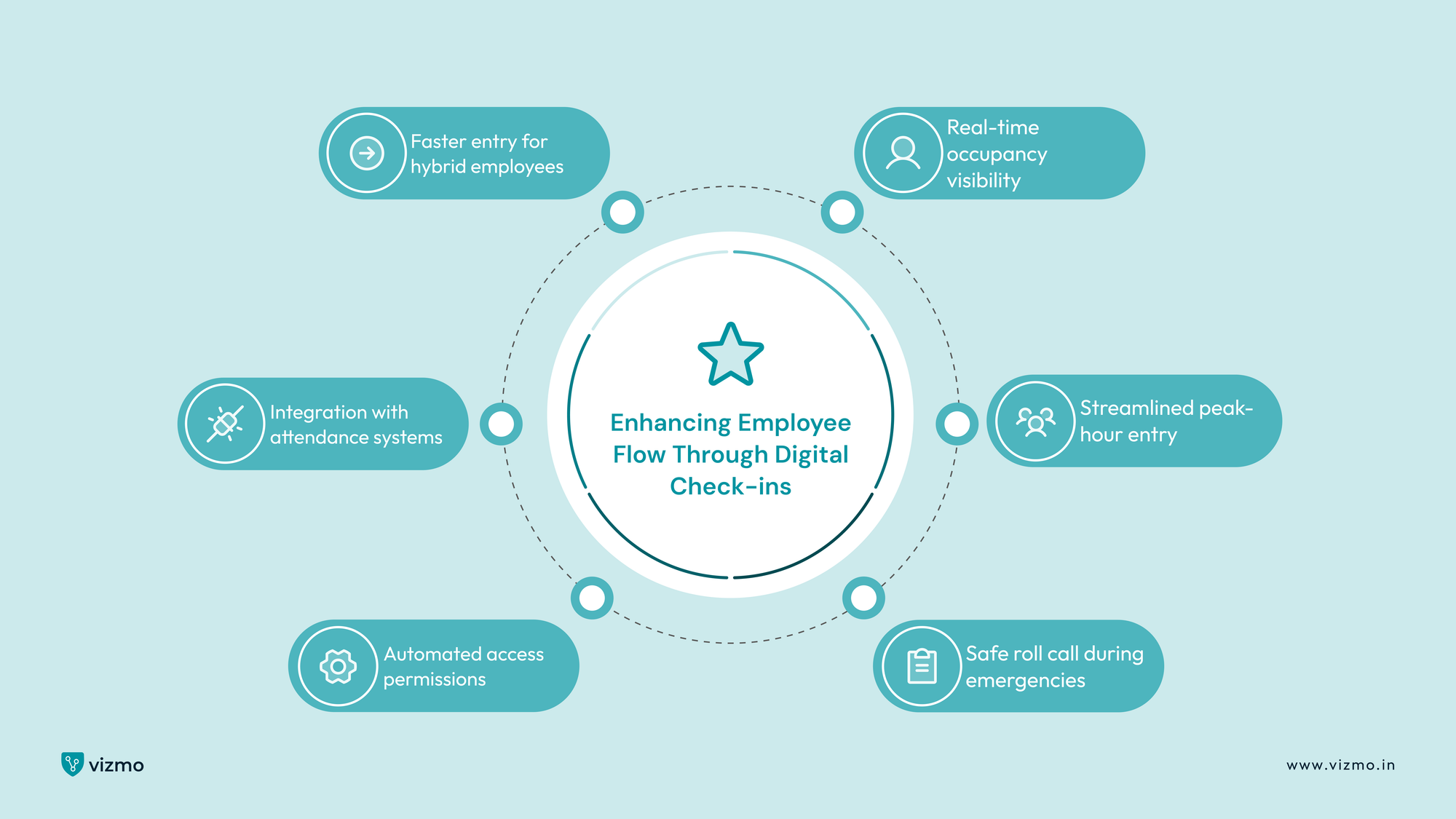
Digital check-ins are not limited to visitors—they also optimize employee movement:
- Faster entry for hybrid employees: Automated recognition reduces queues during peak hours, enhancing employee satisfaction.
- Integration with attendance systems: Check-ins automatically update attendance records, reducing manual reporting and errors.
- Automated access permissions: Employees receive access only to authorized areas, supporting safety and operational compliance.
- Real-time occupancy visibility: Managers gain insights into building density, enabling efficient use of shared spaces and supporting social distancing policies.
- Streamlined peak-hour entry: Reduces congestion in lobbies, elevators, and common areas during high-traffic times.
- Safe roll call during emergencies: Digital check-ins provide accurate counts of employees on-site, improving emergency preparedness.
12. Multi-Tenant Buildings Benefit Even More From Digital Check-ins
Co-working spaces, business parks, and shared office buildings face unique challenges in managing foot traffic across multiple organizations:
- Tenant-specific workflows: Each tenant can customize the check-in process for their employees and visitors, ensuring unique requirements are met.
- Shared lobby optimization: Queues and waiting areas are efficiently managed for multiple organizations, preventing congestion.
- Building-level visitor insights: Aggregated data helps facility managers allocate resources and staff effectively across tenants.
- Unified security enforcement: Policies are standardized to maintain safety across all tenants without confusion.
- Consistent experience across tenants: Visitors and employees enjoy a seamless, professional check-in experience regardless of the company they are visiting.
Digital systems simplify complex multi-tenant management, making front-desk operations strategic rather than reactive.
13. Reducing Operational Costs With Automation
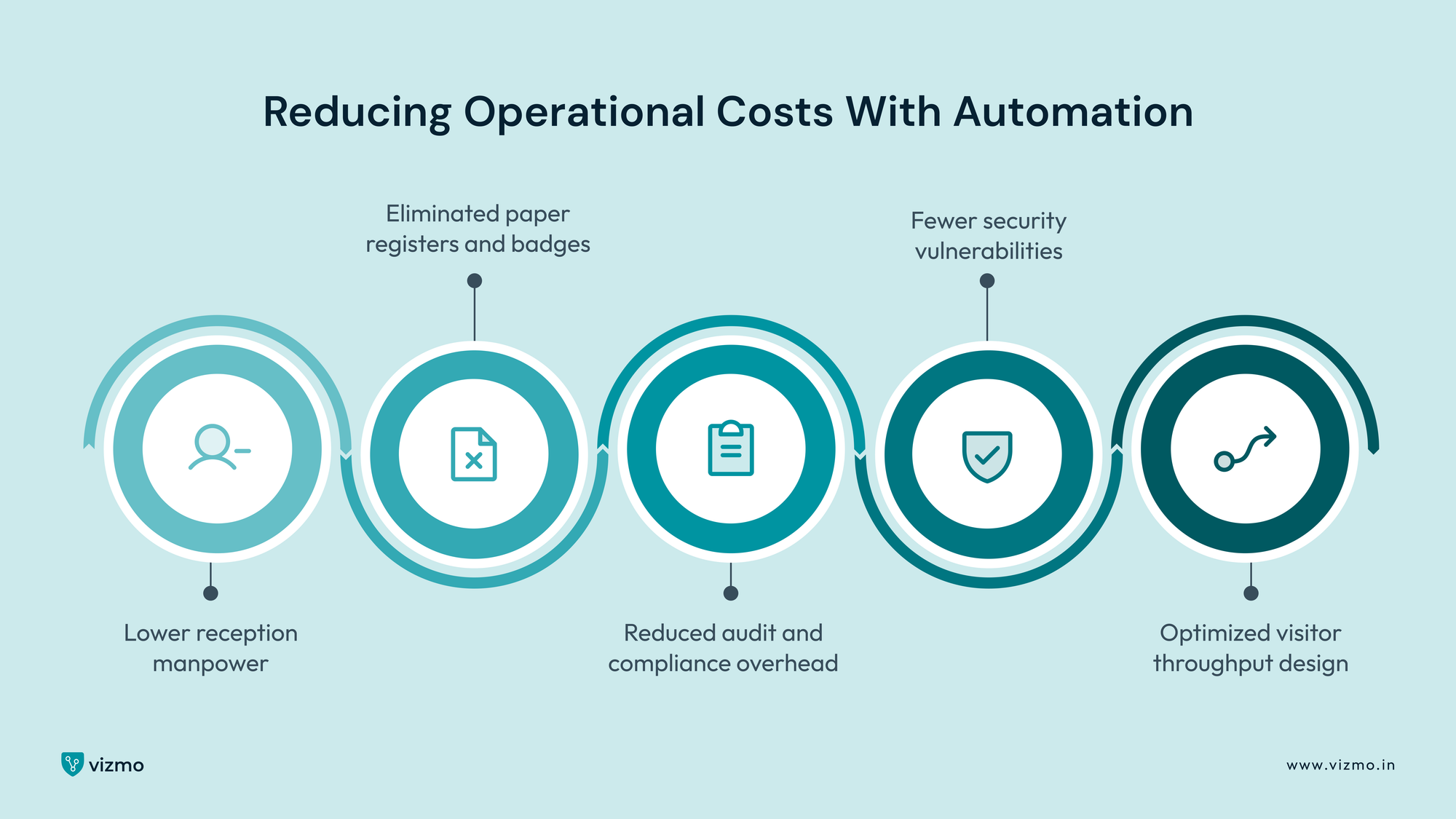
Automation reduces overhead and increases ROI in several ways:
- Lower reception manpower: Fewer staff are required to handle routine check-ins, freeing up resources for other tasks.
- Eliminated paper registers and badges: Digital systems cut printing costs and reduce environmental impact.
- Reduced audit and compliance overhead: Automated reporting reduces hours spent preparing records for audits.
- Fewer security vulnerabilities: Controlled access reduces risk of breaches, limiting potential liabilities.
- Optimized visitor throughput design: Streamlined processes improve efficiency without additional resources, saving both time and money.
Over time, organizations see measurable cost savings while improving operational efficiency.
14. Creating a Future-Ready Workplace
Digital check-ins are a key foundation of modern smart workplaces:
- Smart access control: Automatically manages entry permissions across locations and visitor types.
- Automated meeting workflows: Integrates check-ins with meeting room reservations, minimizing conflicts and optimizing room utilization.
- Space management systems: Real-time occupancy data informs resource allocation and workspace planning.
- Centralized communication: Notifications, alerts, and visitor updates are streamlined for staff and hosts.
- Multi-location visibility: Provides insights across multiple sites, allowing managers to make informed operational decisions.
Organizations adopting digital check-ins today are preparing for scalable, automated, and fully connected workplaces.
Conclusion: A Digitally Optimized Front Desk Creates a More Productive Workplace
Digital check-ins don’t just automate entry—they transform front-desk operations into a seamless, secure, and data-driven hub. By enhancing visitor experience, improving security, strengthening compliance, and reducing manual workload, they ensure smooth flow across the workplace ecosystem.
The front desk of the future is intuitive, integrated, and capable of powering an entire workplace—a critical step toward a modern, connected, and intelligent office environment. By embracing digital check-ins, organizations signal efficiency, professionalism, and readiness for the demands of the hybrid and dynamic workplaces of tomorrow.