What Is Space Utilization?

Companies today are rethinking how they use their office space. As the work dynamics transform, efficient use of space has become crucial for companies that value employee productivity, efficient workflow, and at the same time reducing costs. The post-pandemic shift, marked by the rise of hybrid work models and adaptable office designs, has pushed businesses to reconsider how their office spaces function.
Space utilization includes assessing and optimizing how effectively a workspace is used. A report by Density suggests that up to 71% of spaces could be used up to four times more than they currently are. This highlights how important it is for companies to monitor and assess their space utilization to enhance workplace efficiency.
Space utilization refers to how effectively a company uses its physical workspaces to support daily operations and business goals. Understanding what is space utilization, is crucial for businesses aiming to create efficient and adaptable work environments. In this blog, we'll explore the benefits, effective strategies, common challenges of space utilization, and solutions for optimizing your workspace.
What is Space Utilization?
Space utilization refers to assessing how well a space is used relative to its capacity. It helps organizations see whether their workspaces are being maximized or whether certain adjustments are needed for better efficiency. Optimal space utilization helps companies enhance their workspaces while at the same time increasing productivity, reducing costs, and improving employee satisfaction.
The relevance of space utilization is evident in multiple sectors. For corporate offices, it ensures that areas like meeting rooms, desks, and shared workspaces are used effectively. In healthcare, optimizing space can mean better patient care and smoother operations. Schools and universities can benefit by using their facilities to accommodate more students and activities. In manufacturing, efficient space use can enhance productivity and streamline workflows.
Space utilization isn't just about counting how many people occupy a given area, it’s about enhancing efficiency and making the best use of provided resources. With smart space utilization organizations can create more functional workplace environments, save costs, and elevate the overall experience for employees, clients, and users.
Importance of Space Utilization for Corporates
Understanding how space is used within a corporate setting is key to making smart, data-driven decisions. When companies can analyze how their office spaces are being utilized, they can optimize layouts, improve workflows, and reduce unnecessary costs.
Findings by Density’s report highlight just how much-unused potential there is in office spaces. According to the report about 22-person spaces are often used by only 1 person, social areas designed for over 100 people are occupied by just 3, and the conference rooms costing about $87,000 a year sit empty more than 80% of the time. The data underscores the importance of optimizing office space. If companies continue to pay for underutilized spaces, they are missing out on opportunities to cut costs and create better and more efficient work environments.
In addition to cost savings, proper space utilization offers several other benefits. It helps increase overall efficiency by ensuring that spaces are designed for maximum productivity. Employees thrive in spaces that meet their needs, leading to higher job satisfaction and engagement. Moreover, efficient use of space makes a company more adaptable, allowing it to quickly adjust to changes in workforce size, office needs, or business direction.
Benefits of Space Utilization
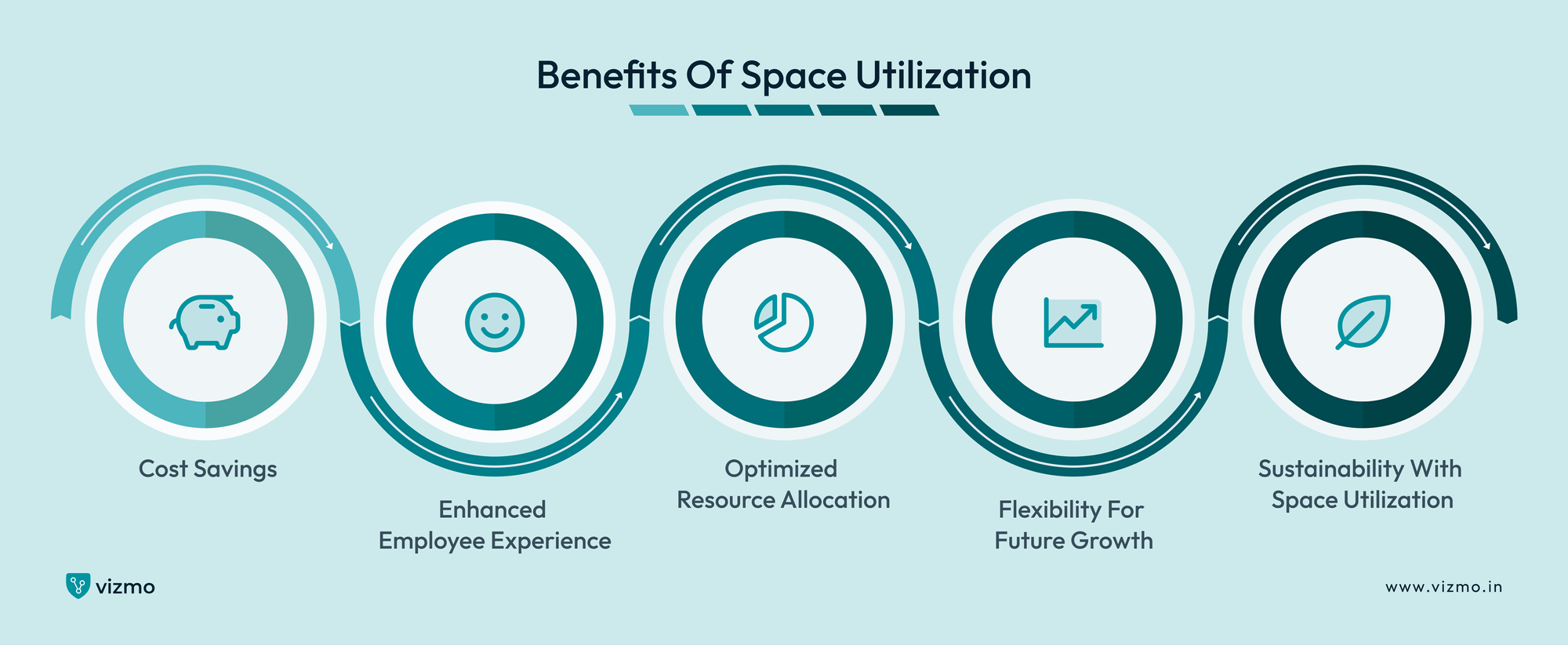
Effective space utilization brings a range of benefits to organizations, helping them make the most of their resources while creating a positive work environment. Here are some of the key advantages:
1. Cost Savings
Space utilization directly impacts costs. Rent and utilities are major expenses, and if spaces aren’t being used efficiently, companies are essentially paying for unused areas. By optimizing space, businesses can reduce these overheads, ultimately saving money and maximizing the value of their real estate. Additionally, by analyzing how space is used and eliminating underutilized areas, companies can downsize or repurpose spaces, leading to significant cost savings in rent and operational expenses.
2. Enhanced Employee Experience
A well-organized workspace supports better workflow and collaboration. When employees have easy access to the spaces they need whether for meetings, focused work, or brainstorming sessions, it fosters productivity and efficiency. According to Zenefits, 77% of employees view flexible work arrangements as a key factor when choosing job opportunities, highlighting their growing preference for flexibility in work style and location. Additionally, a recent LinkedIn survey also shows that employees of all ages are increasingly prioritizing flexibility at work.
3. Optimized Resource Allocation
Effective space utilization ensures that office resources are distributed and used efficiently. By properly managing resources such as meeting rooms, desks, and shared facilities, businesses can minimize instances of overbooked or unused spaces, leading to smoother operations and better overall productivity. This strategic allocation helps maximize the value of available resources, ensuring that employees always have access to the spaces they need, when they need them.
4. Flexibility for Future Growth
Businesses that prioritize space utilization are better equipped to adapt to evolving needs, such as company growth, changing team structures, or the rise of hybrid work models. By optimizing their office layouts and incorporating flexible workspaces, companies can quickly adjust to these shifts without significant disruptions. This adaptability not only makes it easier to scale the workspace as needed but also ensures that the organization can respond swiftly to external changes like market fluctuations or new industry trends.
5. Sustainability with Space Utilization
Effective space utilization not only optimizes resources but also contributes to a more sustainable workplace. By reducing wasted space and ensuring that every area is used efficiently, companies can minimize their energy consumption and lower their carbon footprint. For example, consolidating underused areas means less lighting, heating, and cooling are required, leading to a reduction in overall energy use. Additionally, optimizing workspace layouts and incorporating eco-friendly design elements can further enhance sustainability efforts.
Best Practices to Optimize Space Utilization
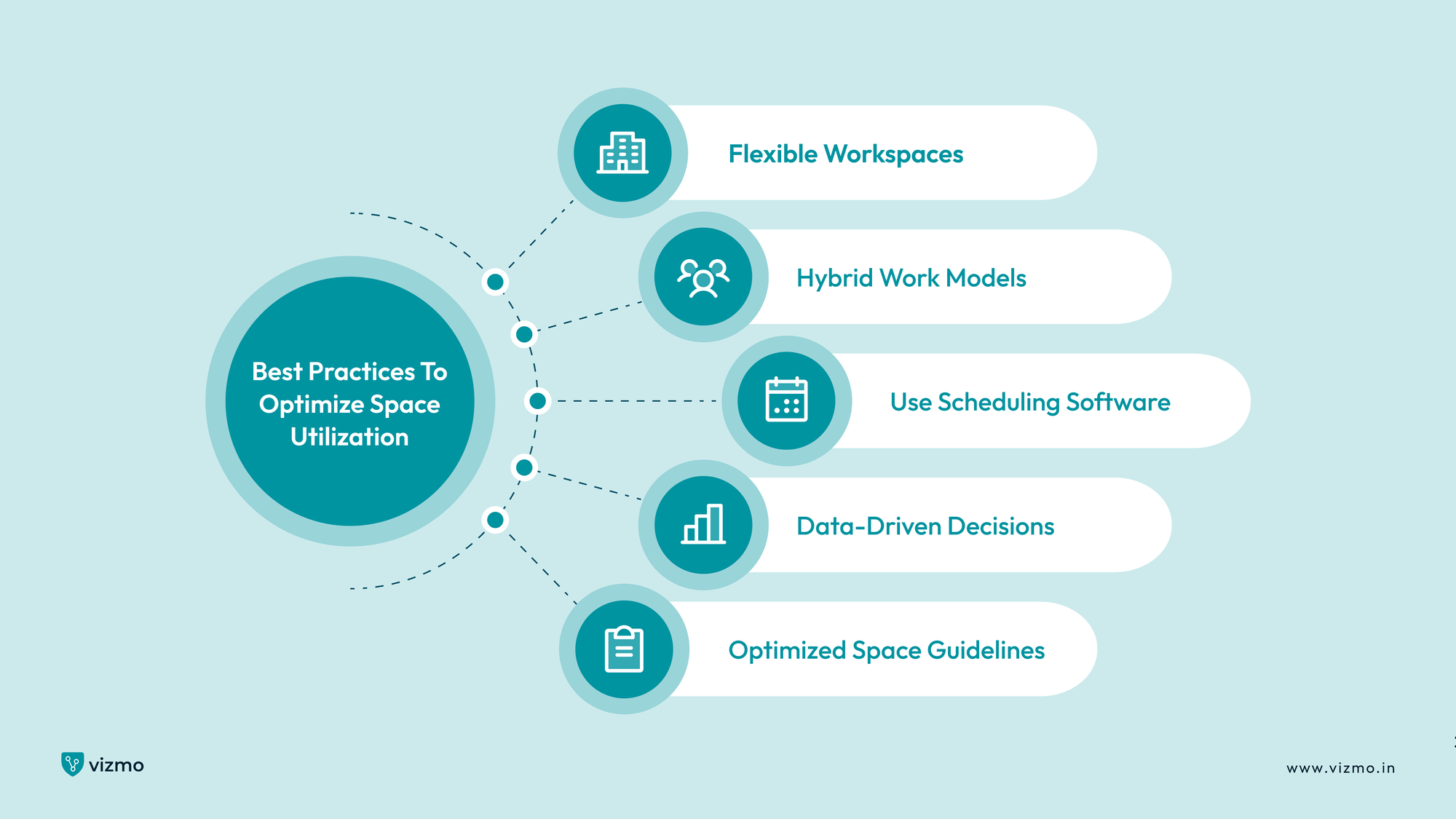
To fully unlock the potential of your workspace, it’s important to adopt strategies that not only optimize the use of your physical space but also enhance the overall work experience for your employees. By making thoughtful adjustments to how your space is utilized, you can increase efficiency, foster collaboration, and improve employee satisfaction.
Here are several practical strategies to help you make the most of your workspace, ensuring it aligns with both the needs of your team and the demands of modern work practices.
1. Flexible Workspaces
Create adaptable areas where employees have the freedom to choose how and where they work. This could mean offering open spaces for collaboration, quiet zones for focused work, or multi-purpose rooms that can be transformed depending on the need of the moment. Companies can utilize desk and meeting room booking solutions to simplify processes and ensure these spaces are used efficiently and are readily available to employees.
A study by the University of Exeter showed that employees with more control over their workspace experience better health, greater happiness, and increased productivity. Providing several workspace options allows employees to select environments that suit their tasks better and at the same time lead to greater productivity and better use of office space.
2. Hybrid Work Model
Adopting a hybrid model can greatly enhance space utilization with new trends reshaping workplaces and more employees choosing to work remotely. According to Accenture's 2021 Future of Work Study, 83% of employees preferred a hybrid work setup. This shift calls for thoughtful planning to make the most of office spaces. By adopting flexible scheduling, shared workstations, and multi-purpose areas, companies can balance the needs of both in-office and remote workers. Hybrid models help optimize space and improve employee satisfaction by offering greater flexibility and autonomy.
3. Use Scheduling Software
Utilizing scheduling software for room bookings, desk bookings and workspace reservations can significantly improve how space is managed within an office. This technology streamlines the process of reserving rooms and desks, ensuring that every available space is put to good use. By optimizing room availability and desk assignments, organizations can prevent the common issue of meeting rooms sitting empty or desks going unused.
Data from an Inc. survey reveals that nearly 40% of dedicated desk space goes unused each day. According to Learnpatch, implementing desk booking software helps tackle this inefficiency, allowing companies to cut office costs by up to 30% and save 15% to 25% on space. Additionally, scheduling software provides valuable data on peak usage times and underused areas, giving insights that help refine space allocation strategies. With these tools, companies can better adapt their layouts, improve space efficiency, and create a smoother, more organized work environment that meets the evolving needs of employees.
4. Data-Driven Decisions
Making informed decisions about space management requires ongoing data collection and analysis. Tracking key metrics like foot traffic, room occupancy, and desk usage patterns helps companies gain a clear understanding of how their workspace is being utilized. By regularly reviewing this data, you can identify underused areas, peak usage times, and any potential inefficiencies in your office layout.
These insights allow for strategic adjustments that better align with employee needs, improving overall productivity and space efficiency. Moreover, data-driven decisions support continuous optimization, ensuring that space is allocated in a way that fosters collaboration, enhances workflow, and adapts to changing work styles.
5. Guidelines and Regular Reviews for Optimized Space Use
To ensure efficient space utilization, it's important to implement clear space guidelines and regularly review space needs. Clear usage guidelines help employees understand where to go for specific tasks, such as focused work, meetings, or collaborative projects. This clarity leads to better organization and prevents certain areas from becoming overcrowded or underused.
It is equally important to routinely evaluate and adjust your office layout as your company expands and work trends shift. For example, if new teams are formed or the balance between remote and in-office work changes, adjusting the layout can better accommodate these shifts. Periodic reviews and reconfigurations keep your workspace flexible and aligned with your organization's goals, supporting productivity and efficient use of resources over time.
Challenges in Space Utilization and How to Overcome Them
Many businesses struggle to make the most of their available workspace, facing challenges that can disrupt productivity and employee satisfaction. Common issues include underutilized areas that waste valuable resources, meeting rooms that are consistently overbooked, and a general requirement of real-time data to inform decisions. These inefficiencies can lead to employee frustration, reduced operational flow, and missed opportunities to optimize space.
Addressing these challenges is essential to create a workplace that is both efficient and supportive of the team’s needs.
1. Underutilized and Overbooked Spaces
A common challenge for businesses is managing spaces that are either overbooked or underused. Meeting rooms are often reserved in advance but left vacant when plans change, leading to underutilized prime space. Research from ScienceDirect indicates that while meeting rooms are reserved for 30% of working hours, they are actually utilized only 20% of the time.
Leveraging technology can be a game changer when it comes to tackling these issues. Room booking systems, desk booking solutions, and workplace analytics software offer effective ways to optimize space usage. Additionally, advanced tools like occupancy sensors provide real-time data on how spaces are being used, offering valuable insights that help facility managers make informed decisions.
2. Lack of Real-Time Data
The mismatch in space allocation in desks and meeting rooms often results from a lack of real-time data, which hampers effective space management. When companies lack real-time data, making informed decisions about space utilization becomes a challenge. This results in inefficiencies such as unused areas or confusion about room and desk availability, disrupting the flow of work. Booking software such as meeting rooms and desk booking helps address these issues by streamlining reservations and updating their availability in real-time, enabling better space utilization and decision-making.
3. Company Training and Adapting
Shifting towards software solutions and different work setups for space management can often be challenging for companies and employees. Adopting new technologies, such as room and desk booking systems or hybrid setups, requires adjustments in daily workflows. To ensure a smooth transition, it's crucial to implement user-friendly software and provide thorough training for employees.
Offering hands-on sessions and resources can help employees become comfortable with the new tools, reducing friction and increasing adoption. Ongoing evaluations and flexible policies also play an important role, allowing companies to adapt to changing space needs and optimize their strategies. With proper training and continuous assessments, businesses can fully leverage these systems for efficient space utilization and seamless operations.
Final Thoughts
As discussed, smart space utilization is essential for reducing costs, enhancing operational efficiency, and boosting overall employee satisfaction. Space utilization isn't just about cutting costs; it's about creating an environment where your business and your team can thrive. Businesses that prioritize tracking and analyzing their space usage can continuously refine their approaches and adapt to the evolving needs of workplace dynamics. By investing in the right tools and following best practices, organizations can create a workspace that maximizes productivity and resource allocation.
To elevate your space management strategies, consider implementing solutions like Vizmo’s meeting room and desk booking systems. These tools streamline reservations, provide real-time usage data, and support flexible workplace arrangements. Enhance your space management approach today with Vizmo's tailored solutions.

FAQs
1. What is space utilization?
Space utilization refers to how effectively the available workspace is being used. It involves measuring how often and in what ways spaces like desks, meeting rooms, and collaborative areas are occupied. By optimizing space utilization, businesses can reduce costs, enhance productivity, and improve overall employee satisfaction.
2. How do you calculate office space utilization?
To calculate office space utilization, use this simple formula:
Space Utilization Rate = (Occupied Space / Total Available Space) x 100
This formula helps determine what percentage of your office space is being used effectively. For example, if 80 out of 100 desks are occupied, the space utilization rate is 80%.
3. What are the benefits of space utilization analysis?
Cost Reduction: By optimizing space, businesses can reduce overhead costs related to unused areas.
Increased Efficiency: Better space allocation leads to improved workflow, collaboration, and productivity.
Improved Employee Experience: Well-organized spaces create a comfortable and functional work environment, enhancing employee satisfaction.
4. What are the top space utilization metrics to track?
Utilization Rate: The percentage of space being used compared to the total available space.
Peak Usage: The times when space usage is at its highest, helping plan for capacity.
Average Weekly Usage: The average number of hours a space is used each week, indicating how often different areas are in demand.