Visitor Management System for Enterprises: What Is It and Why Is It Important?

1. Introduction
“Visitor management is often treated as a front-desk function. But in modern workplaces, it’s a critical security layer.”
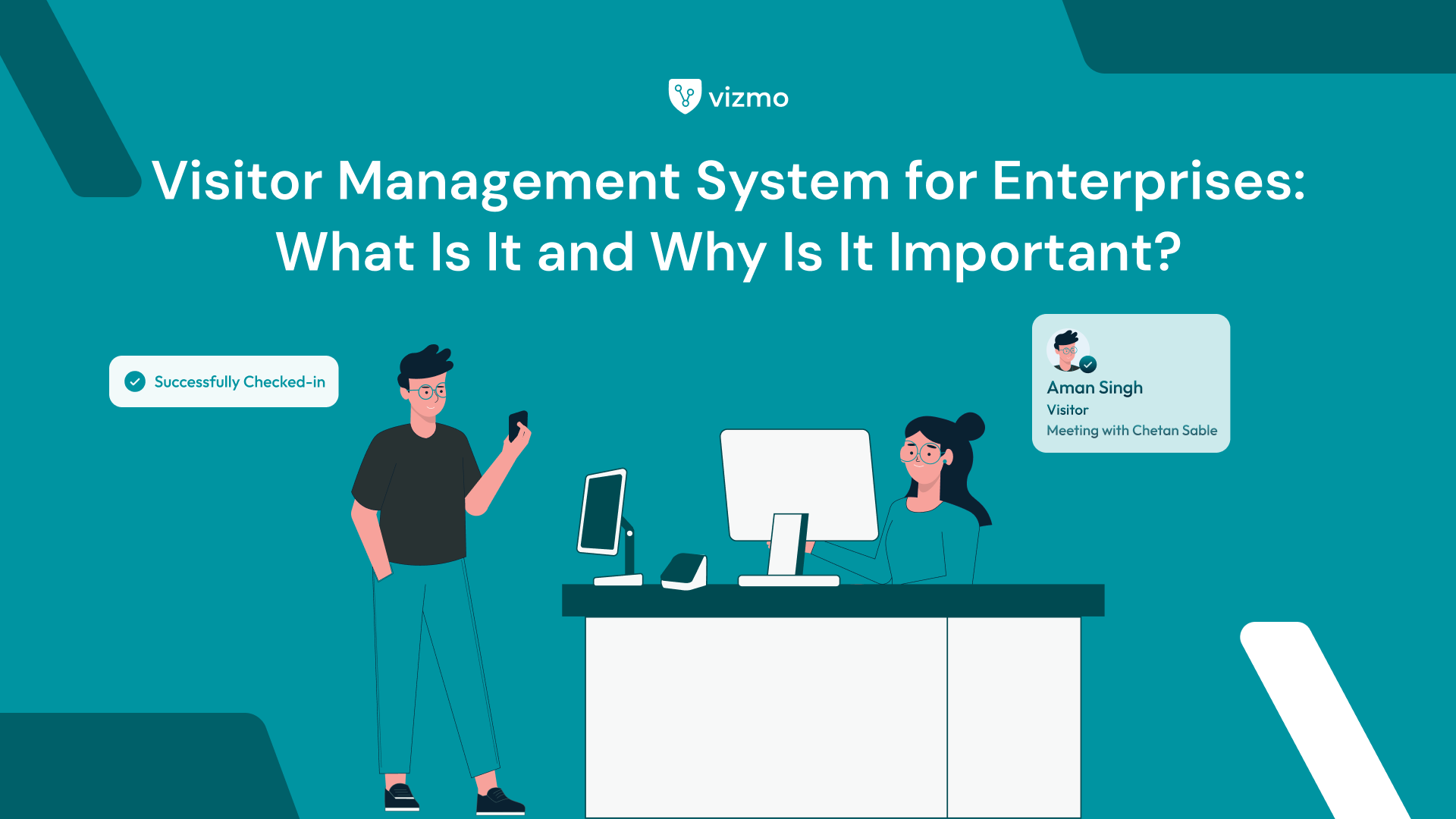
Think about the last time you visited an office. You probably walked up to reception, signed a register, waited for someone to confirm your visit, got a badge, and headed in. It’s such a familiar process that most people don’t think twice about it.
But here’s what’s interesting—this simple interaction is one of the most critical control points in any workplace.
Today’s enterprises are no longer dealing with just employees walking in and out. Offices see a constant flow of vendors, consultants, clients, auditors, candidates, and third-party staff. On any given day, dozens—or even hundreds—of non-employees may enter the workplace.
Now imagine trying to manage all of that with a paper register or a basic logbook.
It quickly becomes messy, inconsistent, and risky.
Without a structured system, organizations lose visibility over who is entering their premises, why they’re there, who they’re meeting, and how long they stay. And when something goes wrong, there’s often no reliable way to trace back what happened.
That’s why a visitor management system for enterprises has become essential.
It’s no longer just about logging entries at the front desk. It’s about creating a controlled, traceable, and secure way to manage every external interaction within the workplace. More importantly, it connects directly to broader workplace security systems—ensuring that visitor access is not just recorded, but actively managed.
In a world where security, compliance, and efficiency are all equally important, visitor management has quietly become a strategic function.
2. Why Visitor Management Is Important for Enterprises

A modern enterprise visitor management system solves multiple challenges at once—many of which organizations don’t even realize they have until they start scaling.
- It keeps the wrong people out -Let’s start with the most obvious one—security. Manual processes rely heavily on human judgment, which isn’t always reliable. A secure visitor management solution ensures that every visitor is verified, approved, and logged before they step inside. There’s no guesswork, no skipped steps, and no reliance on memory. Every entry follows a defined process, which drastically reduces the chances of unauthorized access.
- It makes audits and compliance much easier -Most enterprises today need to maintain proper records for compliance. Whether it’s internal audits, safety regulations, or legal requirements, visitor data plays a role. A visitor management system for compliance and audits ensures that all visitor information is stored digitally, complete with timestamps, host details, and visit purpose. Instead of digging through paper logs, teams can access clean, organized data instantly.
- It improves safety for everyone inside the workplace -Safety isn’t just about preventing incidents—it’s about being prepared when something happens. A workplace visitor management system gives organizations real-time visibility into who is inside the building at any moment. This becomes incredibly important during emergencies, where knowing exactly who is on-site can make evacuation faster and more effective.
- It brings order to everyday operations -Without structure, visitor management can disrupt daily workflows. Reception areas get crowded, employees are interrupted for approvals, and visitors are left waiting. With visitor management software for offices, visits can be pre-scheduled, approvals can be automated, and check-ins become quick and predictable. It removes friction from the process and keeps things running smoothly.
- It scales with your organization -What works for a small office doesn’t work for a large enterprise. As visitor volumes increase, manual systems break down. A digital visitor logbook system for enterprises handles high volumes effortlessly—automating repetitive tasks like registrations, notifications, and badge generation without increasing workload.
- It creates a strong first impression -The visitor experience says a lot about your organization. Long wait times and manual paperwork can feel outdated. A smooth, tech-enabled check-in process not only saves time but also makes your workplace look more professional, organized, and forward-thinking.
3. Hidden Risks of Poor Visitor Management

The biggest problem with poor visitor management is that the risks aren’t always visible right away. They build up quietly in the background—until something goes wrong.
- Unauthorized access becomes easier than you think -Without proper verification processes, it’s surprisingly easy for someone to walk in using incomplete or incorrect information. In busy workplaces, these gaps often go unnoticed, creating serious security vulnerabilities.
- Manual logs are unreliable -Paper registers may seem simple, but they come with a lot of issues. Handwriting is often unclear, details are missing, and sometimes entries aren’t recorded at all. -When you actually need this data—during an audit or investigation—it’s either incomplete or unusable.
- There’s no real-time visibility -One of the biggest limitations of manual systems is the lack of live information. Without a digital visitor management system, organizations don’t have a clear picture of who is currently inside the facility. This delay in visibility can slow down response times during critical situations.
- Compliance gaps start to appear -Inconsistent or missing visitor data can lead to problems during audits. Without a structured visitor management system for compliance and audits, organizations risk failing inspections, facing penalties, or dealing with reputational damage.
- Front desk operations become inefficient -Reception teams often bear the brunt of manual processes. Logging entries, calling employees, issuing passes—it all takes time. During peak hours, this leads to long queues, delays, and frustration for both visitors and staff.
- There’s no clear audit trail -When something goes wrong, tracing visitor movement becomes difficult. Without proper records, there’s limited accountability, making it harder to investigate incidents or identify gaps in security.
Over time, these issues don’t just affect security—they impact productivity, compliance, and overall workplace experience.
4. Real-World Scenario: How a Mid-Sized Pharma Firm Regained Control of Its Facility
Industry: Pharmaceuticals & R&D Employees: ~1,200 | Daily visitor footfall: 80–120 Location: Pune, Maharashtra
A fast-growing pharma manufacturer in Pune had scaled from a 200-person office to a full R&D and manufacturing hub within five years. But their visitor management process hadn't kept pace with that growth.
During a routine internal security audit in early 2024, the security team uncovered a significant problem — over a three-month period, nearly 340 visitor entries were incomplete or missing from their paper register. Some had no host name recorded. Others had no exit time. A handful had no ID verification at all.
None of it was intentional. The front desk team was simply overwhelmed. On busy days — when vendor deliveries, client visits, and candidate interviews overlapped — maintaining accurate manual records while handling calls, couriers, and employee queries wasn't realistic.
The real turning point came during a third-party compliance audit. The auditor requested visitor records for a specific date range, and the team couldn't produce a clean, timestamped log. No data breach had occurred — but it was a near miss, and it cost the organization significant time, internal scrutiny, and credibility with the auditor.
What changed after implementing a digital visitor management system:
Within six weeks of going live, the difference was measurable. Pre-registration ensured that nearly 70% of visitors were already logged before they arrived on-site. Automated host notifications cut front desk interruptions by half. And for the first time, the security team had a live dashboard giving them real-time visibility into who was inside the facility at any given moment.
When the next compliance audit came around — just three months later — the team pulled complete visitor records for any requested date range in under two minutes. The auditor flagged zero discrepancies.
The issue was never a single dramatic incident. It was the quiet accumulation of small gaps — and the recognition that those gaps would only get worse as the facility continued to scale.
5. How a Modern Visitor Management System Solves This
This is where modern solutions like Vizmo step in and completely transform how visitor management works.
Instead of a fragmented, manual process, everything becomes connected, automated, and easy to manage.
Pre-registration is one of the simplest yet most impactful features. Visitors can be added to the system before they even arrive. This means shorter wait times, smoother entry, and better planning for meetings. It also ensures that every visitor is expected—no surprises.
ID verification strengthens security at the entry point. Rather than relying on visual checks, a secure visitor management solution ensures that visitor identities are properly validated and recorded. This reduces the risk of unauthorized access and creates a reliable record for future reference.
Real-time tracking gives organizations complete visibility. At any moment, you can see who is inside the building, who they’re meeting, and how long they’ve been there. This level of awareness is especially valuable in large workplaces where manual tracking isn’t practical.
Automated approvals remove unnecessary delays. Instead of reception teams calling employees, hosts receive instant notifications and can approve visits with a single click. This speeds up the entire process and reduces dependency on manual coordination.
Another important feature is access control integration. Visitors don’t just enter the building—they are given controlled access to specific areas. This ensures that movement within the workplace is restricted and monitored, adding another layer of security.
Then there’s the power of data. A digital visitor management system doesn’t just store information—it helps organizations understand it. You can identify visitor trends, track peak hours, and optimize how your front desk operates.
And finally, there’s the experience. A fast, seamless check-in process makes visitors feel welcomed and valued. It removes friction, reduces waiting time, and creates a more professional environment.
What used to take several manual steps now happens in seconds—and with far greater accuracy.

6. Conclusion
“Visitor management is no longer administrative—it’s strategic.”
What once felt like a routine front-desk activity has evolved into something much bigger. Today, a visitor management system for enterprises plays a direct role in how organizations manage security, ensure compliance, and maintain smooth day-to-day operations.
It’s no longer just about recording who walks in and out. It’s about having complete visibility into your workplace—knowing who is inside, why they’re there, who they’re meeting, and how long they stay. That level of clarity is what helps organizations move from reactive problem-solving to proactive control.
More importantly, visitor management now sits at the intersection of multiple business priorities. It supports workplace security systems by controlling access, strengthens compliance by maintaining accurate records, and improves operational efficiency by reducing manual effort. Few systems touch so many aspects of an organization so directly.
Enterprises that continue to rely on manual processes often don’t realize the gaps until something goes wrong—an audit issue, a security lapse, or an operational bottleneck. And by then, the cost of fixing those gaps is much higher than preventing them in the first place.
On the other hand, organizations that adopt a digital visitor management system gain more than just efficiency. They gain control. They gain visibility. And most importantly, they gain confidence in how their workplace operates every single day.
As offices become more dynamic—with hybrid work, multiple stakeholders, and increasing compliance requirements—the need for structured visitor management will only grow. It won’t remain a front-desk responsibility; it will continue to be a core part of enterprise infrastructure.
Because at the end of the day, every workplace has entry points. And every entry point is a potential risk—or an opportunity to build a more secure, well-managed environment.
The difference lies in how well you manage it.
6. Frequently Asked Questions (FAQs)
Q1. What is a visitor management system and how does it work for enterprises?
A visitor management system (VMS) is a digital platform that replaces manual logbooks with an automated, centralized solution. It manages the entire visitor lifecycle — pre-registration, ID verification, host notification, badge printing, and exit logging — from a single interface, while integrating with access control systems to restrict movement within the facility.
Q2. How is a digital visitor management system different from a paper logbook?
A paper logbook captures basic entry details and little else. A digital system validates identity, sends automated host alerts, generates access badges, and produces audit-ready reports on demand. It eliminates human error, offers real-time visibility, and keeps records that are searchable and always complete.
Q3. How does a visitor management system help with compliance and audits?
Every visitor interaction is recorded with timestamped, tamper-proof data — including host details, visit purpose, and ID verification. When auditors request records, teams can retrieve clean, organized reports instantly rather than sorting through physical registers. This is especially critical in regulated industries like pharma, manufacturing, and finance.
Q4. Can a visitor management system integrate with existing access control systems?
Yes. Most enterprise-grade platforms integrate directly with access control systems, allowing organizations to grant visitors entry to specific zones only. Visitor movement within the facility is not just recorded — it's actively restricted and monitored, adding a measurable layer of physical security.
Q5. Is a visitor management system suitable for large, multi-location enterprises?
Large enterprises benefit the most from a centralized visitor management platform. It ensures consistent entry protocols across all locations, gives security teams a unified view of visitor activity, and scales effortlessly as visitor volumes grow — without adding to the front desk workload.
Q6. What industries benefit most from enterprise visitor management software?
Industries with strict security and compliance requirements see the greatest impact — pharmaceuticals, manufacturing, IT parks, financial services, healthcare, and government facilities. These sectors deal with sensitive environments, high visitor footfall, and regulatory obligations where accurate visitor records are non-negotiable.