What Is Access Control in Factories? Benefits, Security Applications & Best Practices

Introduction
Factories are dynamic, fast-moving environments where operations rarely pause. There are multiple entry and exit points, employees working across rotating shifts, and contractors or vendors coming in for specific tasks. On any given day, hundreds—sometimes thousands—of movements happen across the facility.
But with this level of activity comes complexity.
Without a structured way to manage access, it becomes difficult to answer even the most basic questions: Who is inside the facility right now? Are they authorized to be there? Are they in the right zone? And if something goes wrong, can you trace it back quickly?
This lack of visibility creates real risks. Unauthorized access can lead to theft, data breaches, or operational disruptions. Safety incidents can occur when untrained personnel enter hazardous areas. And without proper tracking, investigations and audits become slow and unreliable.
Traditionally, factories have relied on manual processes or basic security measures to manage entry. But as operations scale and become more complex, these methods start to fall short.
This is where access control in factories becomes essential. It plays a critical role in modern industrial security systems, helping organizations move beyond basic entry control to a more structured and intelligent approach.
It’s not just about restricting entry anymore. It’s about building a system that brings together security, safety, and operational control—one that gives you real-time visibility into movement across your facility and ensures that access is always aligned with roles, responsibilities, and timing.
Another important shift is how factories are now expected to balance security with efficiency. Slowing down operations at entry points is no longer acceptable, especially in high-throughput environments. Modern access control systems are designed to enable fast, frictionless movement while still maintaining strict security protocols. This balance is what makes them indispensable in today’s manufacturing landscape.
What Is Access Control in Factories?
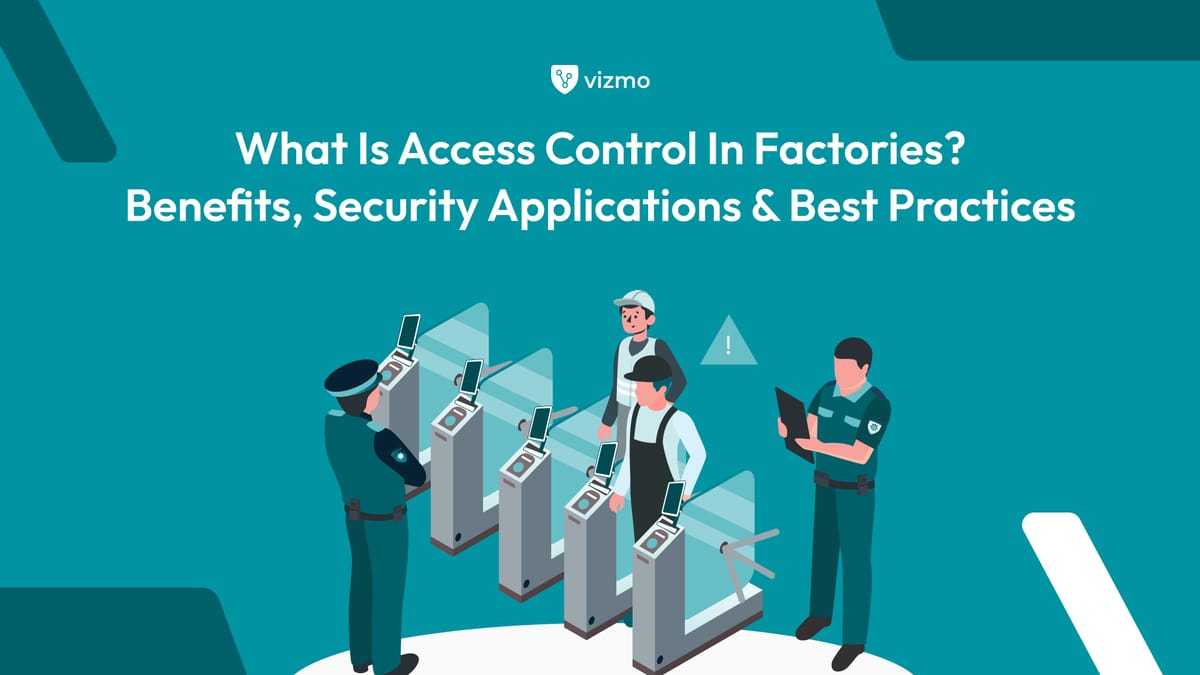
Access control in factories is a security system that regulates who can enter specific areas within a manufacturing facility based on predefined permissions, roles, schedules, or credentials. These systems use technologies such as face recognition, RFID cards, mobile credentials, or biometric authentication to ensure that only authorized individuals can access designated zones.
Modern industrial access control systems do more than restrict entry. They provide real-time visibility into workforce movement, maintain detailed audit trails, support compliance requirements, and integrate with broader workplace security systems. By ensuring the right people have access to the right areas at the right time, access control strengthens security, safety, and operational efficiency across manufacturing environments.
How Access Control Systems Work in Factories
Modern access control systems follow a structured process to verify identity and manage entry permissions.
- An employee, contractor, or visitor approaches an entry point.
- The system verifies identity using face recognition, RFID cards, mobile credentials, or biometric authentication.
- Access permissions are checked against predefined rules such as role, department, shift timing, or zone authorization.
- The system grants or denies access instantly.
- Every event is automatically recorded with timestamps and location details.
- Security teams can monitor activity through a centralized dashboard in real time.
This process enables organizations to maintain secure access control in factories while reducing manual intervention and improving operational visibility.
Why Traditional Security Measures Fall Short
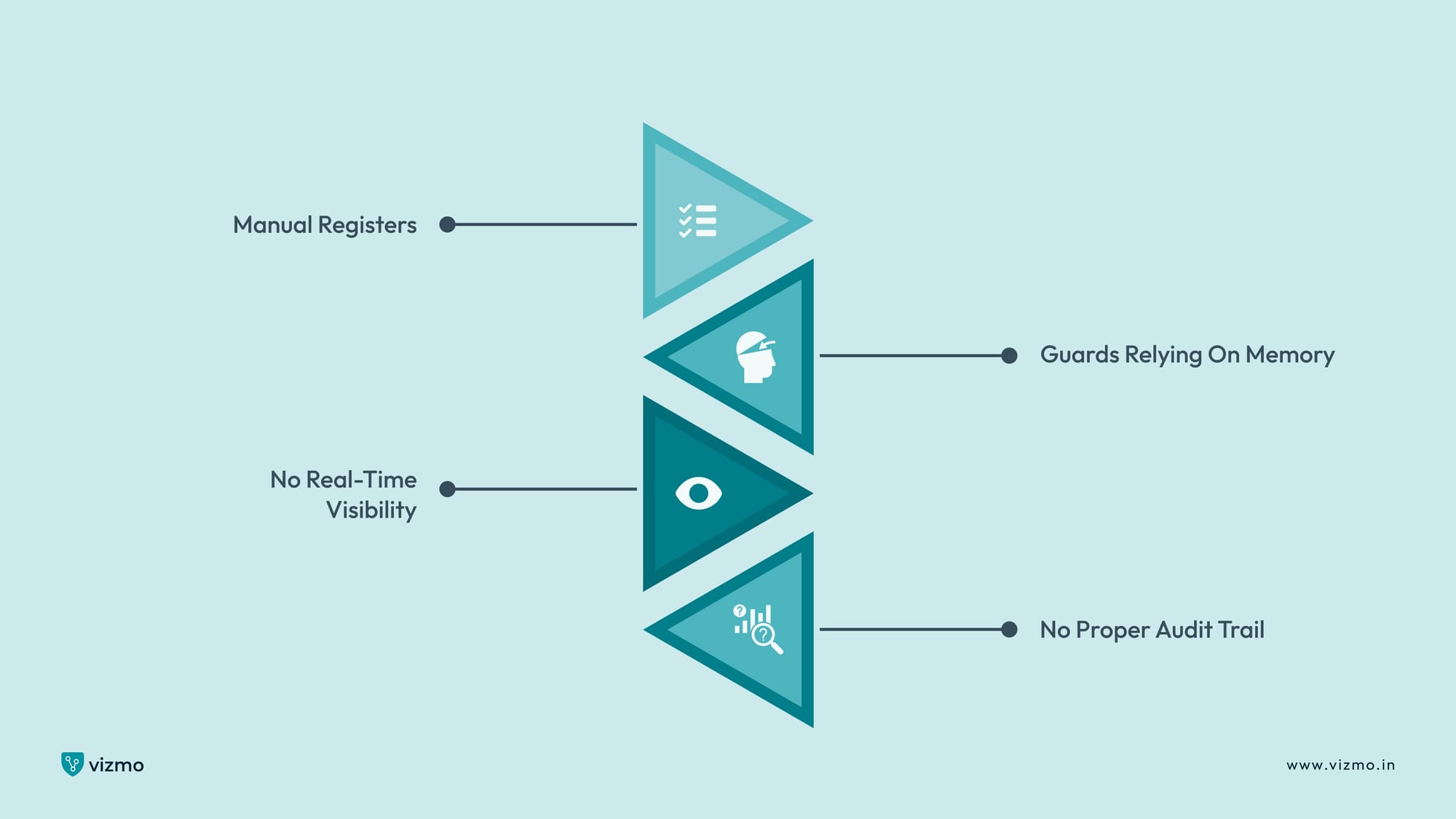
- Manual registers - Paper-based logs are often incomplete or inaccurate. Entries can be skipped, handwriting can be unclear, and there is no way to verify if the information is genuine.
- Guards relying on memory - Security personnel are expected to recognize employees and visitors, but in large facilities with frequent movement, this becomes unreliable and prone to error.
- No real-time visibility - There is no instant way to know who is currently inside the facility or which areas are occupied, making it difficult to respond quickly during incidents.
- No proper audit trail - Retrieving historical data for audits or investigations is time-consuming and often inconsistent, leading to gaps in compliance and accountability.
Why Access Control Is Important in Factories
Prevents Unauthorized Entry
Access control systems play a key role in reducing unauthorized entry in factories using access control, ensuring that only verified individuals can access the facility or specific zones.
Protects High-Risk Areas
Critical zones such as production lines and storage areas remain protected, allowing only trained personnel to enter and operate safely.
Ensures Employee Safety
By restricting access to hazardous zones, organizations can significantly improve employee safety in factories and reduce workplace incidents.
Enables Real-Time Visibility
Real-time tracking enables teams to monitor movement across the facility, supporting real-time access control monitoring and faster response during emergencies.
Supports Compliance & Audits
Access logs help meet regulatory requirements, making access control systems for factory compliance and audits an essential part of modern operations.
Types of Access Control Systems Used in Factories
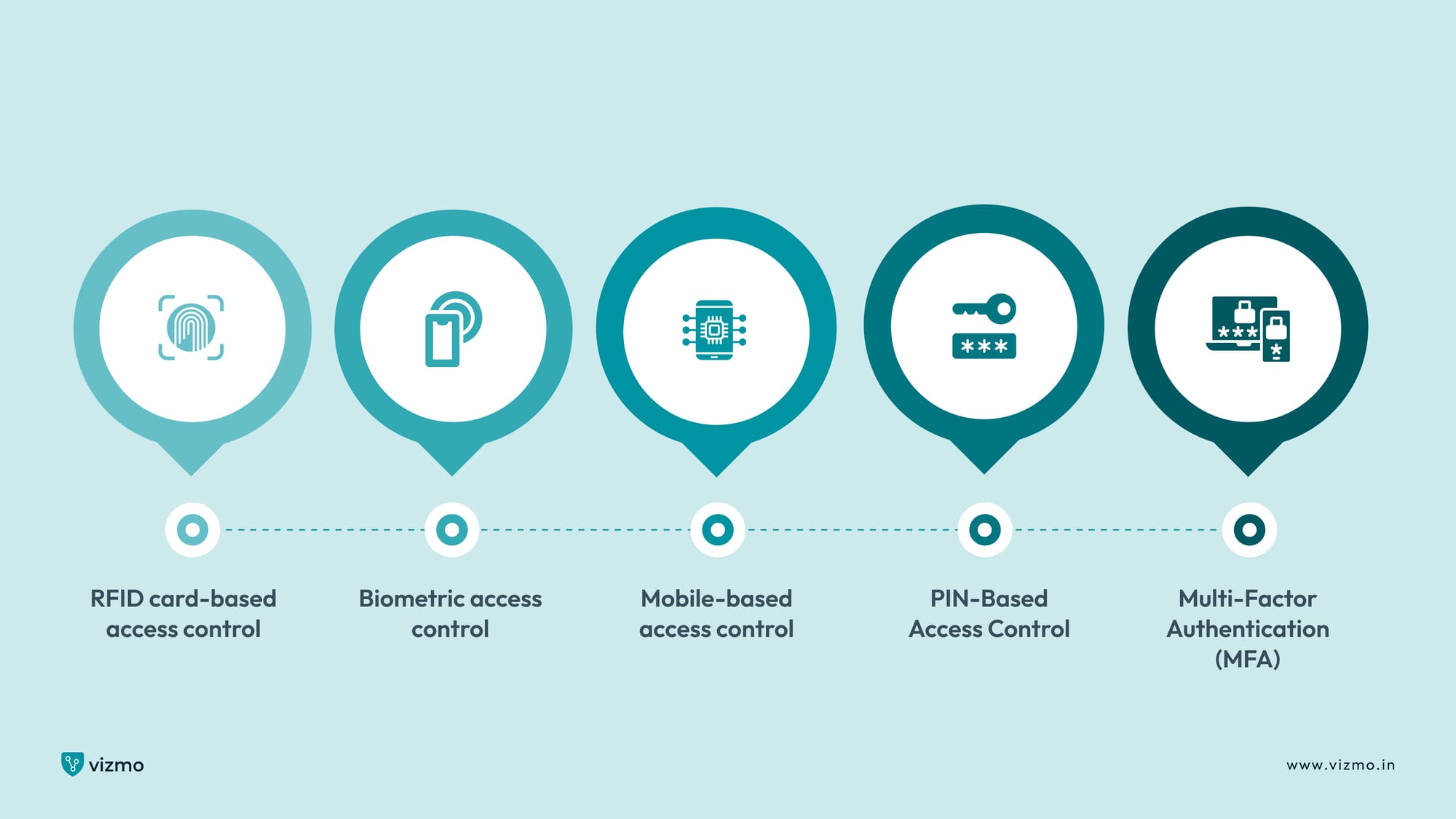
RFID Card-Based Access Control
Employees use access cards to enter approved zones. RFID systems are widely used due to their simplicity and scalability.
Biometric Access Control
Uses face recognition, fingerprint scanning, or other biometric identifiers to verify identity. This approach eliminates credential sharing and improves security.
Mobile-Based Access Control
Authorized users gain access through mobile credentials stored on smartphones, reducing dependency on physical cards.
PIN-Based Access Control
Users enter unique codes to gain access. This method is commonly used for specific restricted areas.
Multi-Factor Authentication (MFA)
Combines two or more authentication methods, such as face recognition and mobile verification, to strengthen security for high-risk zones.
The right access control solution depends on facility size, security requirements, compliance needs, and operational workflows.
Benefits of Access Control Systems in Factories
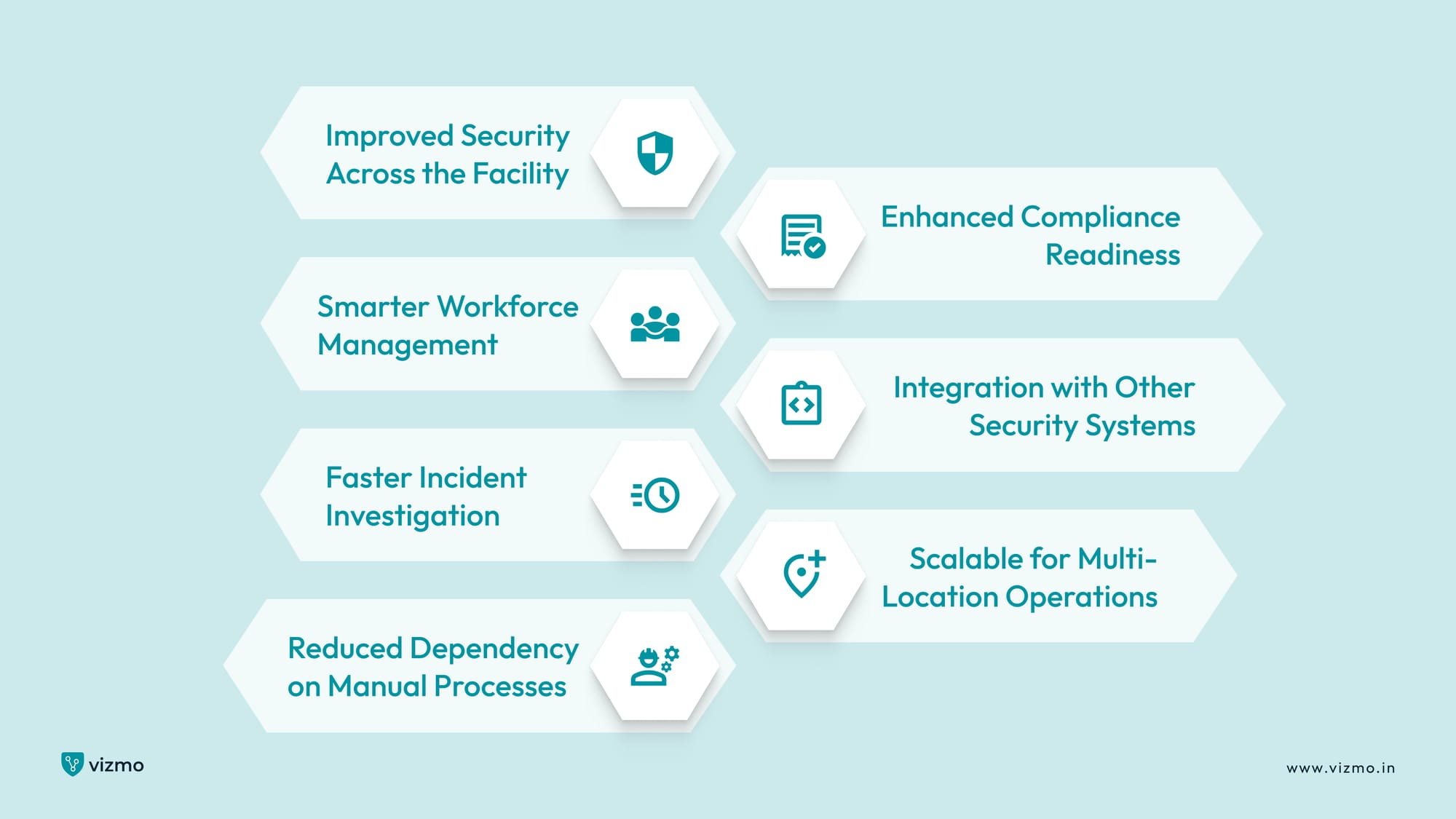
Improved Security Across the Facility
A structured access control system strengthens overall facility security by minimizing unauthorized movement.
Better Workforce Management
Helps in managing workforce access in industrial facilities, especially in shift-based environments.
Faster Incident Investigation
Detailed logs allow teams to quickly trace events and understand what happened, improving response times.
Reduced Dependency on Manual Processes
Automation removes the need for manual logs, reducing errors and improving efficiency.
Enhanced Compliance Readiness
Digitally recorded data ensures organizations are always audit-ready.
Integration with Other Security Systems
Seamless access control integration with video surveillance enhances visibility and context during incidents.
Scalable for Multi-Location Operations
Supports centralized control, making it easier to manage multiple facilities through centralized access control management.
How a 24/7 Auto Components Manufacturer Tightened Zone-Level Security
A mid-sized automotive components manufacturer having 2000+ employees operating round-the-clock had a problem that wasn't immediately obvious — their access control was technically in place, but it wasn't working the way it should.
The facility ran three rotating shifts with over 800 workers per shift. Contractors came in for maintenance windows. Supervisors moved between zones. And the security team relied on a combination of ID card swipes and manual guard checks at internal checkpoints.
On paper, it looked functional. In practice, it had significant gaps.
During an internal review, the team discovered that the same contractor ID card had been used to access the restricted production zone on 11 separate occasions over two months — by at least three different individuals. Credential sharing had become normalized, and no one had flagged it because the card was always "valid."
Beyond that, there was no reliable way to know which zones were occupied during a given shift. During a minor fire alarm on the night shift, the evacuation team had no clear picture of how many people were in the chemical storage area. A manual headcount took over 20 minutes — far too long for a real emergency.
What changed after implementing a biometric access control system:
The facility replaced card-based entry at all critical zone entry points with face recognition. Credential sharing became impossible overnight. Access permissions were tied directly to shift schedules — a worker assigned to the morning shift could not enter the facility outside those hours without a supervisor override.
Within the first month, unauthorized zone entries dropped to zero. The security dashboard gave the team live visibility into occupancy across every zone at any moment. When the facility's annual safety audit came up, the team produced complete zone-wise access logs for the entire year in minutes.
More importantly, during a subsequent emergency drill, evacuation headcount was completed in under four minutes — compared to the 20-plus minutes it had taken during the actual alarm.
The shift wasn't dramatic. It was systematic. And that's exactly what made it sustainable.
What to Look for in a Factory Access Control System
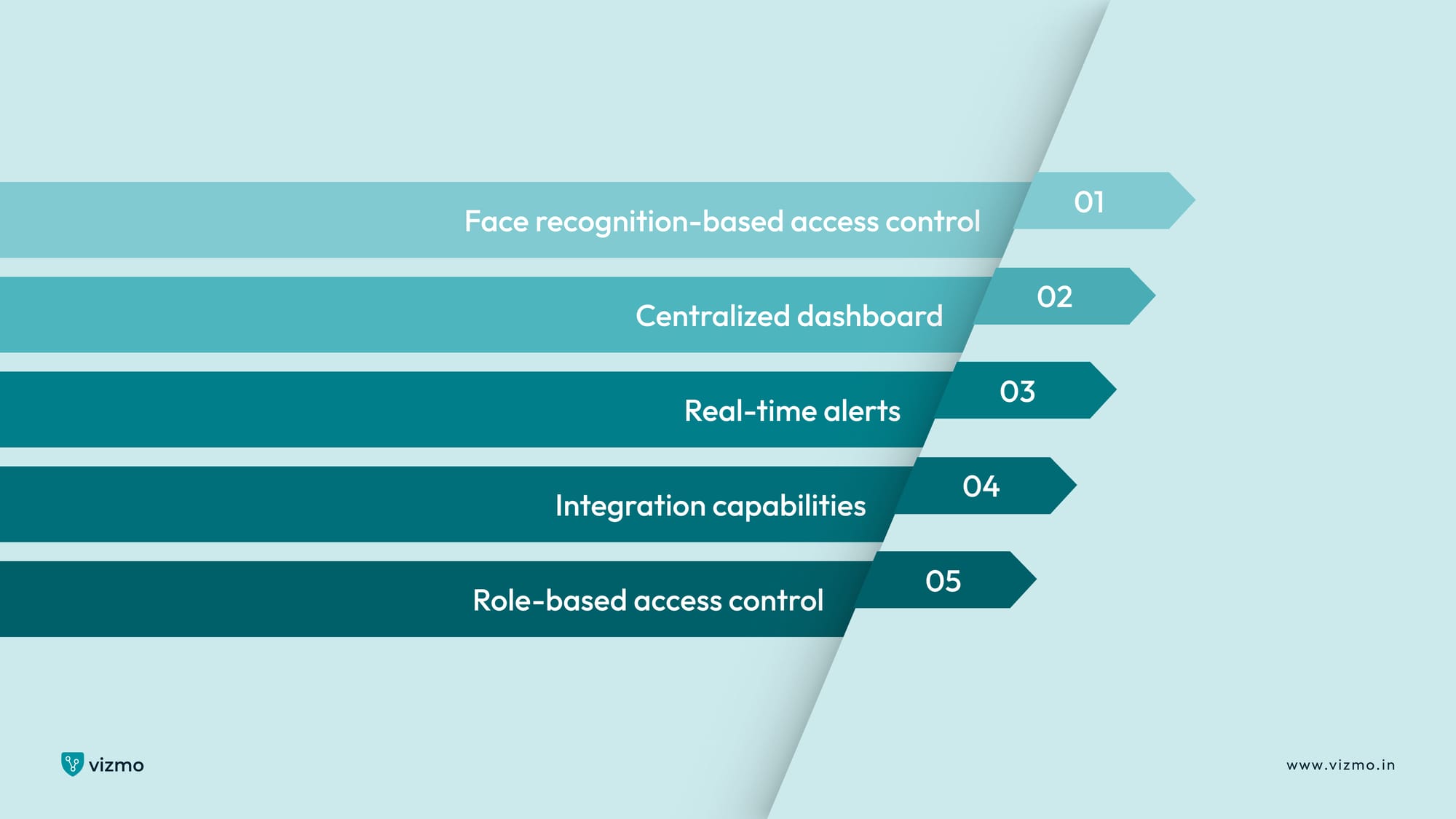
- Face recognition-based access control A key component of modern secure access control systems for factories, offering contactless and reliable authentication.
- Centralized dashboard Enables centralized access control management for better visibility across locations.
- Real-time alerts Supports proactive action through real-time access control monitoring.
- Integration capabilities Ensures smooth access control integration with other systems.
- Role-based access control Strengthens employee access management by aligning permissions with roles.
Conclusion
As factories continue to scale and evolve, the way they manage security must evolve with them. Traditional approaches are no longer enough to handle the complexity of modern operations.
Today, access control in factories is a core part of efficient and secure operations. It not only strengthens industrial security systems but also improves visibility, accountability, and decision-making across the organization.
From reducing risks to enabling smarter workforce management, the impact goes far beyond security. It helps organizations stay compliant, operate efficiently, and respond faster to incidents.
What’s equally important is the long-term value it brings. With consistent data, better control, and improved transparency, organizations can continuously refine their processes and strengthen their overall operational strategy.
In the long run, investing in the right access control solutions for manufacturing plants is not just about protection—it’s about building smarter, more resilient operations. And as factories become more connected and data-driven, access control will continue to play a central role in shaping the future of industrial security.

Frequently Asked Questions (FAQs)
Q1. What is access control in factories and why is it important?
Access control in factories refers to systems that regulate who can enter specific areas within a facility, using technology like biometrics, ID cards, or mobile-based authentication. It ensures that only authorized individuals access the right zones at the right times — improving security, worker safety, and operational accountability across the facility.
Q2. How does biometric access control improve security over traditional ID cards?
Unlike ID cards, biometric access control — particularly face recognition — ties entry directly to an individual's identity. Cards can be shared, lost, or misused, but biometrics cannot. This eliminates credential sharing, strengthens zone-level security, and creates a more reliable audit trail of who actually entered a specific area.
Q3. How does access control help manage shift-based workforces in factories?
Access permissions can be configured to align with shift schedules, ensuring employees can only enter during their designated hours. This removes the need for manual monitoring at entry points, reduces unauthorized access during off-hours, and gives operations teams clear visibility into workforce movement across every shift.
Q4. Can factory access control systems integrate with video surveillance and other security tools?
Yes. Modern access control systems are designed to integrate with video surveillance, attendance management, and contractor tracking platforms. This creates a connected security ecosystem where access events are automatically linked to camera footage — making investigations faster and compliance reporting more comprehensive.
Q5. How does access control support factory compliance and audits?
Every entry and exit is automatically logged with timestamps, zone details, and individual identity. When auditors request records, teams can retrieve complete, accurate data instantly — eliminating the inconsistency of manual registers. This is especially valuable in regulated manufacturing environments where visitor and worker movement must be fully documented.
Q6. What should organizations look for when choosing an access control system for a manufacturing plant?
Key factors include face recognition-based authentication, role-based access permissions, real-time monitoring with live alerts, integration capability with existing security and HR systems, and a centralized dashboard for multi-location management. The system should also be scalable enough to handle high volumes of daily movement without slowing down operations.
Q7. What is the difference between biometric access control and card-based access control?
Biometric access control verifies identity using unique physical characteristics such as facial recognition or fingerprints, while card-based systems rely on access cards. Since biometric credentials cannot be shared or misplaced, they generally provide a higher level of security and accountability.
Q8. Can access control systems help during emergency evacuations?
Yes. Modern access control systems provide real-time occupancy visibility, helping emergency response teams quickly determine who is inside the facility and which areas may require evacuation assistance.