What Is Cloud-Based Video Surveillance?


In today's digital and tech-savvy era, security isn't just about having cameras on your premises, it's about how intelligently you monitor, manage, and analyze your security data. Recent studies show that 69% of companies have moved or are moving their IT systems to the cloud, including camera systems, highlighting the importance of security in the workplace, and leading businesses to look for solutions that are both strong and efficient.
According to the Verified Market Report, the Cloud Video Surveillance Market has been experiencing significant growth, with its value estimated at $4.42 billion in 2023. By 2030, it’s projected to reach an impressive $10.70 billion, driven by a compound annual growth rate (CAGR) of 14.2% between 2024 and 2030.
But why are cloud-based solutions, including surveillance systems, on the rise?
The answer is rooted in their ability to revolutionize security management. Moving beyond the constraints of traditional systems with their local storage and limited access, cloud surveillance harnesses the power of internet-based platforms for seamless storage, processing, and management of video footage. This shift from conventional CCTV systems introduces unprecedented advantages in flexibility, scalability, and accessibility, transforming how businesses approach their security needs.
The adoption of cloud technology in security systems mirrors a broader digital transformation across industries. From retail establishments to manufacturing facilities, organizations are increasingly recognizing the value of cloud-based solutions. This shift isn't merely about storage it's about creating intelligent, connected security ecosystems that can adapt to evolving security challenges.
Noting the importance of cloud-based surveillance systems, In this blog, we'll explore the fundamental concepts of What Is Cloud-Based Video Surveillance, including:
- What is Cloud-Based Video Surveillance
- How Does Cloud Video Surveillance Work
- Benefits of Cloud-Based Video Surveillance
- Challenges of Using Cloud Surveillance in Different Industries
- The Future of Cloud-Based Video Surveillance

What is Cloud-Based Video Surveillance?
Cloud-based video surveillance represents a modern evolution in security technology where surveillance cameras connect directly to the internet, transmitting footage to secure cloud servers instead of traditional local storage devices. This innovative approach allows organizations to capture, store, and manage security footage in remote data centers, making it accessible from anywhere while maintaining high-security standards.
At its most basic level, cloud surveillance works by having security cameras send their footage over the network to cloud servers, eliminating the need for on-site storage systems. For example, an organization with multiple locations across different cities can now centrally monitor and manage all its security cameras through a single cloud platform, accessing live feeds and recorded footage 24/7 from any authorized device.
The conventional approach to video surveillance relies heavily on local infrastructure, presenting several challenges. Organizations must maintain expensive DVR/NVR hardware, manage limited storage capacity, and deal with footage accessibility issues. When storage runs out, older footage is typically overwritten, risking the loss of potentially crucial evidence. Additionally, these systems require on-site maintenance, regular manual updates, and physical presence for footage review, making multi-location management particularly cumbersome.
According to Cognitive Market Research, the growth of cloud-based video surveillance is driven by rising demand for remote monitoring and cost-effective solutions accessible to small and medium-sized businesses. While data privacy remains a challenge, compliance with regulations like GDPR and the shift to contactless monitoring during the pandemic has accelerated the adoption.
Whereas Cloud-Based Surveillance replaces this with:
- Remote Storage: Instead of depending on local DVRs or hard drives, footage is automatically stored in redundant cloud servers, eliminating the risk of data loss and storage limitations
- Universal Accessibility: Security teams can access footage from any device with an internet connection, enabling real-time monitoring and quick incident response regardless of location
- Centralized Management: Organizations can monitor and manage multiple locations through a single interface, streamlining security operations and reducing administrative overhead
- Enhanced Security: Advanced features like two-factor authentication, encrypted transmission, and automated backups ensure footage remains secure and protected from unauthorized access
- Automatic Updates: System improvements and security patches are deployed automatically across all devices, eliminating the need for on-site maintenance visits
- Regulatory Compliance: Cloud systems inherently maintain high standards of data protection and storage requirements, helping organizations meet industry regulations without additional effort
How Does Cloud Video Surveillance Work?
Cloud video surveillance captures video footage through connected cameras and transmits it to secure cloud servers for storage and management. Here’s how the process unfolds:
First, cameras, usually IP cameras, capture video footage in real-time. Unlike traditional analog cameras that require local recording devices like DVRs, IP cameras connect directly to the internet, making sending footage to the cloud easy. These cameras often come with features like high-definition recording, remote access, and built-in analytics, which set them apart from their traditional counterparts.
Once the footage is captured, it’s encrypted and securely transmitted to cloud servers, where it is stored and processed. The cloud eliminates the need for physical storage devices, ensuring that video footage is safe from hardware failures or theft. Users can easily access this footage through intuitive interfaces, such as web browsers or mobile applications. These platforms allow users to view live streams, review recorded videos, and even manage camera settings remotely. The cloud-based setup not only enhances security but also offers reliable backups and virtually limitless storage for video footage, ensuring your data is always accessible and safe from potential hardware failures or physical damage.
Benefits of Cloud-Based Video Surveillance
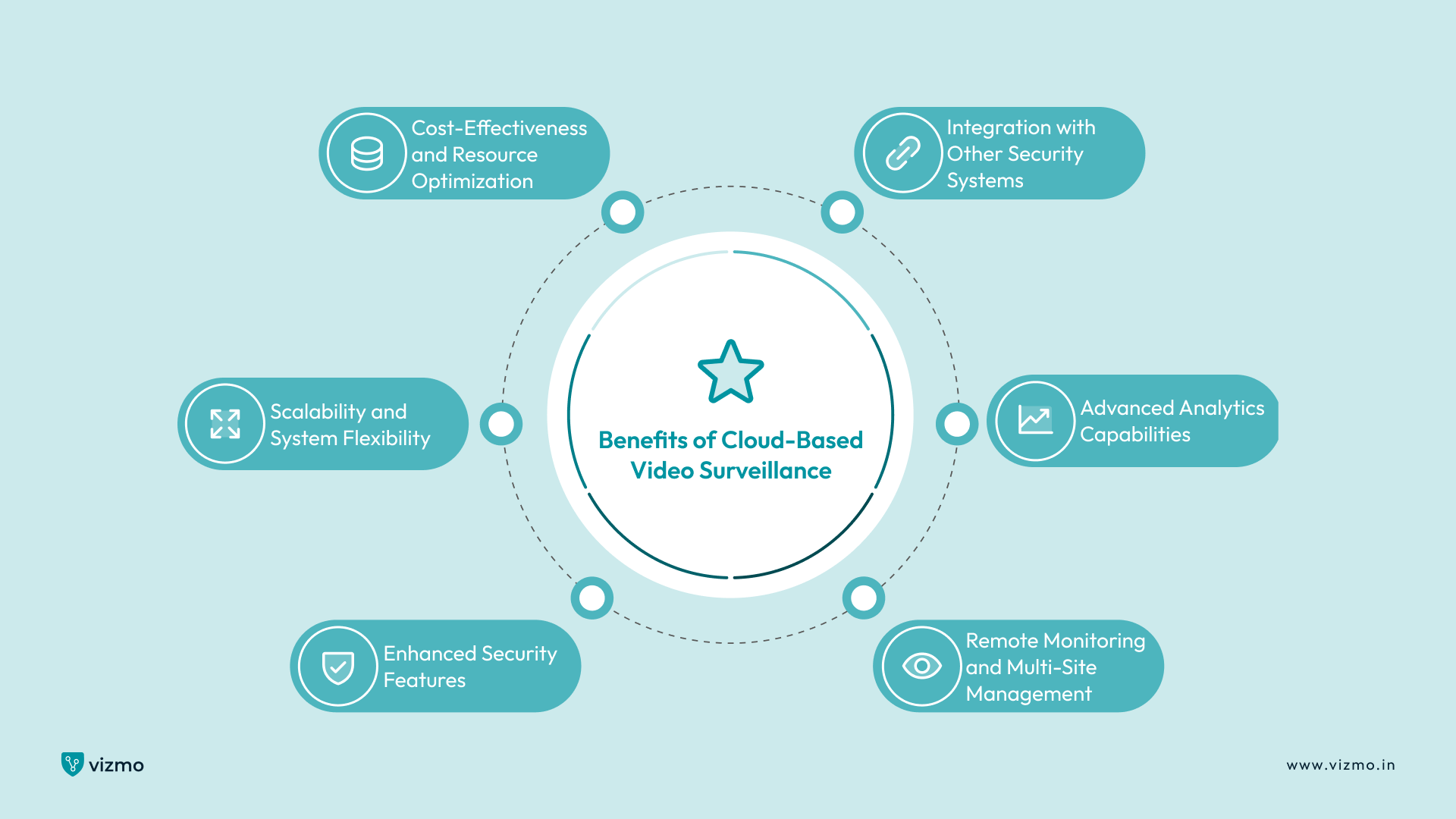
Cloud-based video surveillance offers more than just modern convenience, it transforms the way organizations manage security. According to Gartner, more than 50% of organizations now use cloud services, making the move to cloud video surveillance a clear and popular choice for many businesses.
Let’s explore the key benefits of cloud-based video surveillance to better understand why it’s a smart choice for businesses today:
1. Cost-Effectiveness and Resource Optimization
Cloud-based video surveillance significantly reduces upfront infrastructure costs and ongoing maintenance expenses. There’s no need for heavy investments in local storage servers, extensive networking equipment, or dedicated IT resources. The pay-as-you-grow model allows businesses to start small and scale as needed. Storage capacity can also be adjusted on demand, eliminating the need for additional hardware and enabling better resource allocation with predictable operational costs.
2. Scalability and System Flexibility
Cloud surveillance systems are designed for seamless scalability. Adding new cameras or expanding to multiple locations is straightforward, requiring minimal configuration. New devices automatically inherit security policies and storage settings, ensuring consistent management. This flexibility is especially valuable for growing businesses or those with seasonal security demands, as the system can easily adapt to changing requirements without hardware upgrades or complex reconfigurations.
3. Enhanced Security Features
Modern cloud systems offer advanced security capabilities that go beyond traditional recording. Real-time alerts notify personnel of potential incidents, while encryption and authentication protocols ensure sensitive footage is protected. Automatic backups safeguard data integrity, and secure remote access enables security teams to monitor live feeds or review footage from any device, ensuring efficient incident response and investigation.
4. Remote Monitoring and Multi-Site Management
Cloud-based systems provide the ability to monitor multiple sites simultaneously through a single, user-friendly interface. This capability enhances operational efficiency, especially for organizations managing security across several locations. Remote access allows immediate responses to incidents regardless of physical location, empowering security teams to act swiftly.
5. Advanced Analytics Capabilities
AI-powered analytics in cloud video surveillance unlock powerful insights. These systems can detect specific behaviors, identify objects, and analyze patterns to generate actionable data. According to the Verified Market Report, the integration of video analytics is one of the essential components of the cloud video surveillance ecosystem, significantly enhancing the effectiveness of surveillance systems. Analytics integration in video surveillance is invaluable for improving security operations and making data-driven decisions.
6. Integration with Other Security Systems
Cloud systems excel at integrating with other security technologies to create a unified ecosystem. When combined with visitor management systems, access control systems, alarm systems, or building management platforms, cloud surveillance provides enhanced functionality. For instance, video footage can be correlated with visitor logs or access card usage, streamlining audits and improving overall security.
Cloud-Based Video Surveillance Challenges Across Industries
While cloud-based video surveillance offers numerous advantages, organizations often face challenges during implementation that can vary across industries. One of the most significant concerns is data privacy and security, which is a crucial aspect of any workplace security policy. Since video footage is transmitted and stored in the cloud, organizations must ensure that sensitive data is protected from breaches or unauthorized access. This is especially critical in industries like healthcare, where strict regulations such as HIPAA require safeguarding patient information, or finance, where compliance with data security standards is non-negotiable.
Another challenge is industry-specific compliance. Different sectors are subject to varying regulations that impact how video footage is stored, accessed, and used. For example, organizations in healthcare or education may need to adhere to strict privacy laws, while retail businesses may face challenges in ensuring transparency with customers when deploying surveillance in public areas. Developing a comprehensive workplace security policy that addresses these requirements is essential to ensure compliance and build trust.
From a technical perspective, reliable internet connectivity is a key requirement for cloud-based systems. Poor connectivity or network outages can disrupt the transmission of footage, leaving gaps in surveillance coverage. Additionally, organizations may have concerns about relying on third-party service providers for storing and managing their video data. Questions about long-term costs, data ownership, and service reliability often arise when selecting a cloud provider. Implementing workplace security tips, like choosing a trusted provider that offers end-to-end services, including continuous monitoring, data encryption, scalable storage options, and reliable customer support, can help ease these concerns.
Overall, despite the challenges, with the right planning, resilient security measures, and a trusted service provider, these obstacles can be effectively addressed, enabling organizations to fully leverage the benefits of cloud-based video surveillance systems while enhancing their overall workplace security policy and strategy.
The Future of Cloud-Based Video Surveillance
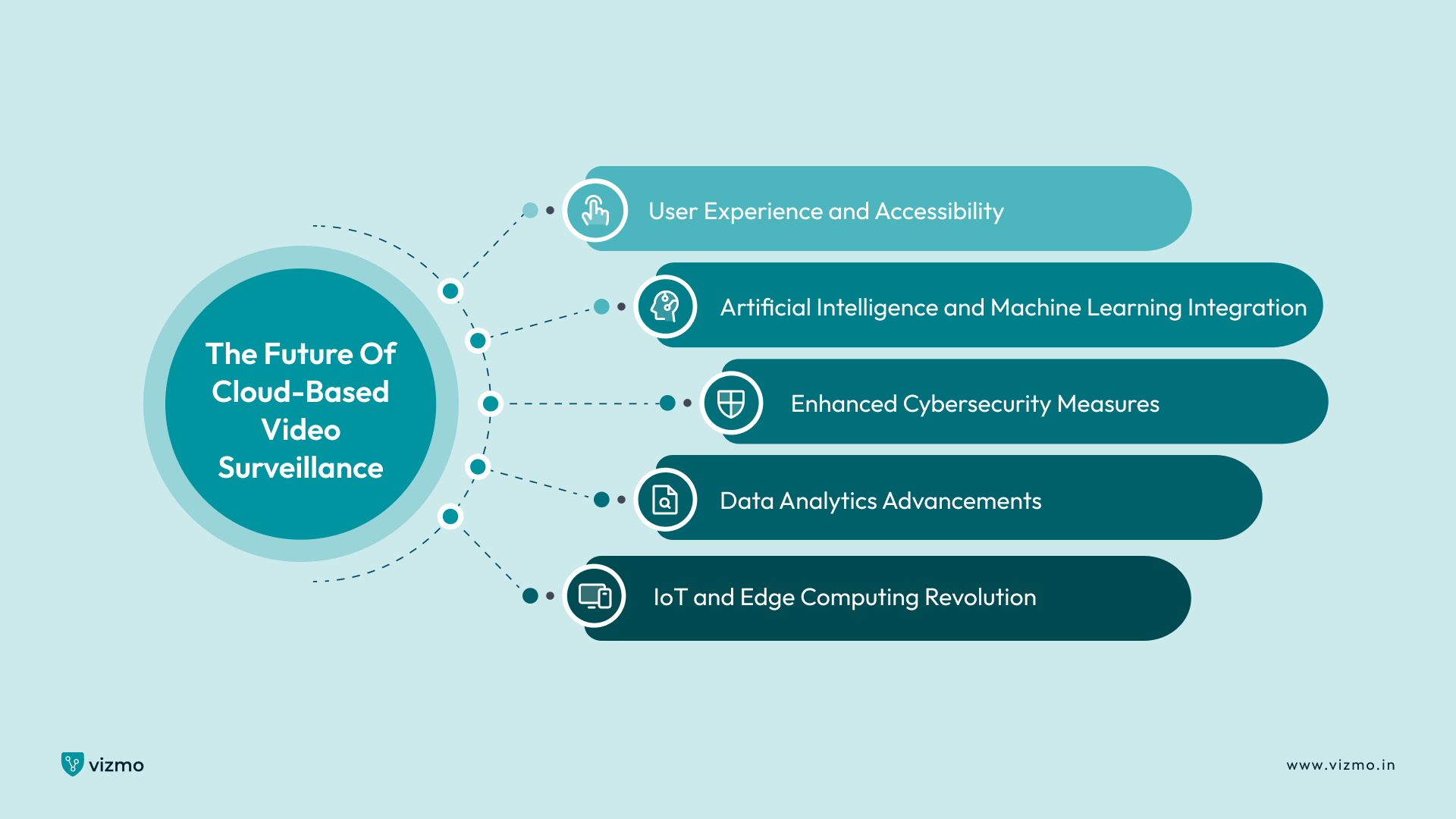
The future of cloud-based video surveillance is full of exciting possibilities, driven by advancements in AI, IoT, and data analytics. Let’s take a look at how these innovations are shaping smarter, more proactive security systems:
1. Artificial Intelligence and Machine Learning Integration
According to Grand View Research, businesses are increasingly investing in AI-powered and future-ready video surveillance systems. Rapid advancements in AI and machine learning are shaping the future of cloud surveillance. These technologies are moving beyond basic motion detection to enable predictive analytics and intelligent threat assessment. Imagine surveillance systems that can not only detect unusual behavior but also predict potential security incidents before they occur. AI-powered facial recognition is becoming more sophisticated, enabling better access control and improved threat detection.
2. IoT and Edge Computing Revolution
The integration of IoT and Edge Computing is transforming how surveillance systems collect and process data. Edge computing brings processing power closer to the cameras themselves, enabling faster response times and reduced bandwidth usage. IoT sensors complement video data by providing additional environmental context – from temperature readings to door position status.
The convergence of IoT and edge computing creates a more comprehensive security ecosystem where cameras work in harmony with other smart devices. The future will see even greater integration, with surveillance systems becoming central hubs in smart building management systems.
3. Data Analytics Advancements
Data analytics is set to revolutionize cloud-based video surveillance by providing deeper insights into security operations. Advanced analytics can process vast amounts of video data in real-time, identifying trends, anomalies, and potential threats with greater accuracy. Features like heat mapping, motion pattern analysis, and object tracking will make it easier to monitor large areas and respond proactively to security incidents. With these capabilities, data analytics will play a crucial role in making surveillance systems smarter, faster, and more efficient.
4. Enhanced Cybersecurity Measures
As cloud surveillance systems become more sophisticated, cybersecurity measures are evolving to match. Future systems will incorporate advanced encryption protocols and blockchain technology for tamper-proof video evidence. Zero-trust security frameworks will become standard, ensuring that every access request is thoroughly verified. We're moving toward systems that use AI to detect and respond to potential cyber threats in real-time while maintaining user privacy and compliance with evolving data protection regulations.
5. User Experience and Accessibility
The future of cloud-based video surveillance focuses immensely on making complex security systems more user-friendly and accessible. Augmented reality interfaces will allow security personnel to interact with surveillance systems more intuitively. Voice commands and natural language processing will simplify system interaction, while automated reporting tools will make security management more efficient.
Lastly, according to Video Surveillance Market Analysis and Global Forecast 2023-2033, the video surveillance market (VSaaS) was valued at USD 53.74 billion by the end of 2023 and is projected to reach USD 97.63 billion by 2033, with a CAGR of 12.98%. This growth is largely driven by advancements in technology, with cloud storage being a major contributor alongside AI, machine learning, IoT, and edge computing, all of which are revolutionizing the way surveillance systems function.
Looking forward, cloud-based video surveillance will continue to evolve as a cornerstone of modern security infrastructure, driven by technological advancements and changing security needs. The key will be balancing advanced capabilities with user-friendly operation and robust security measures.
Final Thoughts
Keeping up with modern security demands requires cloud-based video surveillance in today's world. These systems offer unmatched flexibility, scalability, and advanced features, making them a smart choice for organizations looking to enhance their security posture.
As you think about upgrading your surveillance systems, take a moment to explore how Vision, our cloud-based video surveillance solution, can revolutionize your security approach.

Vision offers a comprehensive suite of features tailored to protect every aspect of your business:
- Perimeter Protection: Monitor outdoor perimeters, including fences, gates, and entry points, to deter unauthorized access and enhance workplace security.
- Entrance and Exit Monitoring: Track employees, visitors, and vehicles at entry and exit points with high-definition surveillance to ensure a secure environment.
- Operations Monitoring: Detect and prevent security threats such as theft, fraud, or suspicious activities within the workplace for a safer work environment.
- Quality Inspection: Maintain operational efficiency by monitoring production processes in real-time, ensuring compliance with safety and quality control measures.
Video Analytics
- Facial Recognition: Identify and verify individuals using AI-powered facial recognition to prevent unauthorized access and enhance security management.
- Motion Detection: Receive instant alerts when unexpected movement is detected in monitored areas, allowing for a quick response to potential security breaches.
- License Plate Recognition: Automatically capture and read license plate numbers of vehicles entering and exiting the premises to regulate vehicular access.
- Virtual Line Crossing Detection: Secure restricted areas by setting virtual boundaries and receiving alerts whenever an unauthorized person or object crosses them.
Vision’s live monitoring, secure remote access, and intelligent analytics keep you ahead of potential threats. Its scalable design ensures seamless expansion, while automated backups and high-level encryption protect your data at every step.
Now is the perfect time to evaluate your current system and explore how Vision can transform your security strategy. Start with Booking a Free Demo with our team Today!