What Is Office Space Planning? Tips & Benefits

Office space planning has emerged as a critical strategy for businesses adapting to today’s complex landscape of modern work environments. In the emerging era of hybrid and remote working models, the traditional office setup has undergone a significant transformation. Companies are now reimagining their physical workspaces to accommodate flexible work arrangements, collaborative needs, and the diverse preferences of a dynamic workforce.
Accenture's 2021 Future of Work Study found that 83% of employees favor a hybrid work setup, while a report by Density reveals that office spaces could be utilized up to four times more effectively than they currently are. This highlights why strategic space planning is crucial to optimizing office environments and supporting evolving work models.
At its core, office space planning is the deliberate and strategic organization of workplace layouts to maximize space efficiency, enhance productivity, and create environments that support employee satisfaction and organizational goals. Effective office space planning goes beyond mere aesthetic considerations, it is a powerful tool for aligning physical work environments with broader company goals, employee well-being, and evolving workplace trends.

If you're wondering how to create an effective office space plan, this blog covers everything from the basics of “what is space planning” to proven strategies and practical tips to help you optimize your workspace.
What Is Office Space Planning?
Office space planning is a detailed process focused on analyzing current office space, understanding employee needs, and designing a layout that maximizes functionality. It ensures that every part of the workspace serves a purpose, enhancing productivity, efficiency, and comfort for employees.
Balancing collaborative and focused work environments is a key challenge in modern office space planning. This involves creating adaptable spaces that transition between open areas for teamwork and private zones for individual focus, catering to diverse employee needs. Technology plays a crucial role in contemporary office space planning, requiring flexible solutions supporting in-person and remote work. This might include designing areas with robust connectivity, creating multipurpose meeting spaces, and incorporating technology that supports hybrid work models.
Ultimately, effective office space planning is about creating an environment that:
- Maximizes spatial efficiency
- Supports employee well-being and productivity
- Reflects the organization's culture and values
- Provides flexibility for future growth and changing work patterns
By approaching office space planning as a strategic, holistic process, organizations can create work environments that not only meet current needs but also anticipate and adapt to future workplace trends.
Why Is Office Space Planning Important?
Office space planning is far more than a simple architectural undertaking, it's a strategic approach that directly impacts an organization's operational efficiency, employee experience, and bottom line. By organizing layouts thoughtfully, businesses can enhance employee productivity, promote collaboration, and make the best use of available space. A well-planned office fosters smoother workflows and ensures employees have the right tools and environment to perform at their best.
Smart space planning also helps reduce costs by minimizing wasted space and improving resource management. Optimized layouts can eliminate unnecessary expenses, such as leasing extra space or maintaining underutilized areas while ensuring that every part of the office serves a clear purpose. Chicago Tribune reports that the value of office real estate could decline by up to $1.3 trillion by 2030 due to shifting work models and evolving space utilization strategies.
Beyond functionality, office space planning contributes to a positive work environment that aligns with company culture. A thoughtfully designed workspace boosts employee morale, making people feel more comfortable, valued, and motivated. Strategic office planning creates a balanced office that supports both the company’s goals and employees’ well-being, whether through open spaces for collaboration or quiet areas for focused work.
Important Factors for Office Space Planning
When planning office space, several key factors need to be considered to ensure the layout meets the needs of both the business and its employees. The first consideration is the available space, how much room there is, and how it can be effectively utilized. Understanding employee work styles is also crucial, as some may require quiet spaces for focus, while others thrive in collaborative environments. Additionally, each department’s specific needs must be taken into account to ensure the layout supports their tasks and workflows.
Flexibility is essential in modern office design. A recent LinkedIn survey reported that workplace flexibility has become a top priority for employees of all age groups. This flexibility empowers employees to work in settings that enhance their focus and creativity, leading to higher engagement and job satisfaction. Incorporating flexible workspaces like desks, meeting rooms, quiet zones, and collaboration areas also helps accommodate various work styles and team dynamics.
Additionally, integrating technology that monitors space utilization or incorporating desk booking solutions and meeting room software, can help businesses optimize their office layouts. These tools provide valuable data on space usage, allowing companies to make informed decisions and ensure resources are used efficiently and effectively.
Benefits of Office Space Planning
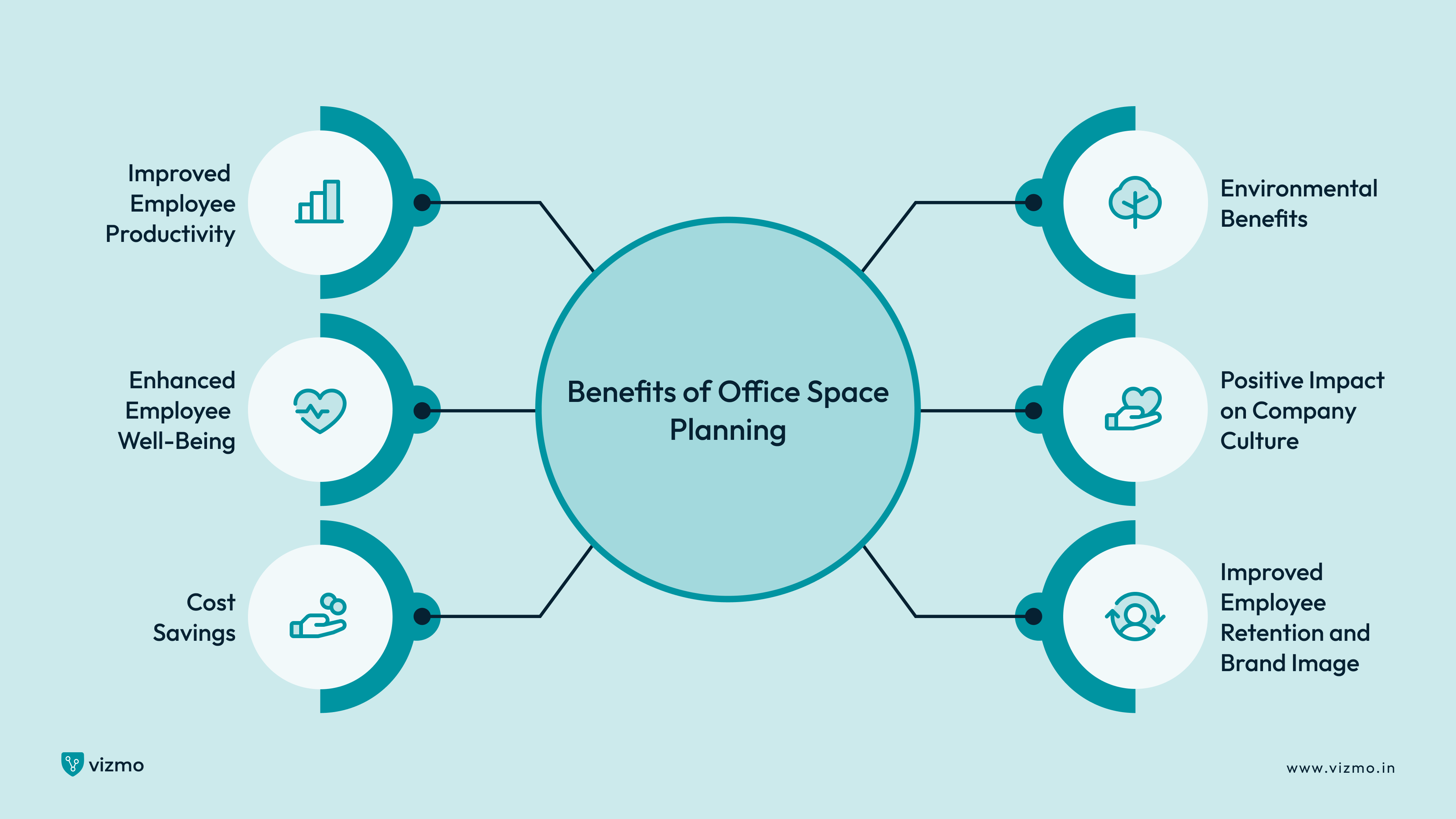
1. Improved Employee Productivity
Effective office space planning directly contributes to higher productivity. By designing a layout that minimizes distractions and supports efficient workflows, employees can focus on their tasks with greater ease. Thoughtful planning ensures that employees have the right tools, resources, and environment to perform at their best, boosting overall work output.
2. Enhanced Employee Well-Being
A well-planned office improves employee well-being by providing comfortable and ergonomic furniture, along with spaces that cater to both individual focus and team collaboration. Incorporating areas for relaxation and quiet work not only reduces stress but also supports mental and physical health, helping employees feel more comfortable and engaged.
3. Cost Savings
Optimizing office space usage can lead to significant cost savings for businesses. By reducing wasted space and avoiding the need for additional leased areas, companies can streamline operations and cut unnecessary expenses. This efficiency allows businesses to allocate resources more effectively and improve their bottom line.
4. Environmental Benefits
Sustainable office space planning offers various environmental benefits. Incorporating energy-efficient lighting, optimizing HVAC systems, and using eco-friendly materials can reduce energy consumption. Additionally, improving air quality through proper ventilation and the use of plants or natural elements contributes to a healthier, more sustainable workspace.
5. Positive Impact on Company Culture
A well-designed office space fosters a positive company culture. When the workspace aligns with organizational values, it promotes a sense of pride, connection, and well-being among employees. This alignment can enhance collaboration, innovation, and morale, making employees feel more invested in the company’s mission.
6. Improved Employee Retention and Brand Image
Aligning the workspace with the company’s values can improve employee retention by creating an environment that supports personal and professional growth. A study by Hassell and Empirica Research found that workplace design and space planning are key factors in attracting job seekers. Employees are also more likely to stay with a company that prioritizes their comfort and well-being. Additionally, a well-planned office enhances the company’s brand image, showcasing a commitment to both employee satisfaction and sustainability.
How to Plan Office Space Effectively?
Effective office space planning is a meticulous process that requires careful analysis, strategic thinking, and a deep understanding of organizational and employee needs. By following a structured approach, businesses can create workspaces that optimize productivity, support employee well-being, and align with company objectives.
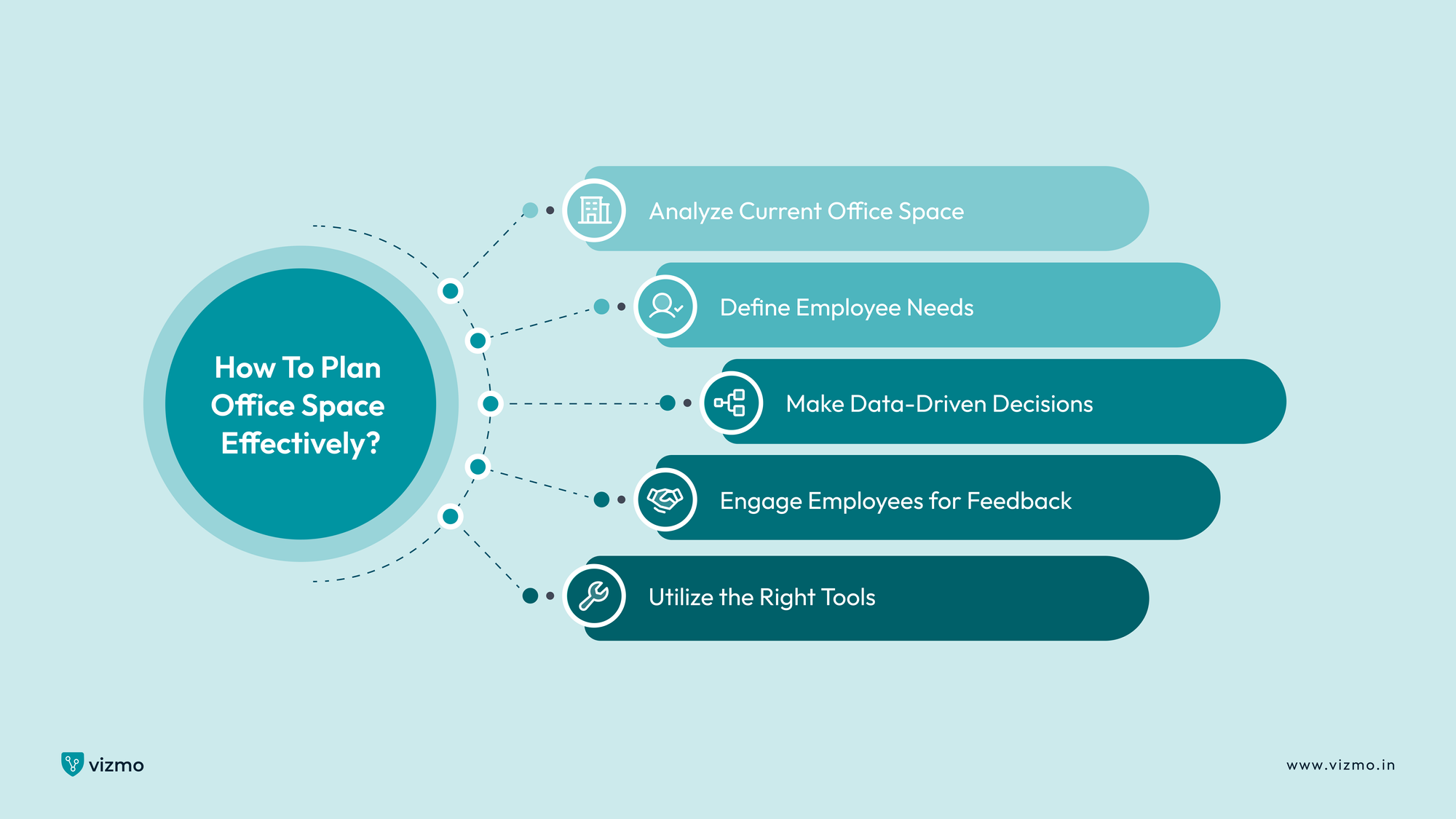
1. Analyze Current Office Space
The first critical step in office space planning is conducting a comprehensive assessment of your current workspace. By tracking employee attendance and space usage data through tools like meeting room and desk booking software, along with your visitor management system, you can gain valuable insights into how your office is being utilized. This data helps pinpoint areas that need improvement to better support your team and enhance office functionality.
2. Define Employee Needs
Next, consider the specific needs of your employees. Different teams and departments may require different types of workspaces—some may need open areas for collaboration, while others may benefit from quiet zones for focused work. Understand the roles and work styles of your employees to ensure the layout supports their daily tasks and enhances productivity.
3. Make Data-Driven Decisions
Modern office space planning relies heavily on data collection and analysis. Incorporating data into the planning process is crucial. Tools like space utilization software or desk booking systems can provide insights into how spaces are currently being used. This data helps inform decisions about how to optimize the layout, making sure that resources are allocated efficiently and employees have the right spaces for their work.
4. Engage Employees for Feedback
Engaging employees in the planning process is key to creating a workspace that meets their needs. Conduct surveys or hold focus groups to gather feedback on workspace preferences. Understanding their needs and desires will help create a more comfortable, functional environment that boosts morale and collaboration.
5. Utilize the Right Tools
To create an efficient and adaptable office, it's essential to integrate the right space management tools with your existing workplace systems. According to Future Market Insights Inc., the space management solutions market is projected to grow from $890 million in 2022 to $1.89 billion by 2032, with a 7.8% annual growth rate, reflecting the increasing importance of efficient workspace solution tools. These tools not only enhance the employee experience but also provide valuable data on how your office space is utilized. Here are four key systems to consider for optimizing your office space:
- Visitor Management System: Enhances security and compliance while providing comprehensive data on workplace entries and access patterns.
- Room Booking Software: Simplifies meeting space reservations and provides detailed insights into room usage for strategic space optimization.
- Employee Attendance Tracking: Ensures accurate tracking of hybrid workforce presence and offers valuable insights into team collaboration patterns.
- Desk Booking Software: Enables flexible workspace allocation for hybrid employees and generates data on workspace preferences and utilization.
Office Space Planning Tips for Organizations
1. Create Diverse Workspaces
The foundation of successful office space planning lies in creating flexible and adaptable environments. Open collaborative areas should coexist with quiet zones, allowing employees to choose workspaces that best suit their current tasks. This approach recognizes the diverse working styles within modern organizations, supporting both team interactions and individual focus.
2. Prioritize Employee Well-Being
Employee well-being should be a primary focus in office space planning. Enhancing the physical environment can improve employee comfort and productivity:
- Utilize natural lighting to boost mood and reduce eye strain.
- Add greenery to improve air quality and create a calming atmosphere.
- Ensure ergonomic furniture is available to support employee health.
- Design relaxation areas where employees can take breaks and recharge.
- Ensure a comfortable indoor climate with efficient ventilation systems.
3. Integrate Technology for Efficiency
Technology integration has become essential in contemporary office design. Visitor management systems, room booking software, and desk booking platforms streamline workplace management, providing critical insights into space utilization. Additionally, companies using space management tools achieve up to 30% savings in operational costs by optimizing space usage and cutting down on real estate expenses. These tools also support hybrid work models by offering employees flexible workspace options and helping organizations optimize their physical resources.
4. Use Data to Guide Decisions
Analyze how your office is being used through space management software or desk booking software. Data extracted from these integrations helps identify underutilized areas and informs decisions for better layouts and resource allocation.
By following these tips and leveraging the right tools, you can create a dynamic, efficient office space that supports your team’s productivity and well-being while aligning with your organizational goals.
Example of an Office Space Plan
A well-thought-out office space plan balances diverse zones to meet the varying needs of employees while supporting organizational goals. Here’s an example of how a modern office layout might be structured:
Workspace Composition
- Collaborative Hub (25%): Open workstations and group areas with technology for teamwork.
- Quiet Zones (15%): Focused work areas with soundproofing for concentration.
- Meeting Spaces (20%): Conference rooms, huddle spaces, and video conferencing areas.
- Flexible Work Areas (20%): Hot desks and ergonomic setups for flexible working.
- Wellness Spaces (10%): Relaxation areas, green spaces, and kitchens for employee well-being.
- Support Infrastructure (10%): Reception areas and administrative spaces.
Types of Office Layouts
1, Classic and Structured LayoutsTraditional layouts feature cubicles, private offices, and conference rooms, emphasizing structure and hierarchy. They provide privacy and focus but may limit collaboration. Examples include cubicle setups, corner offices for executives, and bullpen-style rows of desks for teams working closely together.
2. Collaborative Team-Based OfficesThis layout groups desks or workstations by teams or departments, fostering collaboration and communication. Informal meeting areas, shared tables, and huddle rooms enhance teamwork, making it ideal for project-based organizations.
3. Open-Plan OfficeOpen-plan offices remove barriers like cubicles, creating shared spaces that promote transparency and teamwork. Examples include hot desking, where employees choose their spots daily, and hub-and-spoke designs, combining communal areas with focused team spaces.
4. Flexible Activity-Based WorkspacesThis flexible design provides zones tailored to specific tasks, such as collaborative areas for teamwork, quiet spaces for focus, and social zones for informal interactions. It supports diverse work styles and enhances productivity.
5. Dynamic Co-Working Workspaces
Co-working spaces cater to freelancers, startups, and small teams, offering shared desks, private stations, and communal areas. These layouts foster networking, flexibility, and resource sharing in a dynamic environment.
6. Productive Home OfficesHome office layouts prioritize comfort and efficiency with ergonomic furniture, good lighting, and organized storage. They help remote workers maintain productivity and establish a clear boundary between work and personal life.
By understanding these layouts, and composition outlines organizations can create spaces that balance collaboration, focus, and employee well-being.
Sustainability Strategies
Sustainability is central to the office design, with energy-efficient lighting that reduces electricity use while maintaining optimal brightness. The U.S. Green Building Council report indicates that optimized space management can reduce building energy use by up to 25%. Eco-friendly materials, including recycled options, minimize the workspace's carbon footprint. Natural ventilation and strategically placed windows cut reliance on artificial climate control, promoting a greener, more sustainable environment.
Technology Integration
Technology plays a key role in creating a smart and efficient workspace. Visitor management systems enhance security and streamline access. Desk and meeting room booking software supports flexible work arrangements, while interactive workplace maps help employees navigate with ease. IoT-enabled controls adjust lighting, temperature, and energy use in real-time, ensuring a comfortable and eco-friendly office.
This office space plan demonstrates how thoughtful design can create a flexible, productive environment that adapts to changing organizational needs while prioritizing employee well-being and performance.
Guidelines and Procedures for Office Space Planning
Effective office space planning requires continuous evaluation and adjustment to ensure it meets the evolving needs of the business and its employees. Here are some key guidelines and procedures to follow:
1. Regularly Review Space Utilization
It’s crucial to periodically assess how the office space is being used. Track desk occupancy, meeting room bookings, and collaboration area usage to identify underutilized or overcrowded zones. Regularly gather employee feedback to understand their needs and preferences, making adjustments to the layout as required. This ensures that the office remains functional and comfortable as work dynamics change.
2. Desk-sharing and Cleanliness Protocols
Implement desk-sharing policies for flexible work arrangements, such as desk booking software or hybrid models, to maximize space efficiency. Ensure that employees have access to cleaning supplies and encourage them to maintain cleanliness at their workstations. In shared spaces, establish guidelines for tidiness and hygiene to create a pleasant and professional environment for everyone.
3. Compliance with Health, Safety, and Accessibility Standards
Ensure the office layout complies with all relevant health, safety, and accessibility regulations. This includes maintaining clear emergency exit routes, providing accessible entrances and workspaces for employees with disabilities, and ensuring proper ventilation and fire safety measures. Regularly update your office design to meet evolving standards and regulations, keeping employees safe and comfortable.
By following these guidelines and procedures, you can create a workspace that supports employee productivity, well-being, and organizational success.

Conclusion
Effective office space planning is essential for creating a work environment that is both productive and adaptable, catering to the evolving needs of employees and supporting the long-term goals of the business. By carefully considering elements such as space utilization, employee well-being, and flexibility, organizations can design workspaces that not only boost collaboration and creativity but also enhance individual focus and comfort. A well-planned office layout empowers employees to work more efficiently while fostering a positive and supportive workplace culture.
To take your office space planning to the next level, reach out to Vizmo or book a demo for practical solutions and tools, including, desk booking systems, visitor management solutions, and meeting room software to optimize your workspace and enhance the overall work experience.