What Is Space Management?


In today’s rapidly evolving business landscape, space management has emerged as a critical factor in creating efficient, productive, and cost-effective work environments. With the rise of hybrid work models and flexible arrangements, businesses are rethinking how they utilize their physical spaces.
According to a report by the Chicago Tribune, the value of office real estate could decline by up to $1.3 trillion by 2030 due to shifting work models and changing space utilization patterns. This shift has created an unprecedented demand for smart space management solutions that can maximize every square foot while enhancing the employee experience.
In this blog, we’ll understand what is space management, and explore effective strategies and practical solutions to help you optimize your office space and achieve smarter space management.

What is Space Management?
Space management refers to the process of organizing, managing, and optimizing the use of physical spaces within a workplace. It involves tracking how spaces are utilized, identifying inefficiencies, and implementing strategies to maximize functionality and productivity. By ensuring that every area serves a clear purpose, space management helps organizations create environments that meet their operational and business goals effectively.
The primary purpose of space management is to enhance productivity and reduce costs. Space management encompasses everything from desk arrangements and meeting room allocations to the optimization of common areas and support facilities. At its core, it's about analyzing how spaces are used, identifying underutilized areas, improving workflows, and allocating resources more efficiently.
Space management has evolved significantly over the years. Traditionally, it relied on manual methods like spreadsheets and physical audits, which were time-consuming and prone to errors. Today, software-driven solutions powered by real-time data, predictive analytics, and automation have transformed space management into a dynamic and data-driven process.
According to Future Market Insights Inc., the space management solutions market is expected to grow at a CAGR of 7.8% over the forecast period. Its value is projected to increase from $890 million in 2022 to $1.89 billion by 2032, highlighting the rising demand for efficient workspace solutions. Modern automated workplace solutions enable organizations to make more informed decisions about their space utilization, respond quickly to changing needs, and create more agile workplace environments that can adapt to future requirements.
The Benefits of Effective Space Management
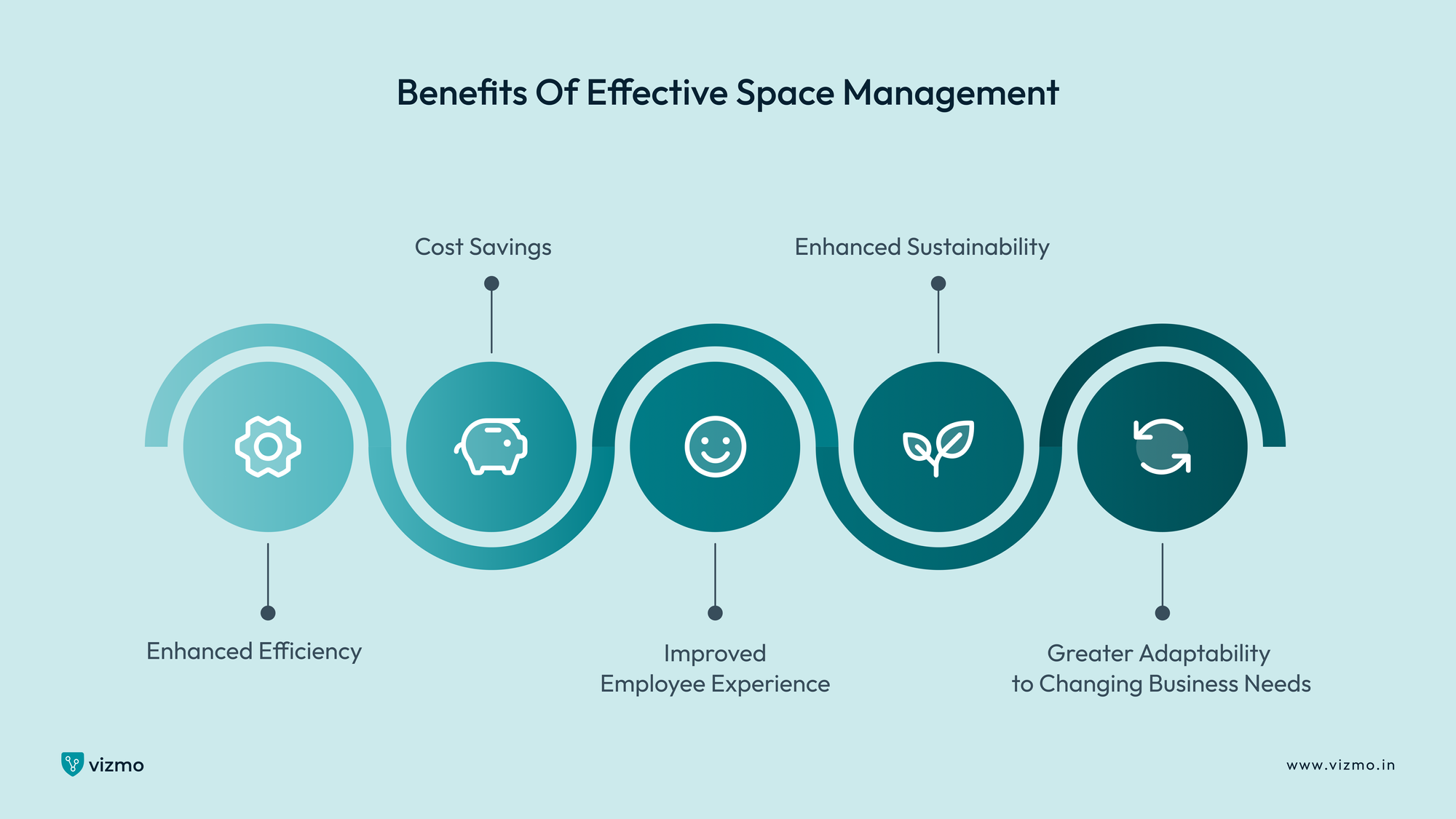
1. Enhanced Efficiency
Effective space management ensures that every area in a workplace serves a clear purpose, reducing unused or underutilized spaces. Organizations can streamline operations and create layouts that support workflows and collaboration by tracking and analyzing space utilization. A recent study by Density reveals that 71% of office spaces have the potential to accommodate up to four times their current usage. Real-time occupancy monitoring helps identify usage patterns, enabling organizations to repurpose unused spaces for more productive activities. This strategic approach ensures every square foot serves a purpose, reducing wasted space while enhancing operational flow.
2. Cost Savings
Effective space management directly impacts an organization's bottom line through significant cost reductions. By optimizing space utilization, companies can minimize their real estate footprint, leading to lower lease costs and reduced utility expenses. Companies using space management tools achieve up to 30% savings in operational costs by optimizing space usage and cutting down on real estate expenses. Smart space allocation also decreases maintenance and operational costs. For example, organizations implementing dynamic desk booking systems often find they can reduce their office space by 20-30% while maintaining optimal functionality. By optimizing how spaces are used, companies can reduce real estate expenses and maintenance costs associated with underutilized areas.
3. Improved Employee Experience
A well-managed workspace contributes to a positive employee experience. When employees have access to the right types of spaces for different tasks from quiet focus rooms to interactive brainstorming areas, their job satisfaction and productivity naturally increase. A recent LinkedIn survey indicates that workplace flexibility is becoming a top priority for employees of all age groups. Modern space management solutions also empower employees with the flexibility to choose where and how they work, leading to better work-life balance and increased engagement. The result is a more dynamic, comfortable workplace that attracts and retains top talent while fostering innovation and collaboration.
4. Enhanced Sustainability
Effective space management contributes to an organization's sustainability goals by reducing energy consumption and waste. By optimizing space utilization, companies can decrease the energy required to heat, cool, and light unused areas, leading to lower carbon emissions. Additionally, organizations can adopt greener practices, such as consolidating office spaces or using multi-purpose areas, to reduce their environmental impact. A report by the U.S. Green Building Council shows that optimized space management can reduce building energy use by up to 25%. This eco-conscious approach not only helps the planet but also resonates with employees and clients who value sustainability, strengthening the organization's reputation.
5. Greater Adaptability to Changing Business Needs
Space management ensures that workplaces remain agile and adaptable in response to evolving business needs. Organizations can quickly reconfigure layouts to accommodate new teams, technologies, or workflows without significant disruptions. CBRE’s 2024 report highlights that over 80% of workplace leaders integrate technology tools to enhance flexibility, improve data quality, and support hybrid environments, enabling dynamic planning and quicker responses to business needs. Flexible space management solutions can significantly reduce implementation time and minimize productivity disruptions during transitions.
Additional Impact
- Better resource allocation through data-driven decisions
- Increased workplace safety through optimal occupancy management
- Improved interdepartmental collaboration through strategic space planning
- Increased Agility to Address Organizational Changes
- Stronger organizational culture through thoughtfully designed spaces
- Enhanced Decision-Making Through Predictive Analytics
Key Factors to Consider When Implementing Space Management Software
1. Space Utilization Rates
Understanding and tracking space utilization is fundamental to effective space management. Modern space management software provides detailed insights into how different areas are being used throughout the workday. Occupancy sensors and booking systems can track metrics such as peak usage times, average occupancy rates, and most popular spaces. This data helps organizations identify underutilized areas, optimize room layouts, and desk occupancies, and make informed decisions about space allocation.
2. Employee Preferences
A successful space management strategy must consider the needs and preferences of employees, especially in today’s hybrid work environments. The software should support flexible options like hot-desking, collaborative spaces, and private work areas to accommodate diverse working styles. When implementing space management solutions, it's crucial to consider:
- Quiet zones for focused work
- Collaborative areas for team projects
- Flexible meeting spaces of different sizes
- Comfortable break areas
- Accessibility requirements
- Technology integration needs
Regular employee surveys and feedback sessions can help understand changing preferences and ensure your space management strategy aligns with workforce needs. Additionally, booking systems should be user-friendly and accessible via mobile devices to support hybrid workers who need to plan their office time effectively.
3. Flexibility and Future Growth
A successful space management strategy must be adaptable to accommodate future changes in business needs and workforce dynamics. Businesses are meant to evolve, and your workspace must be able to adapt. Choose space management software that allows for flexibility, such as reconfigurable layouts and scalable features. This ensures your office can support future growth, changing work models, and new technologies without significant disruptions or additional costs. The best space management solutions are those that can adapt and scale as your organization's needs change over time.
The Role of Occupancy Planning Software in Space Management
Occupancy planning software is a tool designed to forecast and manage space needs within an organization. It analyzes data on how spaces are used to help companies plan for their current and future requirements, ensuring their workspace aligns with operational goals. By providing detailed insights into space utilization, these systems enable facilities managers to make data-driven decisions about space allocation and resource distribution.
In hybrid work environments, balancing office occupancy is crucial to meet employee needs without wasting resources. Occupancy planning software helps monitor and predict space usage patterns, ensuring there are enough desks, meeting rooms, and collaborative spaces available on any given day. This ensures a seamless experience for employees, whether they work on-site, remotely, or a mix of both.
One of the primary benefits of occupancy planning software is its ability to prevent both overcrowding and underutilization of spaces. The system achieves this through:
- Real-time occupancy monitoring and alerts
- Automated booking systems for desks and meeting rooms
- Capacity threshold management
- Usage trend analysis and reporting
- Space utilization forecasting
When occupancy patterns indicate consistent underutilization or overcrowding, the software can suggest adjustments to space allocation or scheduling policies, helping maintain an ideal balance.
How Space Management Software Works: A Step-by-Step Overview
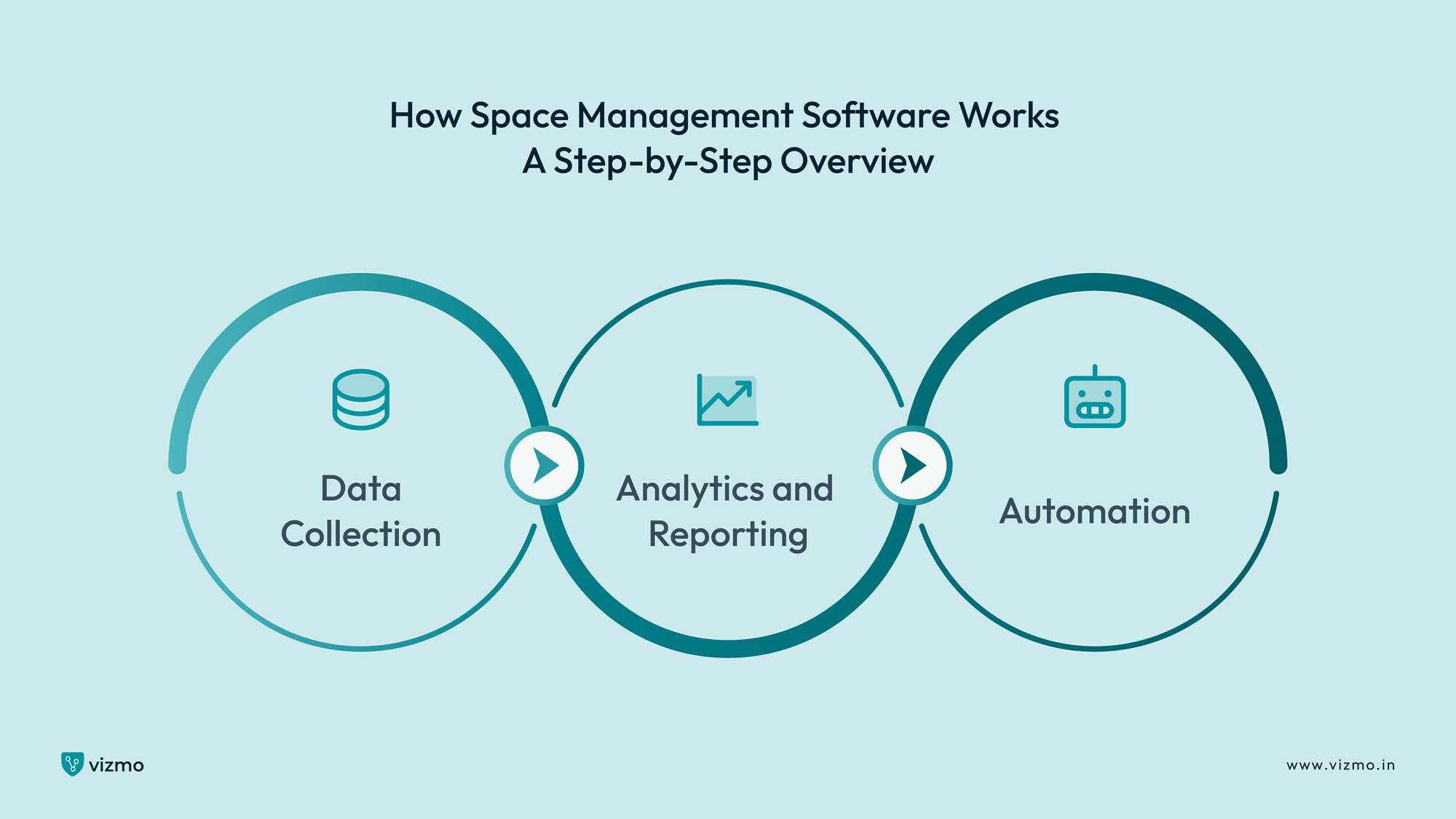
1. Data Collection
Space management software begins by collecting data on how office spaces are being used. It uses tools like sensors, badge systems, and check-ins to track occupancy and utilization patterns in real time. This data provides an accurate picture of how workspaces, meeting rooms, and common areas are utilized throughout the day, helping organizations identify inefficiencies.
2. Analytics and Reporting
Once the data is gathered, the software processes it to uncover trends and insights. Detailed analytics and reports highlight key metrics such as peak usage times, underutilized areas, and occupancy rates. These actionable insights help businesses make informed decisions about reorganizing layouts, resizing office spaces, or reallocating resources to improve efficiency.
3. Automation
Modern space management software goes beyond analysis by automating key processes. It can dynamically allocate resources, adjust seating plans, and optimize space layouts without manual intervention. For instance, it may automatically reassign desks based on employee needs or configure meeting rooms to match real-time demand. This automation streamlines space planning and ensures the workplace remains flexible and efficient.
Common Strategies for Space Management
1. Hot Desking
Hot desking is a popular strategy that promotes flexibility by allowing employees to use any available workstation instead of being assigned a permanent desk. This approach works particularly well in hybrid work environments, where not all employees are in the office at the same time. By maximizing the use of available workstations, hot desking helps improve resource efficiency and reduce the need for excess office space. According to Learnpatch, hot desking and desk booking software helps address inefficiencies, enabling companies to reduce office costs by up to 30% and optimize space usage by saving 15% to 25%.
2. Zoning
Zoning involves dividing the office into designated areas or zones for specific purposes, such as collaborative spaces, individual workstations, and break areas. This strategy helps create an organized layout that enhances productivity by ensuring employees can easily access the resources and environments they need. Zoning also helps minimize distractions and supports a smoother workflow.
3. Activity-Based Workspaces
Activity-based workspaces take zoning a step further by tailoring areas to specific work activities. For example, meeting rooms can be set up for collaboration, while quiet zones are designed for focused, individual tasks. This strategy allows employees to choose the most suitable environment for their work, boosting both productivity and satisfaction while making optimal use of the available space.
Space Management Technologies and Tools
1. Smart Sensors
Smart sensors have revolutionized how organizations monitor and optimize their workspace usage. Smart sensors are integral to modern space management, providing real-time data on how spaces are being used. These sensors track metrics like occupancy, foot traffic, and peak usage times, enabling organizations to identify underutilized areas and optimize layouts. By delivering accurate and up-to-date information, smart sensors help create more efficient and adaptive workspaces.
2. AI and Automation
Artificial Intelligence has transformed space management from a reactive to a proactive discipline. It plays a crucial role in predicting future space needs and automating layout adjustments. AI algorithms analyze usage patterns and employee preferences to recommend changes that align with organizational goals. Automation further streamlines the process by dynamically reallocating resources or reconfiguring spaces based on real-time data, reducing manual intervention and improving efficiency. These AI capabilities enable organizations to anticipate space requirements weeks or months in advance, reducing the need for costly last-minute adjustments and ensuring more efficient resource allocation.
3. Collaborative Platforms
Collaborative platforms enhance team coordination in space planning by centralizing data and tools. According to a study by Gensler, on average, office workers spend 42% of their time collaborating with colleagues. These platforms allow stakeholders to visualize layouts, share insights, and propose changes in real time. By fostering collaboration, such tools ensure that space management decisions are well-informed, strategic, and aligned with both employee needs and business objectives.
Conclusion
Implementing smart space management strategies is essential for businesses looking to optimize their work environments. By effectively managing space, companies can improve operational efficiency, enhance employee satisfaction, and reduce costs. Adopting space management technologies, such as occupancy tracking and planning tools, allows organizations to make data-driven decisions and maximize the value of their office spaces.

We encourage businesses to explore space management software to streamline operations and achieve long-term cost savings. Start optimizing your workspace today and unlock the full potential of your office environment.