Why Factory Video Surveillance Is Critical for Modern Manufacturing

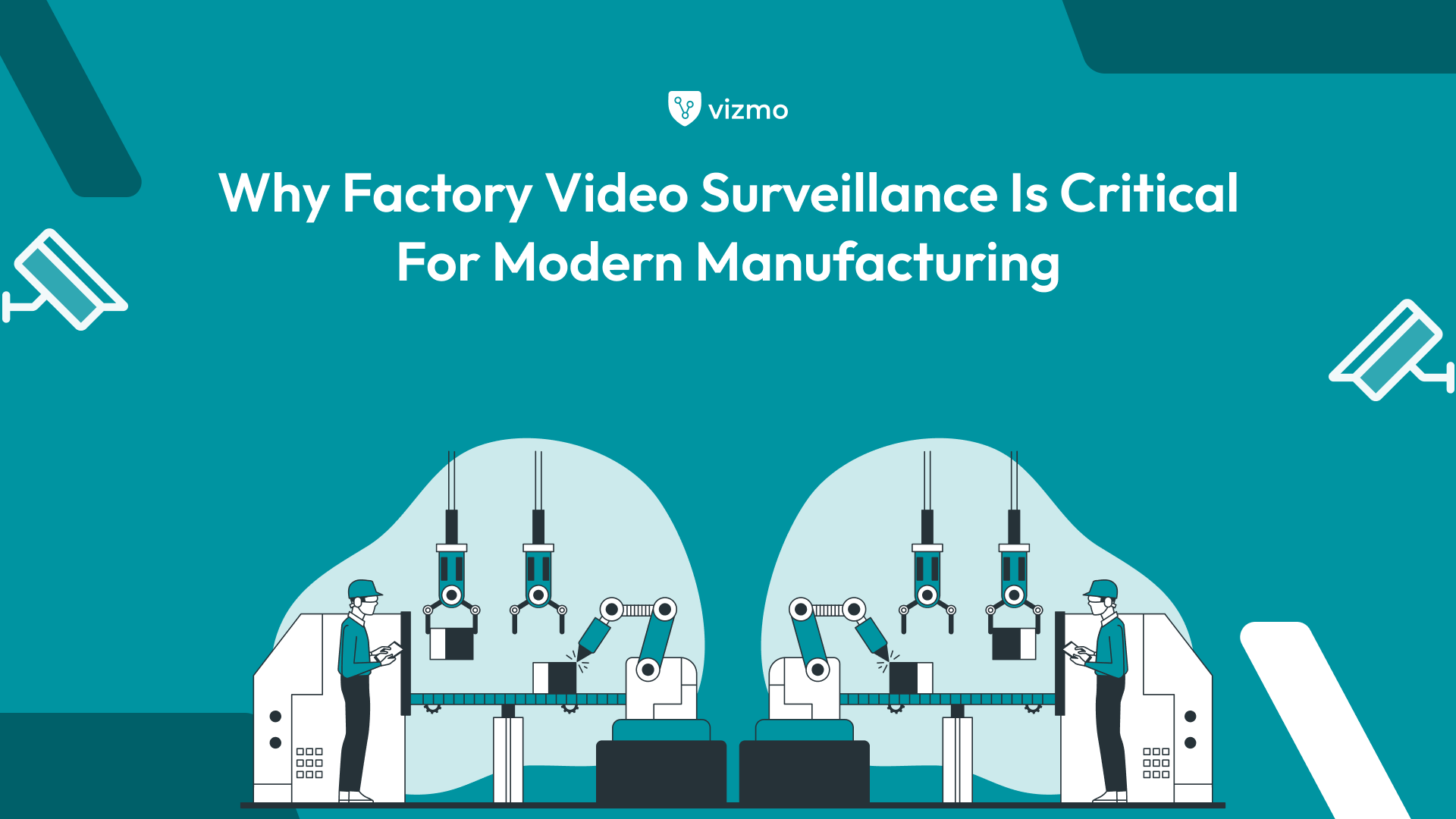
Factory video surveillance is critical for modern manufacturing because it provides continuous oversight of production floors, prevents asset theft, and ensures safety compliance in real time. Without structured monitoring, incidents such as unauthorized entry, inventory loss, safety violations, or production disruptions can go unnoticed until the operational or financial impact becomes significant.
Modern manufacturing plants operate in environments that are faster, larger, and more interconnected than ever before. Automation, digital systems, and global supply chains have transformed how factories function. Materials move continuously across production floors, machines operate under tight production schedules, and teams rotate across multiple shifts to maintain round-the-clock output.
This scale of activity introduces operational risk. Even minor disruptions can quickly escalate into costly downtime or safety incidents. In fact, manufacturing downtime alone can cost facilities an average of $260,000 per hour, according to research cited by industry reports and manufacturing analytics studies.
When incidents occur during night shifts or low-staffed periods, they may remain unnoticed until they affect production output or supply chain commitments.
This is why factory video surveillance has become a critical component of modern manufacturing infrastructure.
Key Takeaways
- Factory video surveillance improves security, asset protection, and operational oversight across manufacturing facilities.
- Industrial video surveillance systems provide real-time visibility across production environments and factory zones.
- Video monitoring helps prevent industrial theft and unauthorized access.
- Surveillance footage supports faster incident investigation and reduces operational downtime.
- Modern factory monitoring systems integrate smart surveillance, intrusion detection, and centralized monitoring.
What Risks Do Modern Manufacturing Plants Face Today?
Manufacturing plants today face complex risk environments, with growing exposure to security threats, operational disruptions, and safety incidents.
Continuous movement of materials, equipment, and personnel across connected supply chains increases the likelihood of unnoticed errors, delays, or unsafe practices. Without structured monitoring, even minor issues can quickly impact productivity or safety.
Operational disruptions can also become financially significant. Studies show that large manufacturing plants can lose hundreds of thousands of dollars per hour when production stops, depending on the industry and scale of operations.
External risks such as theft, vandalism, and unauthorized access remain major concerns, especially at poorly monitored entry points. Internal risks—including material misplacement, unauthorized access to restricted areas, and improper equipment handling—can also lead to significant losses.
These risks highlight the need for continuous visibility in modern manufacturing environments.
Real-World Scenario: How Surveillance Prevents Operational Loss
Consider a mid-sized automotive component manufacturer operating across three shifts. The plant installed perimeter cameras and motion-triggered alerts across its loading docks and warehouse exit points after noticing unexplained inventory discrepancies.
Within three months, security teams identified a recurring issue: materials were being moved through an unmonitored side exit during night shifts. After installing surveillance cameras and restricted-zone monitoring, the company eliminated the gap and reduced inventory discrepancies by more than 50%.
More importantly, plant managers gained real-time visibility into material movement during late shifts — something that had previously relied on manual logs and occasional inspections.
This example highlights how surveillance systems support both security enforcement and operational transparency.
How Does Factory Video Surveillance Strengthen Industrial Security?
Industrial security is no longer limited to gate guards and perimeter fences. As facilities expand, they require layered monitoring systems that cover both external and internal activities. Factory video surveillance enables this by monitoring entry points, restricted areas, and production zones simultaneously.
Security threats often begin at the perimeter—entry gates, loading bays, parking zones, and boundary walls—especially during low-activity periods. CCTV systems provide continuous monitoring, helping teams detect suspicious behavior and respond quickly.
Surveillance also controls internal access. Restricted areas such as control rooms, electrical panels, hazardous storage, and high-value inventory zones remain monitored and documented, ensuring accountability.
Industrial video surveillance systems act as both a preventive measure and a documentation tool, discouraging unauthorized behavior while providing reliable evidence when incidents occur.
How Does Video Monitoring Prevent Industrial Theft?

Asset protection remains one of the most important reasons factories invest in surveillance infrastructure. Manufacturing facilities often store large volumes of raw materials, specialized tools, and finished goods that carry significant financial value. However, losses are not always the result of major theft incidents—materials often disappear gradually due to misplacement, unauthorized removal, or weak tracking systems.
Video monitoring introduces the visibility and accountability needed to address these risks effectively.
- Deters Opportunistic Theft - The visible presence of cameras in storage and inventory areas acts as a strong deterrent.
- Improves Accountability Across Operations - Surveillance creates a transparent environment where material handling is continuously observed.
- Supports Evidence-Based Investigation - When inventory discrepancies arise, recorded footage provides clear documentation of events.
- Tracks Material Movement Patterns - Over time, surveillance systems help identify how goods move between departments and how frequently they are handled.
- Reduces Inventory Shrinkage - By combining deterrence, monitoring, and documentation, surveillance systems help minimize gradual material losses that often go unnoticed in large facilities.
How Does Surveillance Improve Visibility on the Production Floor?
Video surveillance plays a critical role in improving operational visibility within manufacturing environments. Beyond security and asset protection, it enables real-time insight into how production floors function throughout the day.
Manufacturing environments are dynamic—materials move between workstations, teams coordinate across production stages, and machines operate under strict timelines. In large facilities, it is not feasible for supervisors to physically monitor every area at all times. Production floor surveillance addresses this limitation by enabling continuous, remote visibility.

Key Ways Surveillance Enhances Production Visibility
- Remote Workflow Monitoring - Managers can observe activities across the production floor without needing to be physically present.
- Assembly Line Performance Insights - Surveillance systems allow supervisors to track how different sections of the production line are performing.
- Machine Area Supervision - Cameras positioned near industrial equipment help ensure that operators follow proper procedures.
- Multi-Shift Operational Visibility - Facilities operating across multiple shifts benefit from continuous monitoring.
- Improved Decision-Making - Real-time visibility allows management to make quicker, more informed decisions.
How Does Surveillance Support Safety Compliance in Factories?
Safety compliance is a fundamental priority in manufacturing environments involving heavy machinery, electrical systems, and hazardous materials. Maintaining strict safety standards is essential to protect workers and prevent disruptions.
Video surveillance supports safety compliance by reinforcing disciplined procedures across the facility. Workers are more likely to follow protocols—such as wearing protective equipment and maintaining safe distances—when activities are monitored.
Surveillance also provides critical documentation during workplace incidents. Recorded footage helps investigators understand what occurred, determine whether protocols were followed, and identify preventive measures.
It also reduces disputes by offering clear, objective evidence, especially when multiple teams or contractors are involved. For many manufacturers, this documentation is essential for regulatory inspections, insurance claims, and liability reduction, demonstrating that safety practices are actively monitored and enforced.
What Are the Key Advantages of Factory Surveillance Systems?

Factory surveillance systems deliver a wide range of advantages when implemented strategically. They go beyond basic monitoring to provide visibility, control, and operational insight across industrial environments.
- Continuous Monitoring - Industrial facilities remain under observation at all times, ensuring that activities are visible regardless of the time of day.
- Perimeter Security and Intrusion Detection - Surveillance strengthens security by monitoring entry points, loading docks, and facility boundaries.
- Enhanced Asset Protection - Storage areas, warehouses, and dispatch zones remain under constant watch.
- Improved Operational Oversight - Managers gain visibility into production environments without disrupting workflows.
- Faster Incident Investigation - Recorded footage becomes a critical tool when production issues arise.
- Stronger Safety Compliance - Continuous visual documentation reinforces adherence to safety protocols.
What Should Manufacturers Look for in a Surveillance System?
Choosing the right surveillance system requires careful planning, as industrial environments involve dust, vibration, temperature changes, and constant movement. Equipment must be durable while maintaining clear video quality.
Industrial-grade CCTV and IP systems provide reliable performance and clear footage, while centralized dashboards allow teams to monitor multiple zones and respond quickly.
This is critical as over 60% of manufacturers experience unplanned downtime each year, highlighting the need for faster detection and response.
Smart features like motion detection and alerts enable quick action, while cloud storage ensures secure and accessible footage.
The goal is a reliable system that strengthens security and operational control without adding complexity.
Why Factory Video Surveillance Is Critical for Modern Manufacturing
Manufacturing environments today operate under intense pressure to maintain productivity, safety, and efficiency. Facilities must manage multiple shifts, complex machinery, and valuable materials while ensuring consistent production output. Without structured monitoring, maintaining visibility across these environments becomes extremely difficult.
Factory video surveillance provides the oversight necessary to manage these complexities effectively. By combining security monitoring, operational visibility, and safety documentation, surveillance systems support multiple aspects of manufacturing performance.
How Surveillance Supports Manufacturing Operations

- Asset Protection - Surveillance systems help protect valuable materials and equipment from theft and unauthorized access, ensuring better control over factory resources.
- Operational Visibility - Production floors become easier to monitor, allowing teams to track activities, workflows, and machine usage without disrupting operations.
- Faster Incident Response - When issues arise, teams can quickly review recorded footage to investigate incidents, identify root causes, and minimize downtime.
- Regulatory and Safety Compliance - Continuous monitoring supports adherence to safety protocols and workplace standards, while also providing documentation for audits and inspections.
FAQ: Factory Video Surveillance
What is factory video surveillance?
Factory video surveillance refers to camera systems used to monitor production floors, storage areas, entry points, and restricted zones. These systems provide continuous visibility into facility activity and support security, incident investigation, and safety compliance.
Why is video surveillance important in manufacturing?
Video surveillance helps maintain security, visibility, and safety in manufacturing. Without it, issues like unauthorized access or inventory discrepancies may go unnoticed. It provides real-time visibility and recorded evidence for faster response and better control.
What is the difference between CCTV and industrial video surveillance systems?
CCTV refers to basic camera systems used to monitor and record specific areas, mainly for security. Industrial video surveillance systems go further with features like centralized monitoring, real-time alerts, and analytics. They are designed for large facilities, offering better visibility and supporting both security and operations.
How does a factory video surveillance system work?
It uses cameras across key areas to capture video, which is monitored live or recorded in a central system. Advanced setups include alerts, analytics, and remote access for faster response.
What areas of a factory should be monitored?
Factories typically monitor entry gates, warehouse storage areas, production lines, machine zones, loading docks, dispatch areas, and perimeter boundaries. Restricted areas such as control rooms, hazardous material storage, and electrical panels are also commonly monitored to ensure safety compliance and controlled access.
Do factory surveillance systems allow remote monitoring?
Yes, Vizmo modern surveillance platforms provide centralized dashboards or cloud-based monitoring systems. These allow plant managers and security teams to monitor live footage remotely using secure interfaces. This capability is particularly useful for facilities operating across multiple shifts or across multiple factory locations.