10 Benefits of Visitor Management System

Visitor Management System (VMS) is a sophisticated yet simplistic digital solution that is changing the way businesses manage and track visitor traffic within their premises. With the increase of visitor traffic in modern workplaces, the demand for effective systems to manage this has become crucial. The benefits of visitor management systems extend beyond just efficient monitoring and include aspects such as ensuring a warm welcome, improving security, and creating a seamless experience for both visitors and employees. That not only has an impact on the Workplace Management but also on the overall workplace security.
Before the advent of the Visitor Management System, the process for visitors check-in and approval was lengthy and time-consuming. Organizations needed to switch from handwritten registrars and human data entry at reception to an automated, paperless, digital VMS. This system typically includes features such as digital check-ins, visitor badges, and real-time notifications, providing a secure and efficient means of monitoring visitor traffic. By replacing traditional manual methods with electronic solutions, VMS significantly improves accuracy, enhances security, and modernizes visitor management processes.
Growing Importance of VMS in Modern Workplaces
In today's fast-paced and technologically sophisticated world, traditional manual visitor management systems are being replaced with cutting-edge digital alternatives. According to recent workplace management data and research, demand for VMS has increased, with many organizations incorporating these systems to modernize their visitor management procedures.
The rise in the adoption of Visitor Management Systems (VMS) can be attributed to the growing need for modernizing visitor management practices in today's workplaces. According to the Global Visitor Management System Market Report 2020, the market size for VMS is projected to reach $4.6 billion by 2027, with a compound annual growth rate (CAGR) of 17.3% from 2020 to 2027.
The demand for VMS solutions has also been driven by the need to comply with industry-specific regulations. For example, in the healthcare sector, the Health Insurance Portability and Accountability Act (HIPAA) requires organizations to have robust visitor management systems in place to protect patient privacy and ensure compliance.
Moreover, advanced technologies such as artificial intelligence and machine learning have been integrated into VMS solutions to provide real-time analytics and actionable insights. These insights help organizations identify patterns in visitor traffic, optimize resource allocation, and enhance security protocols.
What is a Visitor Management System?
A visitor management system is a software-based solution that helps organizations track and manage visitors within their facility. It automates the visitor registration process, streamlining the check-in and check-out procedures, and improving overall security and efficiency.
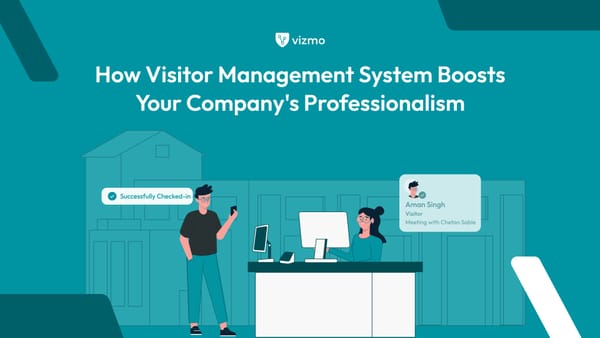
The system tracks and manages visitors by having them check-in using digital methods such as self-service kiosks or mobile apps. Visitors provide their information, including their name, contact details, reason for visiting, and the person they are meeting. This information is then stored in a centralized database.
Key features of a visitor management system include:

1. Digital Check-ins: Instead of using paper sign-in sheets, visitors can check-in using self-service kiosks or mobile apps. This eliminates the need for manual data entry and reduces waiting times for visitors.
2. Visitor Badges: The system can automatically generate visitor badges with relevant information such as the visitor's name, photo, purpose of visit, and expiration time. These badges help identify authorized visitors and enhance security within the facility.
3. Real-time Notifications: When visitors check-in, the system can send real-time notifications to the hosts or employees they are meeting. This enables the hosts to be aware of their visitors' arrival and ensures prompt and efficient greetings.
The main difference between manual and electronic visitor management systems lies in the way visitor information is processed and managed.
Manual visitor management systems typically use paper sign-in sheets, requiring visitors to manually write down their information. This method is often time-consuming, prone to errors, and lacks security measures. Manual systems also lack features such as real-time notifications and digital check-ins.
Electronic visitor management systems, on the other hand, automate the entire process, allowing visitors to check-in digitally. This method saves time, reduces data entry errors, and enhances security by capturing and storing accurate visitor information. Electronic systems also offer additional features like real-time notifications and visitor badge printing.
Overall, a visitor management system is crucial for organizations to efficiently track and manage visitors within their facility, improving security, streamlining processes, and enhancing the visitor experience.
10 Benefits of a Visitor Management System

1. Improved safety and security
A visitor management system allows for the visual identification of all visitors, leveraging background checks to identify potential risks and unwanted visitors. This feature enhances the safety and security of the organization and staff, helping to create a safer visitor experience.
2. Streamlined operations
With automated visitor registration, badging, and various safety protocols, a visitor management system can streamline every crucial task and help reduce administrative work. This feature allows staff to focus on other productive tasks, increasing efficiency and productivity.
3. Enhanced customer satisfaction
When front office staff can quickly and efficiently welcome visitors, it conveys a sense of professionalism that enhances overall customer satisfaction. This feature motivates employees, encouraging them to perform better.
4. Pre-registration
With a visitor management system, staff can pre-register guests, adding all necessary details before their arrival. This feature helps visitors by providing crucial information like maps, safety instructions, and schedule changes before they arrive, enhancing their overall experience.
5. Scalability and flexibility
Visitor management systems are customizable to meet the growing needs of organizations, with quick updates and minor tweaks, prepared for unconventional situations. This feature helps businesses scale their operations over time.
6. Paperless operation
Visitor management systems reduce the need for paper-based registration, which requires a lot of manual administrative work and is inefficient. This feature frees up time for staff to complete more productive tasks and can enable administrators to erase visitor information when necessary.
7. Reporting capabilities
Visitor management systems can generate customized reports based on visitor check-ins and third-party interactions. These reports provide valuable performance insights that can streamline operations and fix potential issues. This feature ensures accountability of employees as they perform their duties.
8. Efficient integration
Visitor management systems can be integrated with other access control systems and evacuation control to facilitate ease of movement with minimal formalities. This feature provides better movement tracking with broader data consolidation from various buildings across the premises.
9. Threat management
All visitor details within a visitor management system ensure that potential troublemakers are identified instantly. With watchlists, the system can detect the presence of threats or troublemaking elements and immediately notify appropriate personnel to contain the situation. This feature provides increased security to visitors on site.
10. Cost-effectiveness
A visitor management system can streamline front-desk processes and customer service, reducing time spent on administrative work, which is costly. This feature ensures that employees can devote more time to revenue-generating activities while minimizing multitasking and errors.
Each of these benefits contributes significantly to enhancing the visitor experience. From pre-registration to streamlined processes and automated safety protocols, a visitor management system ensures that visitors experience a safe, secure, and productive stay. The features of a visitor management system include digital check-ins, visitor badges, real-time notifications, and automated data collection, among others. The system's overall goal is to ensure maximum convenience while safeguarding visitor data and privacy.
Benefits of Visitor Management System for Organizations
Every day a whole host of people come through your office doors for a number of different reasons. Especially in large organizations, people come in for different purposes like business meetings, as potential clients, for HR interviews, vendors or contractors, auditors or unexpected drop-ins, etc.
Though it may not seem like an issue for your company from the outset, when you look at it from a wider perspective, a swarm of visitors collected at the reception or just strolling through your office premises is chaotic, to say the least. Not to mention the difficulty of tracking all the visitors and knowing their whereabouts in your office space.
Now, how do you overcome this situation? Of course, you can’t control the number of visitors coming in. Let’s take a look at 5 ways to do just that:
1. Address Every Visitor Promptly
Visitors should not feel alienated. This is an obvious failure of the organization to accomplish this simple yet important feat. Every visitor needs to feel welcomed, and have someone who receives them and directs them to the next steps of their journey. A clear example of a company failing to implement the number one step of a robust workplace management system is not having a clear "next step" for the said visitor such as where to go, whom to speak to, or if they simply need to wait.
The importance of a visitor management system cannot be emphasized enough. It helps in addressing every visitor coming to your organization, avoids any unpleasant experience at the reception and gives a good impression of your organization.
2. Identify Visitor Type
You can have hundreds of people coming through your doors on any given day. And the purpose of the visit is arguably the first piece of information you want, with which you can create a great visitor experience. You don’t want someone uninvited just waltzing through unchecked. Create specific visitor journeys for the most frequent types of visitors you have, such as business clients, interview candidates, delivery services, and employee family members. This will allow you to create a seamless experience for visitors without wasting their time, and more importantly, not creating any disturbances for your own employees.
With a visitor management system, you do not have to worry about collecting visitor IDs as the system will do it for you. All you need to do is, make them feel comfortable and the VMS will help you identify your visitor and direct them to where they need to go.
3. Sign-In Process
Having a sign-in process as part of your visitor management system instantly allows you to quantify the number of visitors you welcome in a day, week, or month. Besides, a sign-in process will ensure security – a major priority for corporations around the world. We all want to know who is present on our premises at any given moment.
A sign-in process is simply a security best practice that every company should follow. It ensures that every visitor is checked and approved by your internal security team. This step can be simplified with a VMS in place that collects valuable data from the visitors as part of the sign-in process.
4. Notify Host/Recipient
Once you have all the information regarding the purpose of a visit and have the visitor signed in, the next step is to notify the appropriate personnel at your workplace regarding the visitor. Assisting the visitor with who they want to meet is an important step in any visitor management process.
If you have a reception area with enough dedicated staff, they can physically reach the person in question. But it’s not the most reliable strategy. Aside from being time-consuming, the host may not be in their usual space either. A digital option at hand is a phone call but it can turn out to be disruptive as well. Instant messaging services may end up being unreliable.
A digital visitor management system software, however, has the option of employing each of the above tactics in one go, making it arguably the most efficient and reliable option.
5. Checking Out
It’s not a common practice for offices to incorporate checking out as part of their visitor management services. But there’s one compelling reason that may lead you to be convinced otherwise – security. We all want to know who is on our premises at any given time. Security concerns can range from a delivery executive lingering to potential data theft. A simplified check-out process ensures visitors leave promptly after completing their tasks.
This can be achieved through a combination of a dedicated receptionist and a digital visitor management system, where the receptionist validates the visitor's exit with something as simple as a digital signature.
An efficient visitor management system can prevent a number of issues presented by frequent visitors and keep your office and employees focused on their daily tasks.
Office Visitor Policy
To ensure the efficiency of a visitor management system, organizations must create a clear and comprehensive office visitor policy. This policy specifies the procedures and norms that visitors and workers must follow to ensure a safe and efficient environment.
Key Components of an Office Visitor Policy

1. Pre-registration Requirements
Visitors should be encouraged to pre-register their visit using the VMS. This involves providing information such as the date and time of the visit, the purpose, and the person they will be meeting. These visitors are referred to as invited visitors. Furthermore, the guard or receptionist has access to an extensive list of expected visitors.
2. Identification and Badging
All visitors must present a valid form of identification upon arrival and receive a visitor badge, which must be worn at all times while on the premises. This serves as a robust security measure for all types of visitors, but it will be particularly important for walk-in visitors.
3. Check-in and Check-out Procedures
Visitors must check in upon arrival and check out when leaving. This ensures accurate tracking of who is on the premises at any given time.
4. Access Restrictions
Visitors should be informed of the areas they are allowed to access and those that are restricted. Unauthorized access to restricted areas should be strictly prohibited. They should only be able to access such sensitive zones within the premises with due permission; a specialized visitor badge can be given for such unusual visits.
5. Host Responsibilities
Employees who are hosting visitors are responsible for ensuring that their guests comply with the office visitor policy. This includes meeting the visitors promptly and escorting them as needed.
6. Confidentiality and Non-disclosure
Visitors may be required to sign confidentiality agreements or non-disclosure agreements (NDAs) if they will have access to sensitive information during their visit. This will combat data breaches ensuring data safety and security at the workplace.
7. Emergency Procedures
The visitor policy should include instructions on what to do in case of an emergency, such as fire drills or evacuations. Visitors should be briefed on these procedures upon arrival.
8. Compliance and Enforcement
The policy should clearly state the consequences of non-compliance for both visitors and employees. This ensures that everyone understands the importance of adhering to the rules. This makes the workplace more compliant and ensures that the organization is legally abiding.
Office Management Trends
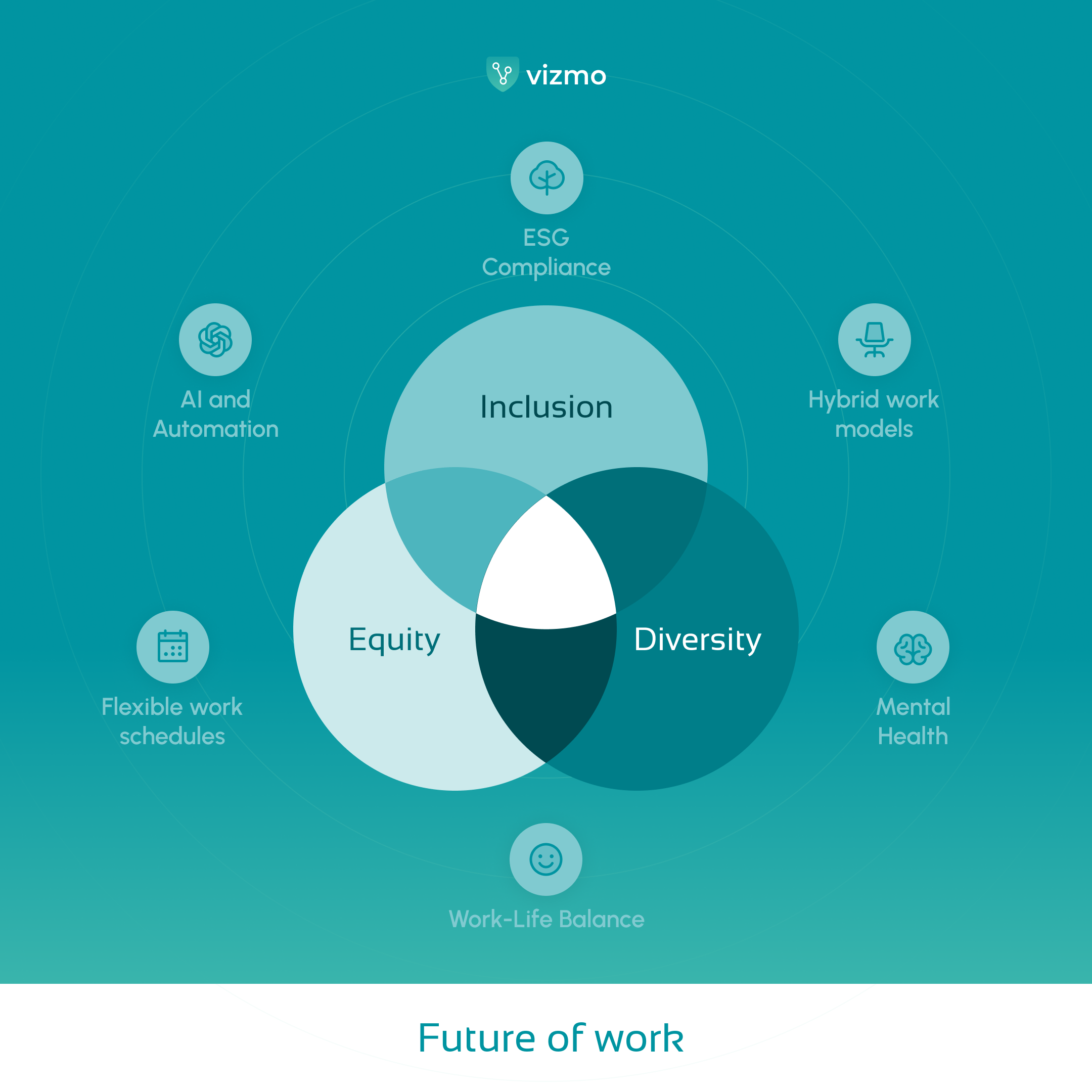
The future of work requires a change of both the hard physical and technological parts of a company, as well as the soft aspects, such as employee well-being and mental health. Furthermore, businesses are diligent about workplace compliance, ensuring that internal and regulatory compliances are met. As a result, they are focusing on concepts such as DEI (Diversity, Equity, and Inclusion) and ESG (Environmental, Social Governance). And considering all of these office management trends into consideration, having a visitor management system is indispensable that ensures a safe, secure, digitized and compliant workplace.
The implementation of visitor management systems is a broader part of the trends in office management toward digital transformation in office management. Organizations are increasingly leveraging technology to enhance efficiency, security, and the overall workplace experience.
Key Trends in Office Management
1. Digital Transformation
Offices are getting a major makeover these days, thanks to digital tools. Imagine trying to juggle dozens of balls at once – that's how complex office management can be! But with software for scheduling, chatting, and keeping the building in check, it’s like each ball is suddenly feather-light. The adoption of digital tools, including visitor management systems, is transforming how offices operate.
2. Flexible Workspaces
The concept of 'the office' sure isn't what it used to be. Now everything’s shifting towards spaces where you might not sit in the same spot every day or even work from within its walls regularly. This flexibility means offices need top-notch systems to keep track of who's coming and going—making everyone feel secure and operations run smoothly. Modern offices are moving towards more flexible and dynamic workspaces. This includes hot-desking and remote work options, which require robust visitor management systems to ensure security and efficiency.
3. Going Green
Everyone's talking about being green these days—even offices aren’t left out! There is a growing focus on sustainability in office management. Visitor management systems contribute to this by reducing the need for paper-based processes and improving energy efficiency.
4. Boosting Security
Keeping an office safe is as crucial as ever; think of it like guarding a fortress but instead using high-tech gadgets rather than moats or drawbridges. Modern visitor management tools alert staff instantly if something’s up and ensure only the right folks get through those gates by checking backgrounds thoroughly. Security remains a top priority for office management. Advanced visitor management systems, with features like real-time notifications and background checks, play a crucial role in enhancing workplace security.
5. Employee Well-being
Office management trends are increasingly focused on employee well-being. This includes creating a welcoming and secure environment for both employees and visitors, which is facilitated by effective visitor management systems.
Final Thoughts
In essence, the visitor management system (VMS) offers numerous benefits that significantly enhance the operations of modern organizations. Key advantages include improved safety and security through visual identification and background checks, streamlined operations with automated processes, and increased customer satisfaction by creating a professional and efficient front office experience. Additionally, VMS provides pre-registration capabilities, scalability, paperless operation, robust reporting tools, efficient integration with other systems, effective threat management, and cost-effectiveness.
Implementing a VMS is crucial for modern organizations aiming to maintain high standards of security and operational efficiency. With the ability to reduce security breaches, enhance visitor experiences, and streamline administrative tasks, VMS proves to be an indispensable tool in today's business landscape.
Businesses should consider investing in a robust visitor management system to reap these benefits and ensure a safe, efficient, and welcoming environment for their visitors. To explore how a VMS can transform your visitor management practices, visit Vizmo's Visitors page and discover the perfect solution for your Workplace Security needs.